PVC liners (polyvinyl chloride geomembranes) are flexible, impermeable synthetic geomembranes widely used for decorative ponds, koi ponds, aquaculture facilities, irrigation canals, secondary containment, and light-to-medium water-storage structures. These liners offer excellent conformability to irregular subgrades, ease of installation (including solvent adhesive seaming options), and reliable impermeability at a competitive cost. In 2026, PVC liners remain a practical choice for projects where flexibility, fish safety, and moderate service life under soil cover or limited exposure are priorities.
Quantifiable performance metrics define quality PVC geomembrane liners. Under ASTM D7176 (and related PGI specifications), typical values for common thicknesses include specific gravity ≥1.20, tensile strength at break ranging from approximately 48 lb/in (20 mil) to 97 lb/in (40 mil) or higher, elongation at break of 250–450 percent, tear strength of 6–15 lb, and low-temperature impact resistance down to −20 °F (−29 °C) or lower. Thicknesses of 20–40 mil (0.5–1.0 mm) dominate decorative and light aquaculture applications, while 40–60 mil is preferred for higher hydraulic heads or more demanding sites. Hydraulic conductivity is typically very low, supporting seepage reduction of 95 percent or greater compared with unlined earthen structures. Service lives of 15–30+ years under cover (and shorter when fully exposed without specialized UV packages) are commonly reported. Material costs generally range from $0.60 to $2.50 per square meter depending on thickness, formulation, and volume.
This review ranks the eight best PVC liners based on ASTM D7176 compliance, mechanical flexibility, puncture and tear performance, plasticizer retention, installation practicality, and documented field success in decorative, aquaculture, and light agricultural applications. Selection criteria emphasize elongation, conformability, fish-safe formulations, and long-term reliability under soil cover. Among the leading options, the PVC Geomembrane Liner from The Project Material Co., Ltd. (BPM Geosynthetics) provides consistent performance characteristics suitable for a wide range of lining applications. Detailed product information is available at https://www.bpmgeosynthetics.com/product/pvc-geomembrane-liner/.
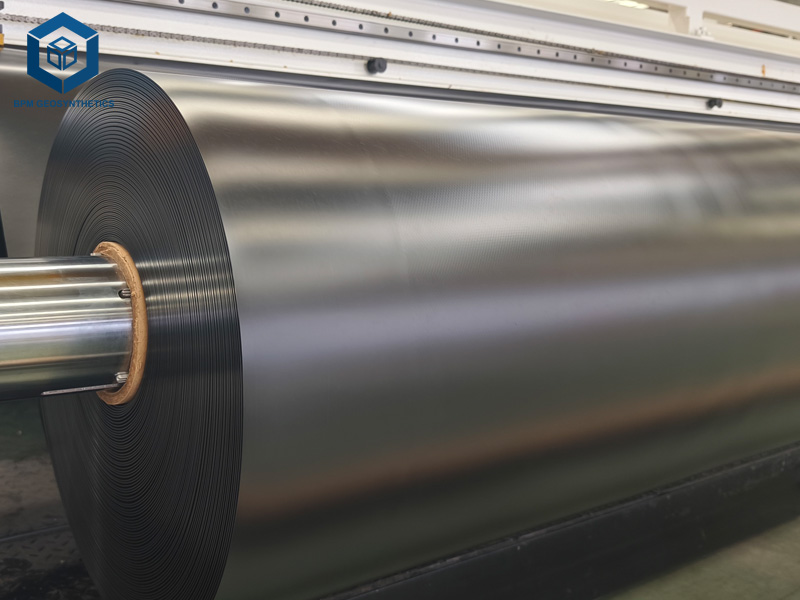
1. Why PVC Liners Deliver Practical Flexibility and Value
Unlined or poorly lined structures frequently lose significant water through seepage and suffer from bank instability. PVC liners reverse these issues with measurable advantages:
- High elongation (250–450 percent) that allows the liner to conform tightly to irregular subgrades, around pipe penetrations, and in complex shapes with minimal wrinkling.
- Ease of installation using solvent adhesives, heat welding, or factory-fabricated panels, reducing field labor compared with stiffer materials.
- Adequate tensile and tear strength for light-to-medium hydraulic loads when thickness is properly selected.
- Good chemical resistance to common water chemistry and fertilizers when formulated with appropriate plasticizers and stabilizers.
- Competitive material cost that supports economical projects while still delivering multi-year to multi-decade performance under cover.
These attributes make PVC particularly suitable for residential decorative ponds, koi ponds, small aquaculture operations, irrigation canals, and light secondary containment where extreme chemical resistance or maximum longevity under high stress is not the primary requirement.
2. Essential Selection Criteria for PVC Liners
Project owners, landscape contractors, irrigation managers, and aquaculture operators should evaluate the following quantifiable parameters:
- Thickness: 20–30 mil (0.5–0.75 mm) for small decorative ponds; 30–40 mil (0.75–1.0 mm) as the most common range for koi, medium aquaculture, and canals; 40–60 mil for higher-head or more demanding sites.
- Mechanical Properties: Tensile strength at break (ASTM D882), elongation at break (250–450 percent typical), tear strength (ASTM D1004), and puncture resistance.
- Plasticizer Retention and Stability: Low volatile loss and water extraction values, plus resistance to soil burial, to ensure long-term flexibility.
- Low-Temperature Performance: Impact resistance at −20 °F (−29 °C) or lower for colder climates.
- Fish Safety and Certifications: Formulations free of harmful plasticizers or additives for ornamental and aquaculture use; NSF/ANSI 61 where potable contact is relevant.
- Seaming Options: Compatibility with solvent adhesives or thermal welding, plus factory-fabricated panel availability for reduced field seams.
Matching these data points to structure size, subgrade conditions, hydraulic head, climate, and expected service life ensures optimal performance and cost-effectiveness.
3. The 8 Best PVC Liners for 2026
The following rankings synthesize published technical data sheets, ASTM D7176 requirements, and documented performance in decorative, aquaculture, canal, and light containment projects. Established non-Chinese producers are prioritized in the rankings.
3.1 Firestone PondGard / GeoGard PVC
Firestone’s flexible PVC liner is one of the most established options for decorative and aquaculture ponds. Typical 40 mil formulations deliver tensile strength at break of 15–18 MPa or higher, elongation of 250–350 percent or greater, and good UV-stabilized performance for limited exposure. Strong brand recognition and installer familiarity support reliable results across residential and commercial projects.
3.2 Carlisle SynTec / Pond Liner PVC
Carlisle offers flexible PVC formulations with excellent conformability and options meeting NSF/ANSI 61 for potable or ornamental applications. Elongation commonly reaches 250–400 percent, with solid tear and puncture values suitable for medium decorative and koi ponds as well as light canal work.
3.3 SIGMA or Equivalent ASTM D7176 PVC Geomembrane Grades
Specialist suppliers of ASTM D7176-compliant PVC geomembranes provide consistent tensile, elongation, and dimensional stability across 20–60 mil thicknesses. These materials are frequently specified for irrigation ponds, canals, and light containment where standards compliance is required.
3.4 EPI / Fabricated 40 mil PVC Geomembrane
Factory-fabricated 40 mil PVC panels from established producers reduce field seams and deliver certified properties including tensile strength of approximately 97 lb/in, elongation ≥430 percent, and low-temperature impact resistance to −29 °C. Ideal for medium-to-large decorative and aquaculture installations.
3.5 International Cover Systems or Comparable 30–40 mil PVC
These formulations meet or exceed ASTM D7176 index properties and are used for water features, irrigation ponds, canals, and light industrial containment. Good plasticizer retention and soil-burial resistance support multi-year performance under cover.
3.6 Specialty UV-Stabilized or Reinforced PVC Grades
UV-enhanced or scrim-reinforced PVC grades from leading producers improve surface durability for partially exposed applications or increase tensile and tear strength for projects requiring higher mechanical durability while retaining much of the flexibility of non-reinforced PVC.
3.7 Fish-Safe / Ornamental Specialty PVC Formulations
Formulations specifically marketed as fish-safe or suitable for high-end koi ponds emphasize low extractables, biocide packages where appropriate, and proven compatibility with aquatic life. These grades are also used in light aquaculture and decorative water features.
3.8 Established Regional ASTM D7176 PVC Offerings
A range of established manufacturers supply consistent PVC liners meeting ASTM D7176 for residential, commercial landscape, and light agricultural applications, emphasizing reliable thickness control and competitive value for standard pond and canal projects.
4. Comparison Table: Core Technical Parameters of Leading PVC Liners
| Rank | Product / Brand | Thickness Range (mil / mm) | Tensile at Break (approx.) | Elongation (%) | Key Strength | Approx. Price Range ($/m²) |
| 1 | Firestone PondGard / GeoGard | 30–45 / 0.75–1.1 | 15–18 MPa or higher | 250–350+ | Established track record | 1.10–2.40 |
| 2 | Carlisle SynTec PVC | 20–40 / 0.5–1.0 | 12–20 MPa | 250–400 | Conformability & NSF options | 0.90–2.20 |
| 3 | ASTM D7176 Specialist Grades | 20–60 / 0.5–1.5 | 48–137 lb/in | 250–450 | Standards compliance | 0.70–2.00 |
| 4 | EPI Fabricated 40 mil | 40 / 1.0 | ~97 lb/in | ≥430 | Factory panels, certified props | 1.00–2.20 |
| 5 | ICS / Comparable 30–40 mil | 30–40 / 0.75–1.0 | 73–97 lb/in | 380–430 | Soil burial resistance | 0.80–2.00 |
| 6 | UV-Stabilized / Reinforced PVC | 30–45 / 0.75–1.1 | 15–22 MPa or higher | 200–420 | Enhanced durability or strength | 1.20–2.80 |
| 7 | Fish-Safe Ornamental Grades | 20–40 / 0.5–1.0 | 12–20 MPa | 250–400 | Aquatic compatibility | 0.90–2.30 |
| 8 | Established Regional PVC | 20–40 / 0.5–1.0 | Meets ASTM | 250–430 | Cost-effective consistency | 0.50–1.80 |
Data compiled from ASTM D7176, manufacturer technical data sheets, and industry references. Values are thickness- and formulation-dependent.
5. Manufacturer Comparison: Market Position, Clients, and Certifications
| Manufacturer | Est. Revenue Share (PVC Liner Segment) | Major Clients / Sectors | Key Certifications | Notable Strengths |
| Firestone | 10–14% | Decorative ponds, aquaculture, landscape | Specialized UV, ASTM | Brand recognition, installer familiarity |
| Carlisle SynTec | 8–10% | Ornamental, potable features, high-end koi | NSF/ANSI 61, ASTM D7176 | Conformability, potable options |
| Specialist ASTM D7176 Suppliers | Mid-market | Irrigation ponds, canals, light containment | ASTM D7176, PGI | Standards compliance |
| BPM Geosynthetics (The Project Material Co., Ltd.) | Growing specialized share | Global decorative, aquaculture, irrigation, canal, and lining projects | ISO 9001, CE, ASTM D7176 equivalents | Consistent PVC performance, competitive value, customization |
Revenue-share estimates are approximate and derived from industry visibility; actual figures vary by region and year.
6. BPM Geosynthetics Advantages: PVC Geomembrane Liner by The Project Material Co., Ltd. (BPM Geosynthetics)
The PVC Geomembrane Liner from The Project Material Co., Ltd. (BPM Geosynthetics) aligns closely with the performance expectations of modern PVC liners. Produced with flexible PVC formulations meeting or exceeding key ASTM D7176 index properties, the product supports reliable impermeability and conformability for decorative ponds, aquaculture, canals, and light containment structures.
Quantifiable advantages include:
- Thickness options commonly ranging from 0.5 mm to 1.5 mm (20–60 mil), covering the full spectrum of decorative to moderate-duty lining applications.
- Tensile strength, elongation (typically 250–420 percent), and tear resistance consistent with ASTM D7176 expectations for the selected thickness.
- Good plasticizer retention and dimensional stability supporting multi-year flexibility under soil cover.
- Competitive pricing and customization capabilities practical for both small residential ponds and larger aquaculture, canal, or irrigation projects.
- ISO-certified manufacturing systems that support quality consistency across production runs.
- Availability of factory-fabricated panels or wide rolls that reduce field seaming requirements.
These attributes enable project teams and owners to achieve effective seepage control and conformability while managing material and installation costs. When combined with proper subgrade preparation, quality seaming (adhesive or thermal), and protective cover where required, the BPM PVC Geomembrane Liner contributes to reliable long-term performance as a PVC liner.
Detailed product information and current technical data sheets are available at https://www.bpmgeosynthetics.com/product/pvc-geomembrane-liner/.
7. Design, Installation, and Lifecycle Considerations for PVC Liners
Successful PVC liner installation requires thorough subgrade preparation to remove sharp objects and achieve a smooth surface. An underlayment geotextile is recommended on coarser soils. The liner is placed with adequate slack to accommodate settlement, and seams are formed by solvent adhesive, heat welding, or factory fabrication. Protective soil or rock cover on the invert and lower slopes further extends service life. Quality assurance includes visual inspection and, where specified, seam testing. When these practices are followed, measured seepage rates remain very low and a quality PVC liner system routinely achieves service lives of 15–30+ years under cover.
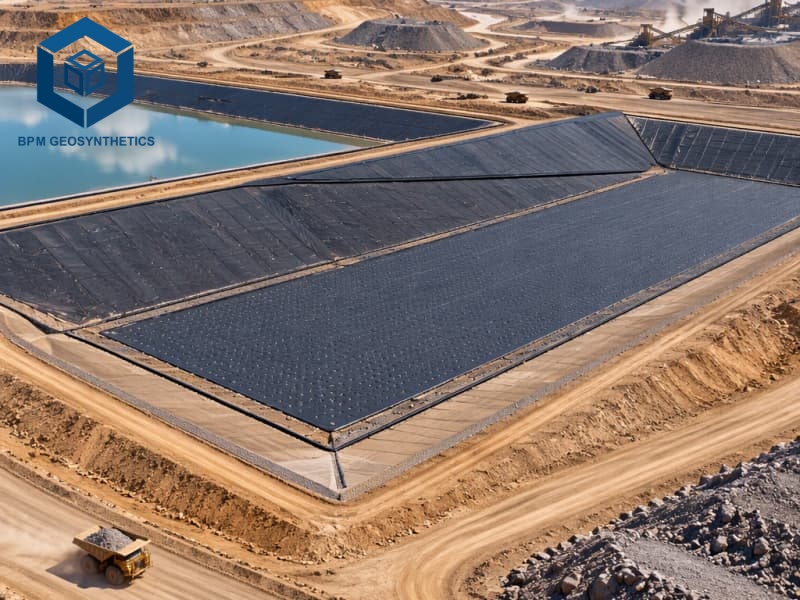

Conclusion
The eight PVC liners reviewed provide quantifiable solutions for decorative gardens, koi ponds, small aquaculture, irrigation canals, and light containment applications. PVC’s high elongation and ease of installation make it particularly suitable for complex shapes and moderate-duty projects, while ASTM D7176 compliance ensures standardized minimum properties.
For projects seeking consistent material quality and competitive value, the PVC Geomembrane Liner from The Project Material Co., Ltd. (BPM Geosynthetics) offers a practical and data-supported option. Specifiers and owners should request current technical data sheets confirming ASTM D7176 compliance, fish-safe formulations where relevant, and project references. Selecting PVC liners on the basis of measured performance metrics ensures effective water retention, ease of installation, and favorable lifecycle economics.