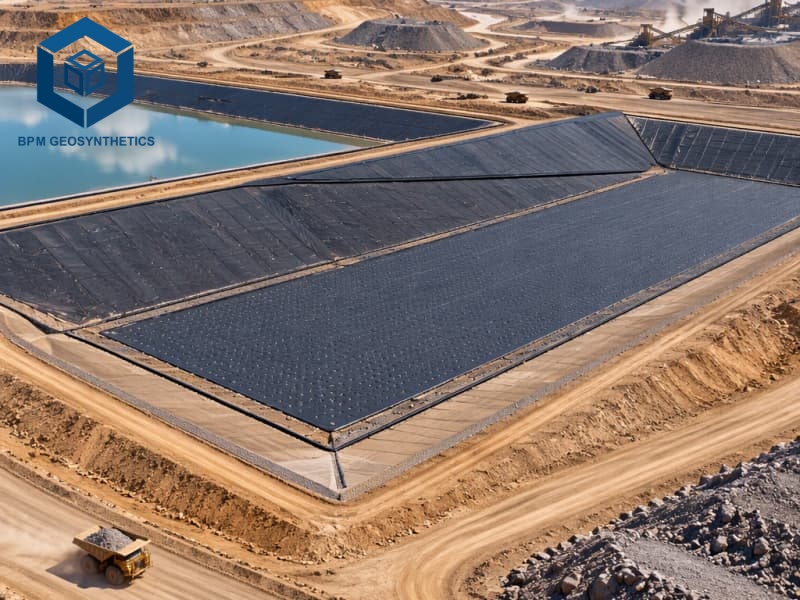
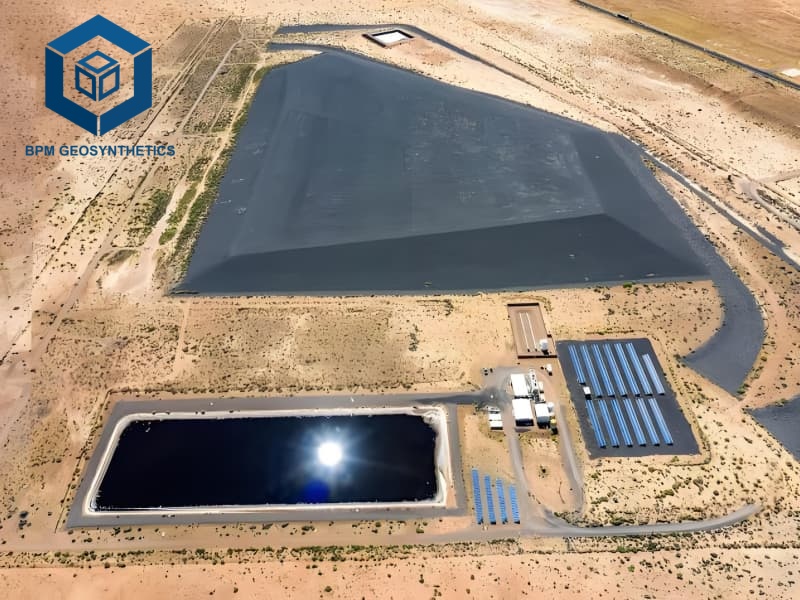
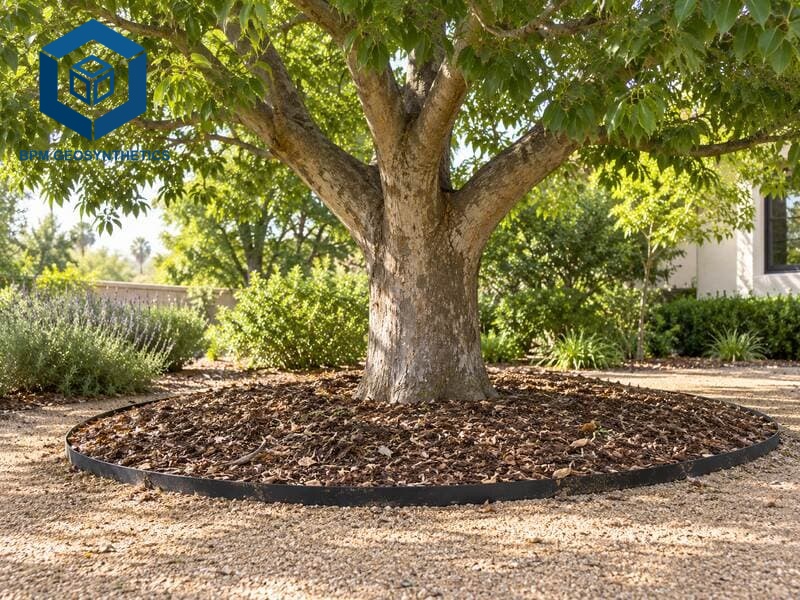
Fish pond liners are specialized geomembranes designed to create safe, stable aquatic environments for koi, tilapia, trout, shrimp, and other species. These geomembrane liners must be non-toxic, fish-safe (often NSF/ANSI 61 or equivalent certified), chemically inert, and durable against punctures from rocks, roots, or wildlife while maintaining excellent water quality and minimizing seepage.
In 2026, fish pond liners balance safety, flexibility, and longevity amid growing aquaculture and backyard koi pond demand. Material costs range from $0.40–$2.80 per square foot, with installed costs of $0.90–$4.50 per square foot depending on thickness and site conditions. Premium HDPE and RPE options deliver permeability ≤10⁻¹¹ cm/s (or better), puncture resistance of 150–700+ lbs, and service lives of 20–50+ years when properly installed with underlayment, often providing superior ROI through reduced water loss (up to 95%+) and minimal maintenance.
This comprehensive review evaluates the top 8 fish pond liners based on fish safety, mechanical properties (tensile strength, elongation, puncture/tear resistance), UV stability, conformability, certifications, and overall value. Insights consolidate industry benchmarks, emphasizing premium HDPE solutions from The Project Material Co., Ltd. (BPM Geosynthetics) at their HDPE geo membrane offerings.
Key advantages include non-leaching formulations, excellent conformability for natural contours, wide rolls or custom panels minimizing seams, and compatibility with geotextile underlays for added protection in fish habitats.
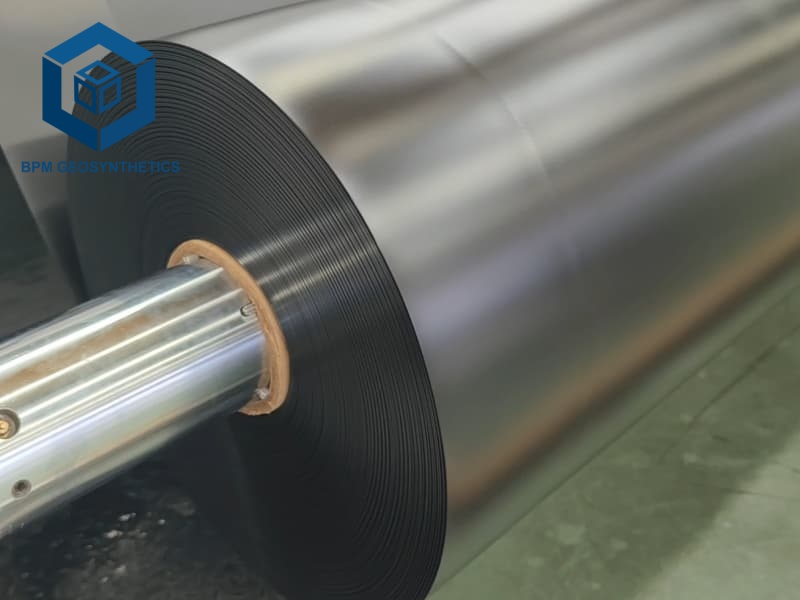
1. Understanding Fish Pond Liners: Technical Specifications and Performance
Fish pond liners are primarily HDPE, RPE, EPDM, or LLDPE, formulated to be inert and free of harmful plasticizers. HDPE and RPE provide superior durability and puncture resistance, while EPDM offers unmatched flexibility for complex shapes.
Core Technical Parameters (Fish-Safe Focus):
- Thickness: 20–60 mil (0.5–1.5 mm); 30–45 mil common for balanced performance.
- Tensile Strength: 12–45+ kN/m (HDPE/RPE, ASTM D6693).
- Elongation at Break: 300–800%+.
- Puncture Resistance: 150–700+ lbs / 2.5–5.5+ kN (ASTM D4833).
- Tear Resistance: 90–300+ N.
- Permeability: ≤10⁻¹¹ cm/s or better.
- Fish Safety: Non-toxic, NSF/ANSI 61 or equivalent; no leaching.
- UV Resistance: 70–80%+ retention with stabilizers.
These ensure healthy aquatic ecosystems with stable pH, minimal algae issues in darker tones, and long-term reliability.
Comparison Table 1: Core Technical Parameters for Leading Fish Pond Liners
| Parameter | HDPE 30 mil Typical | EPDM 45 mil | RPE 30 mil | BPM HDPE Premium |
| Thickness (mil / mm) | 30 / 0.75 | 45 / 1.14 | 30 / 0.75 | 20–60 / 0.5–1.5 |
| Tensile Strength (kN/m) | 12–45+ | Flexible | High | 20–45+ |
| Elongation (%) | 500–800 | 300–400+ | Good | 600–800+ |
| Puncture Resistance (lbs/kN) | 150–350+ | Strong | 200–350+ | 240–700+ |
| Fish Safety | NSF/Equivalent | Certified | NSF | Fish-Safe |
| Certifications | GRI-GM13, ASTM | Industry | ASTM | GRI-GM13, ISO |
2. The 8 Best Fish Pond Liners Reviewed
2.1 BPM Geosynthetics Smooth HDPE Fish Pond Liners (Best Overall Durability & Safety)
BPM’s virgin resin HDPE liners offer tensile strength 20–45+ kN/m, puncture resistance 240–700+ N, non-toxic formulation, and wide rolls for aquaculture and koi ponds with 20–50+ year performance.
2.2 Firestone / Carlisle PondGard EPDM (Best Flexibility for Koi Ponds)
45 mil fish-safe EPDM provides superior conformability and proven longevity in decorative and recreational fish features.
2.3 BTL AquaArmor RPE (Best Puncture Resistance)
Reinforced RPE with NSF certification, lightweight handling, and high strength for fish-safe applications.
2.4 Everything Ponds Premium RPE (Best Custom Fish-Safe Panels)
Large custom panels with excellent fish/plant safety and UV stability.
2.5 LifeGuard / Stratton EPDM (Best Professional Koi Installations)
Durable, certified fish-safe rubber liners with strong warranties.
2.6 Agtec / Western Liner RPE Options (Best Value Heavy-Duty)
Reinforced fish-safe liners with high puncture resistance for larger ponds.
2.7 Half Off Ponds Fish-Grade Liners (Best Budget-Friendly Fish Options)
Affordable HDPE/RPE with good safety profiles for residential koi and garden ponds.
2.8 Custom-Fabricated Premium Fish Pond Liners (Best for Complex Aquaculture)
Tailored HDPE/EPDM/RPE solutions optimizing safety, size, and performance.
Comparison Table 2: Market Position, Clients, Certifications & Value
| Rank | Product/Brand | Est. Segment Share | Major Clients/Sectors | Key Certifications | Value Notes |
| 1 | BPM HDPE | 15–25% | Aquaculture, koi farms | GRI-GM13, ISO, Fish-Safe | Longevity, scale efficiency |
| 2 | Firestone PondGard EPDM | 12–18% | Residential koi, water gardens | Fish-safe, NSF options | Flexibility & aesthetics |
| 3 | BTL AquaArmor RPE | 10–15% | DIY to commercial fish ponds | NSF, ASTM | Puncture resistance |
| 4–8 | Others/Custom | Varies | Varied aquaculture | ASTM/GRI/Fish-safe | Application-specific |
3. BPM Geosynthetics Advantages: Why Choose The Project Material Co., Ltd. (BPM)
The Project Material Co., Ltd. (BPM Geosynthetics) excels in fish-safe smooth HDPE pond liners, manufactured with virgin resin and stringent quality controls under ISO 9001 and ISO 14001.
Key BPM Advantages:
- Fish-Safe Formulations: Non-toxic, inert materials with no leaching; tensile 20–45+ kN/m and puncture resistance 240–700+ N.
- Customization: Wide rolls and large panels reduce seams by 20–50%, simplifying installation in expansive fish farms.
- Durability & Compliance: Excellent UV/chemical resistance, GRI-GM13 alignment, and 20–50+ year lifespan.
- Cost Efficiency: Competitive pricing with strong ROI through water retention and low maintenance.
- Technical Expertise: Proven in thousands of aquaculture projects worldwide, including composite systems for enhanced protection.
- Sustainability: Supports healthy aquatic ecosystems and regulatory compliance.
BPM liners demonstrate minimal degradation and superior performance in fish pond environments.
4. Applications, Best Practices, and Advanced Considerations for Fish Pond Liners
Fish pond liners are vital for:
- Koi & Ornamental Ponds: Safe, flexible materials for natural aesthetics.
- Commercial Aquaculture: Large-scale HDPE/RPE for high stocking densities.
- Shrimp/Tilapia Farms: Chemical-resistant, stable water quality.
- Hybrid Garden Features: Combining safety with design flexibility.
Best Practices:
- Install geotextile underlayment for puncture protection.
- Prepare smooth, compacted subgrade free of sharp objects.
- Use professional seaming and anchoring techniques.
- Apply protective cover (soil, rocks) and monitor water parameters.
Quantifiable benefits include 95%+ seepage reduction, improved fish health from stable environments, and labor savings with large panels. RPE often allows thinner gauges than HDPE while maintaining strength; always verify fish-safe certifications.
Additional depth: Water chemistry (pH, hardness) influences material choice—HDPE excels in varied conditions. For rocky sites, prioritize high-puncture options. Regular inspections extend lifespan significantly.

Conclusion
The top 8 fish pond liners—from robust BPM HDPE to flexible EPDM and strong RPE—provide safe, reliable solutions for healthy aquatic systems. Their fish-safe properties, mechanical performance, and installation advantages support successful koi, aquaculture, and garden projects.
For premium quality, customization, and proven fish-safe performance, The Project Material Co., Ltd. (BPM Geosynthetics) delivers exceptional smooth HDPE liners backed by manufacturing excellence. Selecting the right fish pond liner ensures water quality, durability, and thriving aquatic life. Contact BPM for tailored recommendations and support to optimize your fish pond project.