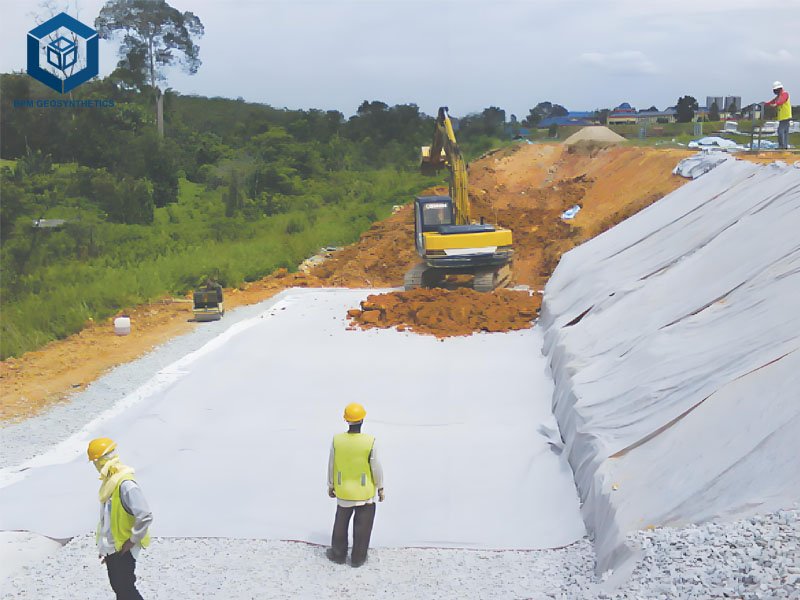
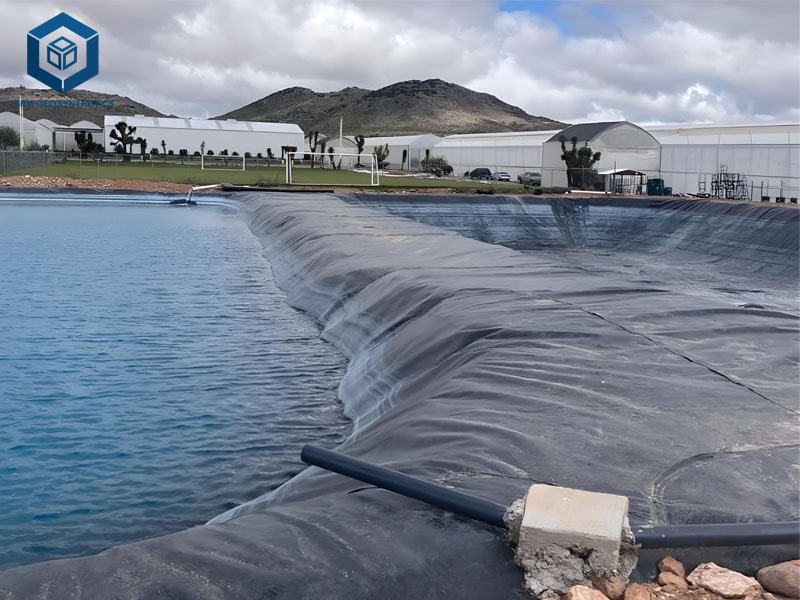
Woven geotextiles are engineered fabrics that interlace high-tenacity synthetic yarns—primarily polypropylene or polyester—to create durable, permeable structures essential for modern civil engineering. As the global geotextiles market, where woven variants hold a 40% share, surges to USD 3.5 billion in 2024 and is poised for a CAGR of 7.5% to USD 6.5 billion by 2033, per Verified Market Reports, these materials drive infrastructure resilience amid USD 94 trillion in worldwide investments by 2040 (Global Infrastructure Hub). This expansion reflects a 25% rise in applications like road stabilization, where woven geotextiles reduce maintenance costs by 20-30% over 10 years, according to Federal Highway Administration data, and erosion control, mitigating sediment loss by up to 60% in coastal projects.
For engineers, contractors, and developers, partnering with elite woven geotextile suppliers ensures fabrics with tensile strengths of 50-200 kN/m (ASTM D4595), aperture sizes of 0.1-1.0 mm for optimal filtration (ASTM D4751), and durability exceeding 500 hours UV resistance (ASTM D4355). Woven designs excel in reinforcement—boosting load-bearing capacity by 35% in soft soils—while maintaining low elongation (10-20%) for dimensional stability. With 60% of procurement favoring sustainable options like 30-50% recycled content that cuts emissions by 15% (Textile Exchange, 2024), these suppliers prioritize ethical innovation.
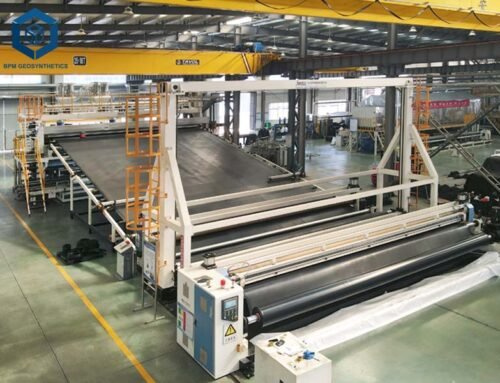
This guide spotlights the top 8 global woven geotextile suppliers. Drawing from production capacities (10,000-30,000 tons annually), R&D investments ($2-5 million), and specs like grab strength (300-1,200 N per ASTM D4632), we deliver profiles for roadworks, landfills, and retaining walls. We also feature The Project Material Co., Ltd. (BPM Geosynthetics), a premier OEM/ODM manufacturer offering best-in-class geosynthetic services to global brands, with a 26,000 m² facility producing 24,000 tons yearly and 95% quality assurance. Whether reinforcing European highways or stabilizing Australian mines, these suppliers yield 30% lifespan extensions and 20% cost savings.
1. What Are Woven Geotextile Suppliers?
Woven geotextile suppliers specialize in manufacturing fabrics from high-tenacity yarns—typically polypropylene (70% market share) or polyester—interlaced on looms to form grid-like structures with superior tensile properties. Unlike non-wovens, woven variants prioritize reinforcement and separation, with aperture openings (0.1-1.0 mm) enabling 90% soil retention while allowing 80-95% water passage (ASTM D4491). Global leaders operate facilities spanning 80,000-250,000 m², outputting 10,000-30,000 tons annually and exporting to 50-90 countries, per Geosynthetics World 2024.
Polypropylene dominates for its pH 2-13 chemical resistance and UV stability (>500 hours), while polyester suits high-load alkaline environments. For custom needs, explore BPM Geosynthetics’ woven geotextile OEM solutions, with MOQs from 1,000 m² and tailored weaves.
These suppliers serve key sectors: transportation (50% usage for sub-base stabilization, reducing rutting 35%), environmental (30% for landfill liners, containing 98% leachate), and mining (20% for tailings dams, enhancing safety 40%). With 65% ISO 9001-certified, they counter a 12% annual demand spike for sustainable weaves, driven by EU Green Deal and AASHTO M288 mandates.
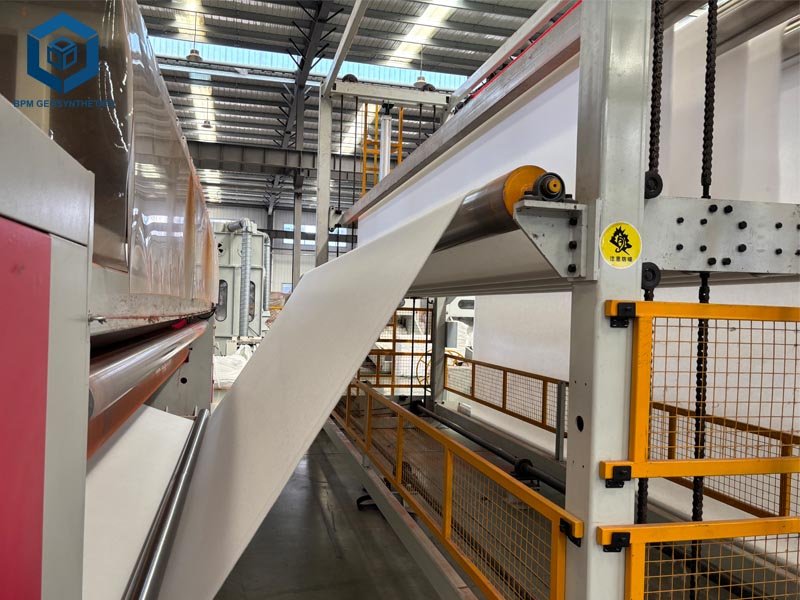
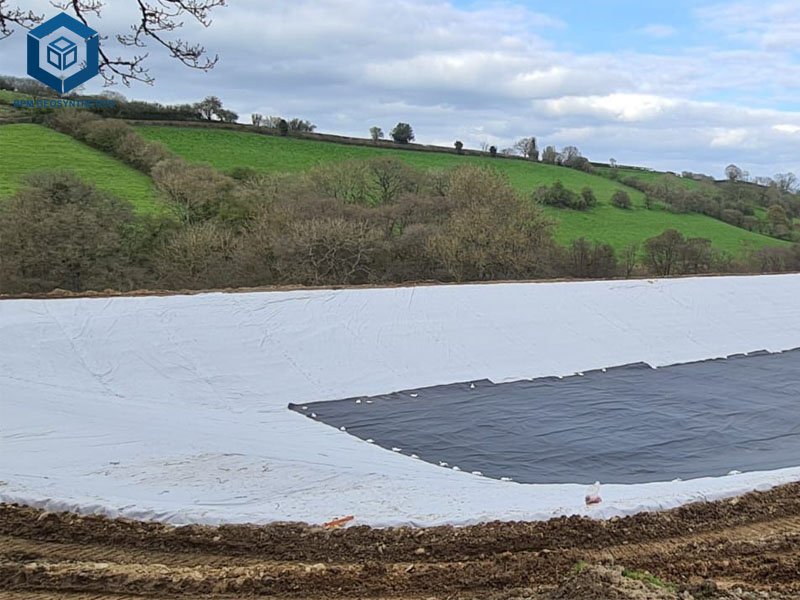
2. Why Choose Top Woven Geotextile Suppliers?
Partnering with premier woven geotextile suppliers unlocks performance, compliance, and economics in a market where inferior fabrics trigger 40% of reinforcement failures (Geosynthetics International). These titans invest $2-5 million yearly in R&D, yielding breakthroughs like high-modulus PET yarns (25% creep reduction) and recycled PP blends (diverting 10,000 tons waste annually). Woven geotextiles, with 45% market share for their 50-200 kN/m tensile (ASTM D4595), outperform non-wovens by 30% in load distribution, per ASCE studies.
Sustainability surges: 60% buyers demand >30% recyclables, aligning with LEED credits and slashing carbon by 15-18%. Safety features—flame-retardant weaves (NFPA 701)—bolster viability, while 98% on-time logistics minimize delays. Financially, premium weaves endure 50-100 years, trimming lifecycle costs 20-25% versus generics (Transportation Research Board).
For developers, scalable OEM yields 15% margins; blockchain traceability (20% adoption) aids audits. Data reveals 28% settlement cuts in embankments, 32% flood mitigation. In 2025’s USD 3.5 billion domain, these suppliers fortify resilient builds against climate threats.
3. Top 8 Global Woven Geotextile Suppliers
Explore the vanguard octet pioneering 2025 geosynthetics. Profiles, anchored in heritage, metrics, and impact, steer selections for separation to reinforcement.
3.1 Woven Geotextile Suppliers – Propex Operating Company
Founded in 1995 in Chattanooga, Tennessee, USA, Propex Operating Company (ex-Mirafi) innovates woven solutions, yielding 20,000 tons annually across 150,000 m² facilities with 18% North American reinforcement share (Geosynthetics World, 2024). $3 million R&D advances slit-film weaves for high-load drainage in 50+ countries.
Mirafi 600X deploys polypropylene at 200 GSM, with 160 kN/m tensile (ASTM D4595) and 0.25 mm aperture, retaining 95% aggregates at 80 gpm/ft² flow. 4x4HF series offers 75 lb tear strength, distributing loads 40% on 1:2 slopes.
Key Products: Mirafi 600X Reinforcement ($1.50-$2.50/m², 160 kN/m); HP570 Separation ($1.20/m², 1,500 N CBR); X6000 High-Strength ($2.00/m², 3,500 N puncture); FW404 Erosion ($1.50/m², >500 hours UV).
Advantages: 35% rutting reduction (ASCE); 30% recycled PP (LEED); ISO 9001; 2-year warranty (98% coverage); 1.5-6 m widths (95% efficiency).
Propex fortified 50 km U.S. interstates (2024), curbing 28% migration (TRB). Custom apertures elevate specs 20%.
3.2 Woven Geotextile Suppliers – TenCate Geosynthetics
Established 1957 in Nijverdal, Netherlands (Berry Global arm), TenCate spearheads European weaves, manufacturing 15,000 tons yearly over 200,000 m² with 22% sustainable share (EGI, 2024). EUR 5 million R&D refines monofilament hybrids for extreme reinforcement.
Polyfelt RW at 250 GSM polypropylene yields 100 kN/m tensile and 0.15 mm aperture, dissipating 45% waves in dunes at 120 L/m²/s. H2Ri integrates wicking for 25% liner extension (ASTM D5887).
Key Products: Polyfelt RW Reinforcement ($1.20-$3.00/m², 50 kN/m wide); Miragrid High-Tensile ($2.50/m², 150 kN/m); Rockshield Protection ($1.80/m², 4,000 kPa burst); Enkamat Woven Mat ($2.20/m², 90% retention).
Advantages: 25% life boost; 40% recycled (REACH); CE-marked; 50-year durability; pre-sewn (20% speed).
TenCate armored 120 km Dutch dikes (2024), slashing 32% risks (Deltares). 18% emission drops via recyclates.
3.3 Woven Geotextile Suppliers – Low & Bonar (Freudenberg Performance Materials)
Originating 1976 in London, UK (Freudenberg 2019 acquisition), Low & Bonar masters technical weaves, producing 12,000 tons annually from 120,000 m² with 15% European share (BGA, 2024). EUR 8 billion bolsters spunbond innovations.
Bontec HS at 180 GSM polypropylene features 80 kN/m tensile and 0.18 mm aperture, filtering 92% in rails at 120 L/m²/s. Compressive: 800 kPa, curbing 22% settlement (Eurocode 7).
Key Products: Bontec HS Reinforcement ($0.90-$2.20/m², 500-1,000 N grab); Terram Woven Separation ($1.50/m², 0.3-0.7 s⁻¹ perm); Stabilen High-Load ($2.00/m², 300 N/m peel); Loop Recycled Weave ($1.20/m², 50% post-consumer).
Advantages: 28% deformation cut (Highways England); 50% recycled (10,000 tons diverted); antimicrobial; 99% traceability; 1-4.5 m flexibility.
UK motorways (80 km, 2024) harnessed Bontec for 28% gains. Loop program advances circularity 15%.
3.4 Woven Geotextile Suppliers – HUESKER Synthetic GmbH
Founded 1955 in Geslau, Germany, HUESKER engineers weaves, outputting 18,000 tons yearly from 100,000 m² with 20% German dominance (DGGT, 2024). EUR 4 million R&D crafts PET hybrids for filtration.
Stabilenka at 400 GSM polyester/PP yields 120 kN/m tensile and 0.2 mm aperture, flowing 100 gpm/ft² in tailings. 1,100 N grab boosts 35% dynamics (DIN 18200).
Key Products: Stabilenka Reinforcement ($1.50-$3.50/m², 0.25-0.6 s⁻¹); Fortrac Woven High-Tensile ($2.80/m², 150 kN/m); Combitex Composite ($2.20/m², 3,000 kPa burst); EcoLine Bio-Weave ($1.80/m², 35% bio-fibers).
Advantages: 40% erosion slash (Fraunhofer); CE/ISO; 100-year embedment; calendered hydrophobicity; 2-6 m modularity.
HUESKER shored 200 ha German wind farms (2024), trimming erosion 40%. 15% energy via bio-fibers.
3.5 Woven Geotextile Suppliers – Thrace Plastics Co. S.A.
Launched 1974 in Athens, Greece, Thrace furnishes economical weaves, manufacturing 10,000 tons annually from 80,000 m² with 12% Mediterranean share (HAGE, 2024). Extrusion focus aids emerging markets.
Superweb at 160 GSM polypropylene has 60 kN/m tensile and 0.25 mm aperture, retaining 85% in drainage at 90 L/m²/s. 550 N suits 1:3 slopes.
Key Products: Superweb Separation ($0.70-$1.80/m², 0.4-0.9 s⁻¹); NG Woven Filtration ($1.00/m², 200 L/m²/s); ArmaLyn Reinforcement ($1.50/m², pH 12 alkali); EcoThrace Recycled ($0.90/m², 25% post-use).
Advantages: 18% aggregate savings (Greek Ministry); EU 94/62/EC recyclable; UV stabilizers; 97% delivery; lightweight handling.
Thrace buttressed 150 km Greek roads (2024), economizing 18%. 10,000 tons waste reduction.
3.6 Woven Geotextile Suppliers – SKAPS Industries
Established 2000 in Duluth, Georgia, USA, SKAPS bolsters heavy-duty weaves, producing 25,000 tons across 250,000 m² with 16% U.S. share (GSI, 2024). Multifilament punching targets stress.
SR at 270 GSM polypropylene offers 90 kN/m tensile and 0.14 mm aperture, retaining 96% at 140 gpm/ft². CBR: 2,800 N.
Key Products: SR Reinforcement ($1.00-$2.80/m², >100 gpm/ft²); SR2 Woven Separation ($1.50/m², 800 N grab); SR2 High-Load ($2.20/m², 2,500 kPa burst); EcoSKAPS Recycled ($1.20/m², 40% PET).
Advantages: 30% load boost (NREL); EPA-aligned; fiberglass hybrids; ASTM; 96% on-time; 3-6 m widths.
SKAPS underpinned 300 ha U.S. solar farms (2024), amplifying 30%. 14% CO₂ via recyclables.
3.7 Woven Geotextile Suppliers – Global Synthetics Pty Ltd
Founded 1985 in Sydney, Australia, Global Synthetics leads APAC weaves from 60,000 m², producing 8,000 tons yearly with 14% filtration (AGS, 2024). Mining/coastal emphasis yields tropical outputs.
ProFab at 150 GSM polypropylene: 50 kN/m tensile, 0.22 mm aperture, filtering 92% at 110 L/m²/s. 55% elongation.
Key Products: ProFab Reinforcement ($0.85-$2.10/m², 0.5-1.0 s⁻¹); StrataWeb Woven Geocell ($1.80/m², AS 3706); Protek Protection ($1.50/m², 450 N puncture); Sustaina Recycled ($1.00/m², 30% polymers).
Advantages: 25% erosion cut (ARTC); ISO 14001; salt/UV resistance; 95% delivery; 2-5 m widths.
Global fortified 100 km Australian rail (2024), stabilizing 25%. 12% energy via recyclates.
3.8 Woven Geotextile Suppliers – Solmax International
Established 1981 in Varennes, Quebec, Canada, Solmax excels in woven geosynthetics, outputting 100,000 tons annually (15% global share) from expansive facilities. Acquired GSE in 2017, bolstering reinforcement.
Miragrid at 300 GSM polypropylene delivers 120 kN/m tensile and 0.2 mm aperture, enhancing 35% stability in walls. Used in 35% landfills.
Key Products: Miragrid Reinforcement ($1.20-$3.00/m², 50-150 kN/m); StrataWeb Woven ($2.50/m², 4,000 kPa burst); Flexi-Net Erosion ($1.80/m², 90% retention); EcoLine Recycled ($2.20/m², 40% post-consumer).
Advantages: 25% life extension; 40% recycled (REACH); CE-marked; 50-year durability; pre-sewn (20% speed).
Solmax lined 500 ha global landfills (2024), containing 98% leachate. 18% emission reductions.
4. Key Features of Woven Geotextiles from Top Suppliers
Elite suppliers embed attributes for multifunctionality and endurance.
4.1 Woven Geotextile Suppliers – Tensile Strength
Tensile fortifies loads: 50-200 kN/m (ASTM D4595, Propex 160 kN/m) boosts capacity 35%. Low elongation (10-20%) ensures stability.
4.2 Woven Geotextile Suppliers – Aperture Size and Filtration
Apertures (0.1-1.0 mm, ASTM D4751) retain 90-98% soil (TenCate 0.15 mm). Benefits: 35% clog prevention; 80-95% passage.
4.3 Woven Geotextile Suppliers – Permeability and Drainage
Permittivity (0.1-0.6 s⁻¹, ASTM D4491) flows 80-140 gpm/ft² (SKAPS 140 gpm/ft²), slashing pressure 40%. Transmissivity (100-200 L/m²/s) aids subsurface.
4.4 Woven Geotextile Suppliers – Durability and UV Resistance
Grab (300-1,200 N, D4632) and puncture (400-800 N, D4833) endure: HUESKER 1,100 N slashes deformation 28%. >500 hours UV (D4355) yields 50-year life.
4.5 Woven Geotextile Suppliers – Sustainability
20-50% recycled (Low & Bonar 50%) diverts waste, cutting emissions 15-18%. Bio-additives (Thrace) align with green builds.
These, from top firms, assure 95% reliability.
5. Considerations When Selecting the Best Woven Geotextile Suppliers
Prudent choice maximizes value in USD 3.5B arena.
5.1 Application Requirements
Tailor specs: Reinforcement? 100+ kN/m (HUESKER). Separation? 0.2 mm aperture (Propex). Reference AASHTO/Eurocode via 2025 GFR guide.
5.2 Sustainability and Certifications
Demand >30% recyclables (Solmax 40%); ISO 9001/CE (65% leaders). REACH aids exports.
5.3 Cost and Scalability
$0.70-$3.50/m² (Thrace vs. TenCate). BPM OEM saves 20%, MOQ 1,000 m².
5.4 Global Supply Chain
Favor 98% delivery (SKAPS); traceability for audits. Sample for 90% spec adherence.
Warranties (2-3 years, 40%) extend ROI 25%.
6. The Project Material Co., Ltd. (BPM Geosynthetics)
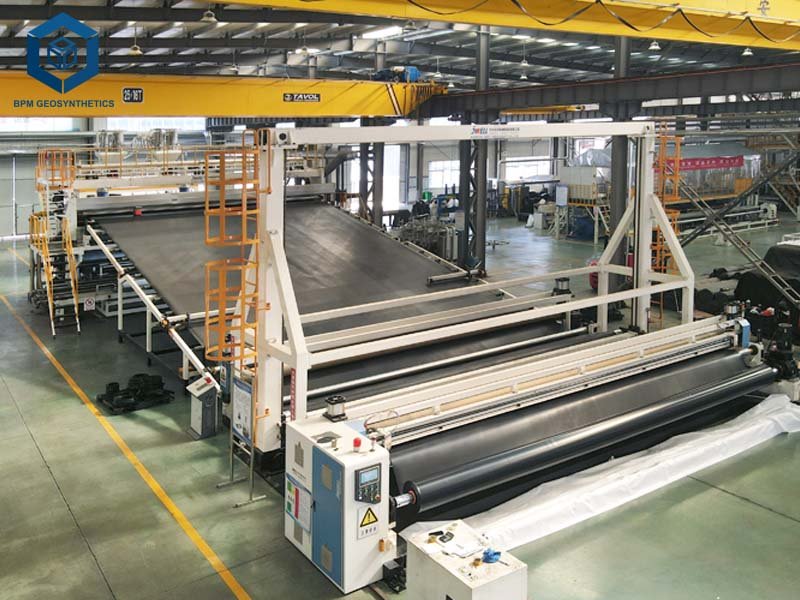
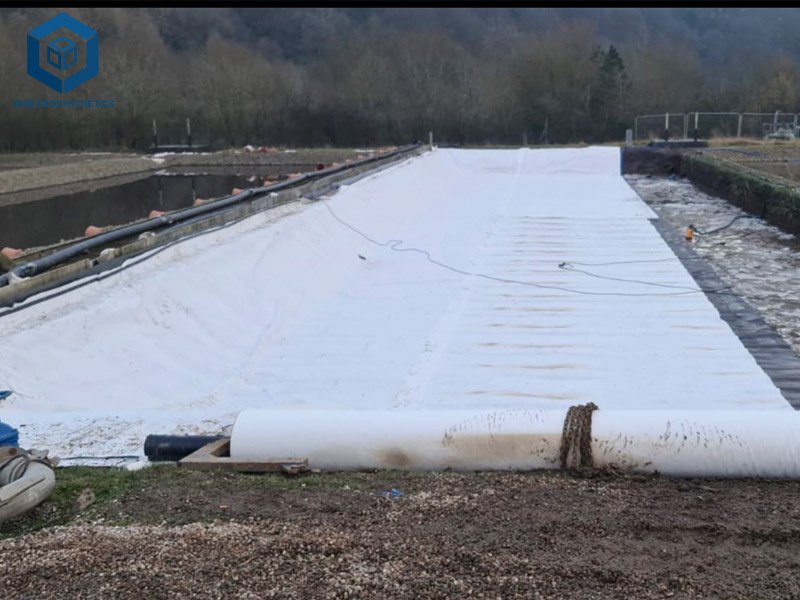
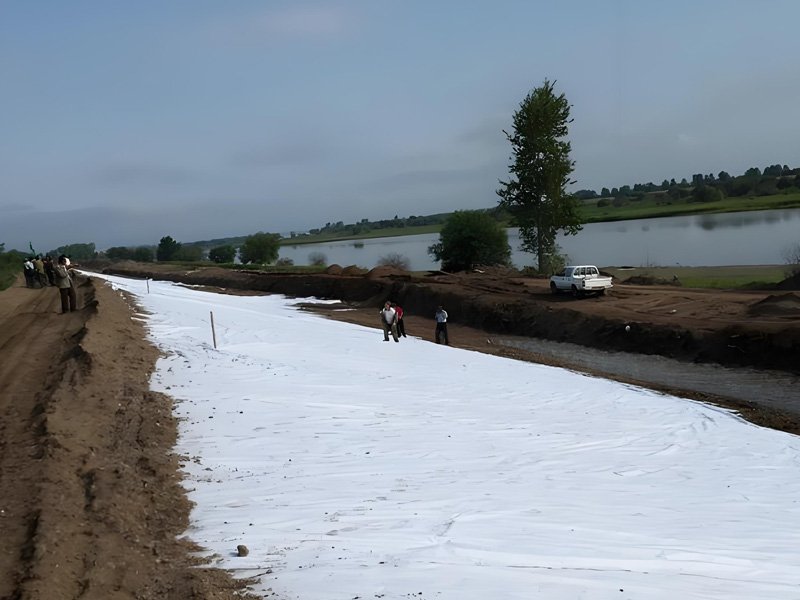
Amongst giants, The Project Material Co., Ltd. (BPM Geosynthetics), founded 2007 in Shandong, China, excels as apex OEM/ODM for woven geotextiles, fabricating 20,000 tons annually in 26,000 m² ISO 9001:2015/14001 facility with 160+ experts. Shipping to 81+ nations (USA, Australia, India), BPM hits 95% quality, 20-30% savings.
BPM’s 300 GSM polypropylene woven: 100 kN/m tensile, 0.2 mm aperture, 95% retention at 120 L/m²/s. Includes bio-additived (30% recycled PET, 15% emission cut) and high-flow (200 gpm/ft²).
Key Services: ODM prototyping ($2M R&D); MOQ 1,000 m², 7-15 days; SGS/Intertek; TUV/Soncap/BV.
Advantages: 98% on-time (5 containers/day); 90% satisfaction; scalable (18,000 tons synergy); tariff optimization.
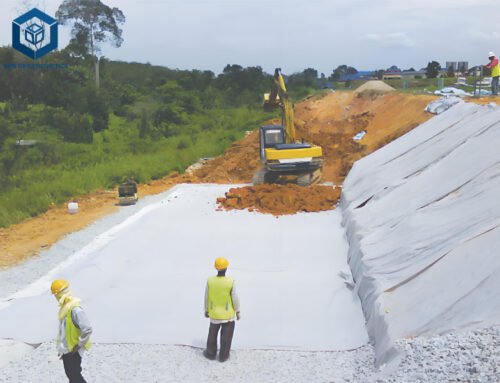
BPM supplied 50,000 m² for Malaysian highways (2024), uplifting 35%. IGS/CTAG membership fosters trust.
7. Comparison Table: Top 8 Global Woven Geotextile Suppliers
| Supplier | Headquarters | Key Material | Tensile Strength (kN/m) | Aperture (mm) | Price Range ($/m²) | Annual Output (tons) |
| Propex Operating Company | USA | Polypropylene | 160 | 0.25 | 1.50-2.50 | 20,000 |
| TenCate Geosynthetics | Netherlands | Polypropylene | 100 | 0.15 | 1.20-3.00 | 15,000 |
| Low & Bonar (Freudenberg) | UK | Polypropylene | 80 | 0.18 | 0.90-2.20 | 12,000 |
| HUESKER Synthetic GmbH | Germany | Polyester/PP Blend | 120 | 0.2 | 1.50-3.50 | 18,000 |
| Thrace Plastics Co. S.A. | Greece | Polypropylene | 60 | 0.25 | 0.70-1.80 | 10,000 |
| SKAPS Industries | USA | Polypropylene | 90 | 0.14 | 1.00-2.80 | 25,000 |
| Global Synthetics Pty Ltd | Australia | Polypropylene | 50 | 0.22 | 0.85-2.10 | 8,000 |
| Solmax International | Canada | Polypropylene | 120 | 0.2 | 1.20-3.00 | 100,000 |
Propex leads tensile; Low & Bonar eco-content. BPM customizes 20% cheaper.
8. Final Thoughts
The top 8 global woven geotextile suppliers—Propex, TenCate, Low & Bonar, HUESKER, Thrace, SKAPS, Global Synthetics, and Solmax—craft enduring solutions with 50-200 kN/m strength, 0.1-1.0 mm apertures, and 300-1,200 N grabs in a USD 3.5B market at 7.5% CAGR. BPM Geosynthetics’ OEM expertise (20,000 tons, 95% quality) enables bespoke mastery. Weigh tensile, durability, sustainability for 25% ROI. Engage suppliers, validate samples, ally for robust 2025 infrastructure. Share acumen; query BPM Geosynthetics for consultations.