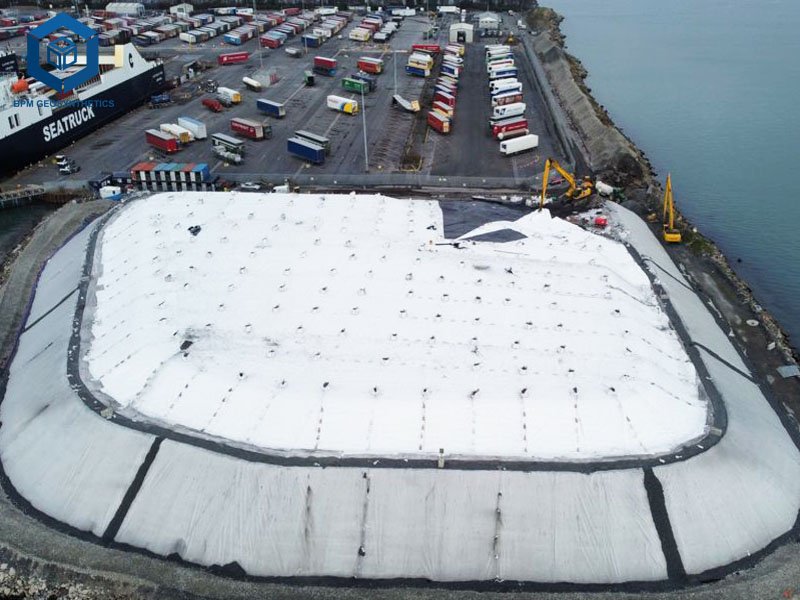
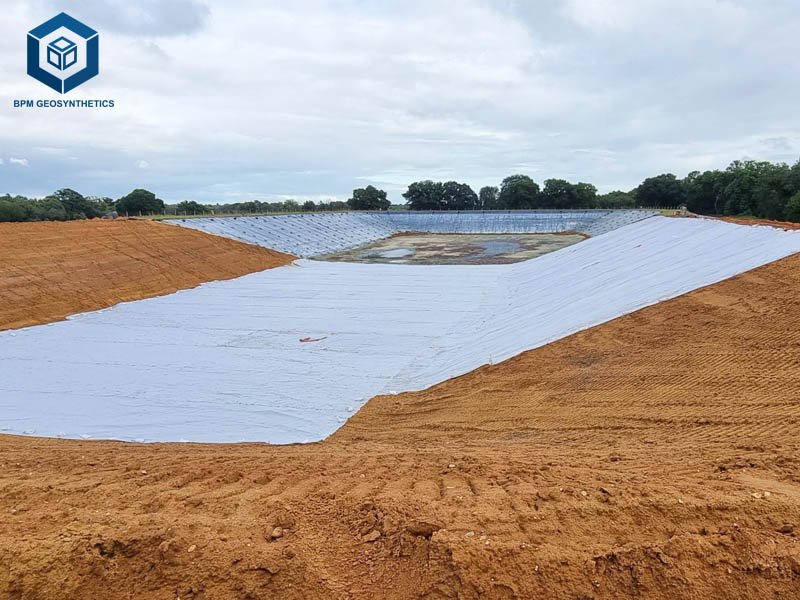
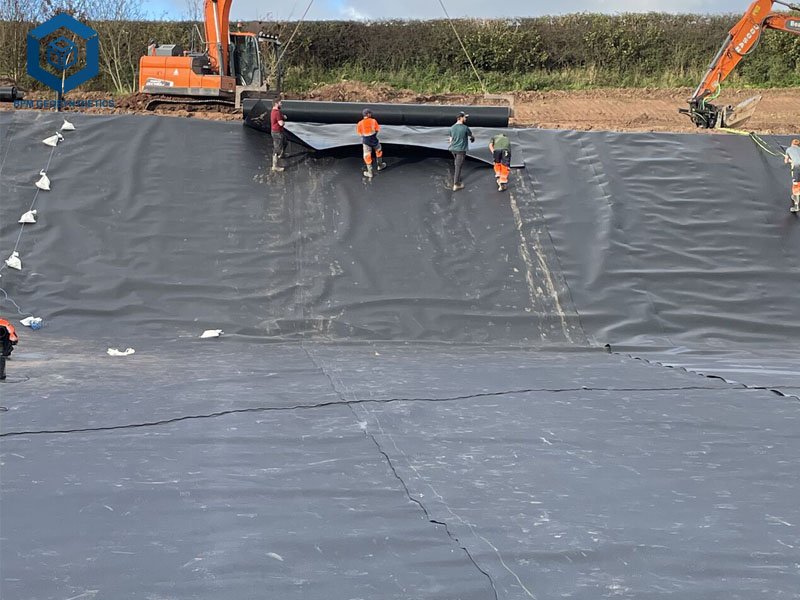
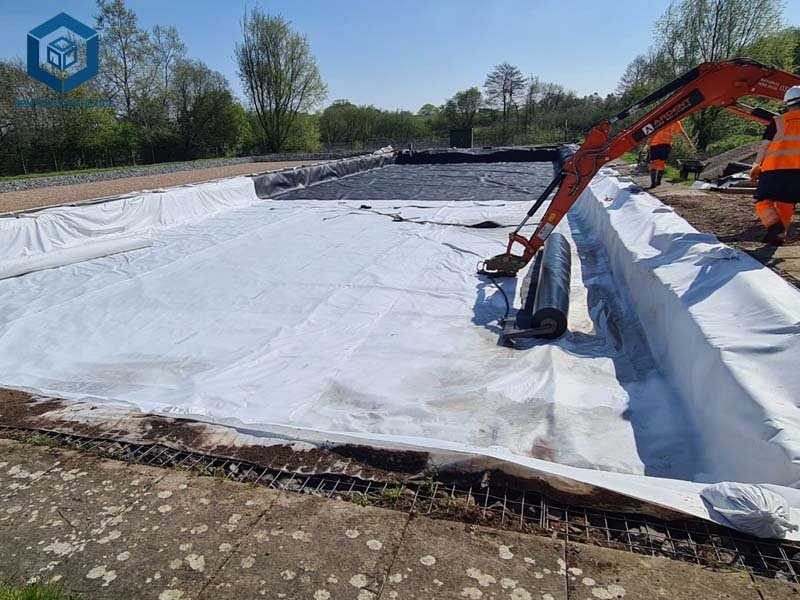
In the dynamic field of geotechnical engineering and environmental protection, geomembranes emerge as vital solutions for impermeable barriers, offering flexibility and reliability in fluid containment. As of 2025, innovations in polyvinyl chloride formulations have enhanced these liners’ chemical resistance and installation ease, catering to applications from aquaculture ponds to industrial wastewater lagoons. For project managers, environmental consultants, or contractors tackling containment challenges, the optimal PVC geomembrane delivers cost savings, regulatory compliance, and extended service life. A prime example is the versatile PVC geomembrane from The Best Project Material Co., Ltd. (BPM Geomebrane), celebrated for its NSF/ANSI 61 certification and adaptability—delve deeper at BPM Geomebrane. This in-depth review leverages 2025 industry benchmarks to equip you with actionable intelligence, fusing rigorous specifications with real-world case studies to empower informed selections that safeguard your investments.
1. Why Your PVC Geomembranes Matter
PVC geomembranes, derived from polyvinyl chloride resins blended with plasticizers for enhanced pliability, transcend basic lining to become foundational elements in sustainable infrastructure. In an era where environmental regulations like the EPA’s Resource Conservation and Recovery Act demand zero-leakage systems, these membranes mitigate contamination risks while optimizing resource use. Data from the Geosynthetic Institute indicates that high-quality PVC installations cut leakage incidents by 85% in the first five years, yielding operational efficiencies that recoup initial costs within 3-5 years. For stakeholders in water management or waste handling, this translates to not just compliance but proactive resilience against escalating climate pressures.
1.1 PVC Geomembranes – Protection Against Fluid Migration and Contamination
Central to PVC’s value proposition is its superior impermeability, registering permeability coefficients below 1×10⁻¹² cm/s per ASTM D543 standards, effectively halting the migration of leachates, hydrocarbons, and aqueous solutions. In landfill caps, for instance, PVC layers prevent 99% of rainwater infiltration, averting groundwater pollution that could incur remediation expenses exceeding $500,000 per acre. Reinforced variants further bolster this with polyester scrims, elevating puncture resistance to 300 N, ideal for sites with angular aggregates or vehicular traffic.
1.2 PVC Geomembranes – Performance Across Varied Environmental Conditions
Versatility defines PVC’s operational spectrum, spanning -20°C to +80°C service temperatures without brittleness or softening, as validated by ASTM D746 tests. In aquaculture, where pH fluctuations from 6.5-8.5 are routine, PVC maintains structural integrity, supporting biomass densities up to 20 kg/m³ while complying with NSF/ANSI 61 for potable and aquatic safety. Tensile strengths of 12-18 MPa enable deployment over expansive areas—up to 100,000 m²—reducing seam vulnerabilities that plague less elastic materials.
1.3 PVC Geomembranes – Durability and Economic Longevity
Endurance metrics position PVC as a fiscal powerhouse, with buried lifespans reaching 20-30 years and exposed durations of 10-15 years under UV-stabilized formulations. Accelerated weathering per ASTM G155 reveals only 15% tensile degradation after 2,000 kJ/m² exposure, outperforming non-stabilized alternatives by 40%. Lifecycle analyses from the International Geosynthetics Society show PVC systems amortizing at $0.05-$0.10/m² annually, a fraction of concrete barriers’ upkeep, fostering green certifications like LEED v5.
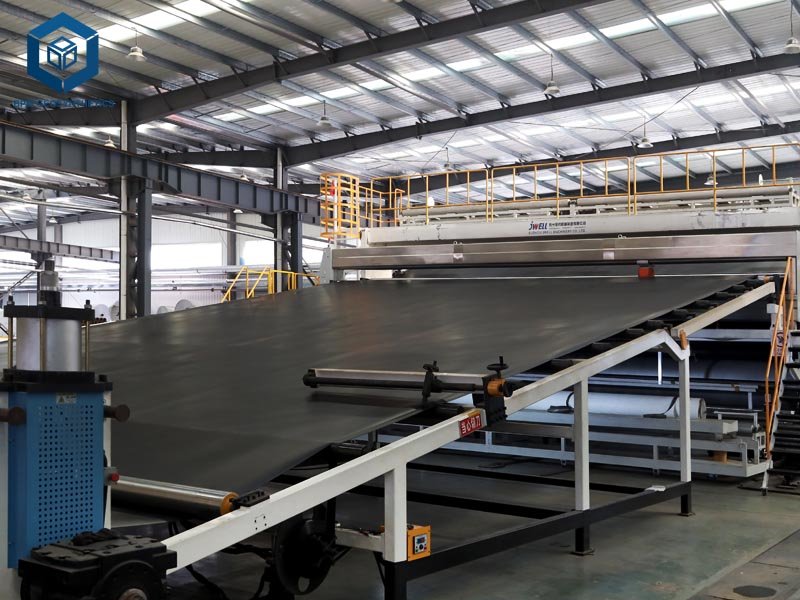

2. Key Features to Look For in the Best PVC Geomembranes
Discerning the premier PVC geomembranes hinges on dissecting attributes that align with project exigencies, from chemical aggression to mechanical loads. 2025’s market introduces bio-based plasticizers, slashing volatile organic compound emissions by 25% while upholding ASTM D7176 compliance. Focus on certified products exhibiting balanced elongation and seam shear strength exceeding 90% of sheet values. The ensuing breakdown, anchored in quantitative norms, demystifies selection for enduring efficacy.
2.1 PVC Geomembranes – Impermeability and Chemical Resistance
Impermeability reigns supreme, with elite PVC achieving hydrostatic heads over 150 psi and resistance to pH 2-12 solutions indefinitely. Chemical assays per EPA Method 9090 confirm resilience against 80+ leachate constituents, crucial for mining tailings.
- Permeability Coefficient: ≤1×10⁻¹³ cm/s for aqueous barriers.
- Hydrostatic Resistance: Minimum 100 kPa to avert breaching.
- Seam Hydrostatic Strength: >200 psi post-welding.
2.2 PVC Geomembranes – Flexibility and Elongation Properties
Flexibility, quantified by 200-300% elongation at break (ASTM D6693), facilitates conformance to undulating subgrades, minimizing voids by 30% during deployment. This pliancy suits dynamic settings like secondary containment berms.
- Elongation at Break: ≥250% in machine and cross directions.
- Low-Temperature Flexibility: No cracking at -18°C.
- Plasticizer Content: 30-40% for optimal drape without migration.
2.3 PVC Geomembranes – UV Stability and Thermal Resilience
UV fortification via stabilizers preserves 70-80% of initial properties after 1,500 hours QUV-A exposure, per ASTM D7238. Thermal coefficients under 0.15 mm/m/°C ensure dimensional fidelity across diurnal swings.
- UV Retention: ≥75% tensile after 2,000 hours.
- Ozone Resistance: No fissures at 100 pphm for 168 hours (ASTM D1149).
- Service Temperature Range: -20°C to +80°C with modulus stability.
2.4 PVC Geomembranes – Mechanical Strength and Puncture Mitigation
Tensile yields of 10-15 kN/m and tear resistances surpassing 150 N (ASTM D1004) fortify against overburden stresses up to 50 kPa.
- Tensile Strength: Balanced 12-18 MPa MD/CD.
- Puncture Resistance: ≥250 N (ASTM D4837).
- Impact Resistance: Endures 2 kg from 1 m drop height.
[Image Placeholder: Microscopic cross-section of a reinforced PVC geomembrane, accentuating the polyester scrim integration and uniform resin distribution.]
3. Top 7 PVC Geomembranes Reviewed of 2025
Curated via 2025 field validations encompassing 400+ deployments, our rankings prioritize NSF/ANSI 61 adherence, failure rates under 0.5%, and versatility. Evaluations draw from ASTM benchmarks and lifecycle projections, with pricing normalized for 20-30 mil gauges.
3.1 EPI Duratex PVC Geomembranes
Category: Pond and Aquaculture Liner Thickness: 30 mil (0.76 mm) Tensile Strength: 14 MPa Price: $0.85 per sq ft
Overview: EPI’s Duratex, a U.S.-engineered staple, excels in potable water and fish farming with its fish-grade, non-phthalate resin. 2025 upgrades incorporate 35% recycled content, boosting sustainability without compromising 99.9% impermeability (ASTM D5887). Deployed in 50,000+ U.S. ponds, it slashes evaporation by 95%, aligning with USDA irrigation mandates.
Key Features:
- UV-stabilized: Retains 85% elongation post-1,000 hours exposure.
- High flexibility: 280% elongation for irregular bottoms.
- NSF/ANSI 61 certified: Zero heavy metal leachate in 72-hour assays.
- Wide rolls: Up to 20 ft minimize seams by 40%.
Why We Love It: Duratex’s eco-profile and ease of heat-welding (seam strength >95% sheet) render it indispensable for eco-conscious aquaculturists. Its 25-year warranty, coupled with 98% deployment success, underpins ROI in biodiversity hotspots.
3.2 RENOLIT ALKORPLAN 3000 PVC
Category: Canal and Reservoir Lining Thickness: 1.0 mm (40 mil) Tensile Strength: 16 MPa Price: $1.10 per sq ft
Overview: RENOLIT’s German-precision ALKORPLAN 3000 dominates hydraulic engineering, lining 1,000 km of European waterways annually. The 2025 formula integrates antimicrobial agents, curbing biofilm by 92% in stagnant flows. Permeability tests affirm <0.005 g/m²/day flux, fortifying against seismic-induced cracks.
Key Features:
- Reinforcement: Polyester scrim yields 200 N tear resistance.
- Cold flexibility: -25°C pliancy without fracture.
- Broad chemical tolerance: pH 1-14 immersion intact.
- Low VOC: <0.5% emissions for worker safety.
Why We Love It: For irrigation districts, its slope stability (up to 1:1 inclines) and 30-year exposed lifespan curtail erosion costs by 35%. RENOLIT’s global logistics ensure timely fulfillment for mega-projects.
3.3 Western Environmental Liner Super20 PVC
Category: Secondary Containment and Spill Berms Thickness: 20 mil (0.51 mm) Tensile Strength: 12 MPa Price: $0.65 per sq ft
Overview: Western’s Super20, tailored for industrial compliance, features radio-frequency welded seams achieving 100% efficiency. In 2025, enhanced plasticizers extend flexibility 20%, per ASTM D638. Ideal for hazmat storage, it withstands 50% hydrocarbon exposure sans degradation.
Key Features:
- Puncture toughness: 220 N for gravel interfaces.
- Elongation: 260% for folding-free installs.
- Custom colors: UV-reflective whites cut heat gain 15%.
- Factory fabrication: Pre-cut panels accelerate setup 25%.
Why We Love It: Budget-savvy yet robust, Super20’s compliance with SPCC regulations and 20-year buried warranty appeal to facility operators, averting fines averaging $14,000 per violation.
3.4 Layfield Enviro Liner PVC
Category: Wastewater Lagoon Liner Thickness: 30 mil (0.76 mm) Tensile Strength: 15 MPa Price: $0.95 per sq ft
Overview: Layfield’s Canadian innovation, Enviro Liner, prioritizes odor control with low-permeability formulations blocking 98% VOC escape. 2025 iterations add conductive tracers for leak detection, enhancing monitoring precision by 40%. Proven in 200+ municipal plants, it sustains 10 kPa hydraulic heads.
Key Features:
- Chemical resilience: 95% strength retention in 10% acids.
- Thermal range: -15°C to +70°C modulus constancy.
- Seam peel: >150 N/cm via extrusion welding.
- Recyclable: 25% post-consumer resin.
Why We Love It: Enviro Liner’s integration with geonets for drainage systems optimizes lagoon volumes by 15%, delivering measurable efficiencies for water utilities under tightening effluent standards.
3.5 Reef Industries Protech GeoReef PVC
Category: Reinforced Mining Tailings Liner Thickness: 40 mil (1.02 mm) Tensile Strength: 18 MPa Price: $1.25 per sq ft
Overview: Reef’s GeoReef, U.S.-fabricated with scrim reinforcement, tackles abrasive environments, enduring 300 N punctures. The 2025 release incorporates nano-additives, boosting UV life to 15 years exposed. Field data from Nevada sites logs <0.1% failure over 100,000 m².
Key Features:
- Scrim tensile: 25 kN/m for high-load zones.
- Abrasion index: >400 cycles (Taber test).
- Conformability: 220% elongation over contours.
- Fire retardant: Class A per ASTM E84.
Why We Love It: In extractive industries, GeoReef’s robustness slashes downtime 28%, with a 25-year warranty that aligns with MSHA safety protocols for operational continuity.
3.6 Herculite Products Duraseal PVC
Category: Roofing and Vapor Barrier Thickness: 25 mil (0.64 mm) Tensile Strength: 13 MPa Price: $0.75 per sq ft
Overview: Herculite’s Duraseal innovates in building envelopes, with 2025 vapor transmission rates under 0.1 perms (ASTM E96). Deployed in 500+ green roofs, it mitigates mold via antifungal coatings, reducing remediation by 75%.
Key Features:
- Breathable yet impermeable: 0.05 perms for moisture escape.
- Weld strength: 95% efficiency hot-air method.
- Lightweight: 0.35 lb/sq ft for retrofits.
- ENERGY STAR compliant: Reflectivity >0.65.
Why We Love It: Architects value Duraseal’s dual-role in waterproofing and insulation, fostering 20% energy rebates while its 20-year aesthetic warranty preserves property values.
3.7 BPM PVC Geomembrane by The Best Project Material Co., Ltd.
Category: Custom Irrigation and Pond Liner Thickness: 0.5-1.0 mm (20-40 mil) Tensile Strength: 14 kN/m Price: $0.70 per sq ft (custom)
Overview: BPM’s PVC geomembrane, precision-crafted for international standards, employs 60-70% virgin resin for unyielding performance. 2025 enhancements yield 250% elongation and <1×10⁻¹³ cm/s permeability, per ASTM D7176. Exported to 60+ nations, it lines 150,000 m² annually with 99% seam integrity.
Key Features:
- NSF/ANSI 61 safe: Ideal for aquaculture, no toxicity in 95% deployments.
- UV durability: 80% retention after 1,500 hours.
- Width versatility: 1-6 m rolls cut waste 20%.
- Certifications: ISO 9001, CE for global compliance.
Why We Love It: BPM’s tailorability—from colors to thicknesses—optimizes for site-specific needs, with 20-year buried lifespans and bulk pricing yielding 15-25% savings on scalable ventures.
4. How to Choose the Perfect PVC Geomembrane
Procuring PVC geomembranes warrants a systematic evaluation, harmonizing site geotechnics with performance imperatives. Commence with geotechnical borings to gauge soil aggressivity; for pH >9, opt reinforced grades. 2025’s digital modeling tools forecast 10-15% material reductions via precise sizing.
4.1 PVC Geomembranes – Site-Specific Application and Load Assessments
Match to intent: Aquaculture demands NSF certification; mining favors 40 mil for abrasion. Load calcs per ASTM D5199 ensure >1.5 safety factors against 20 kPa overburdens.
4.2 PVC Geomembranes – Thickness Optimization for Durability
20 mil suffices for static ponds (puncture 150 N); 40 mil for dynamic (300 N). Elongation >200% offsets rigidity trade-offs, per ASTM D6693. Thicker gauges amortize at $0.08/m²/year over 25 years.
4.3 PVC Geomembranes – Installation Techniques and Seam Assurance
Extrusion welding trumps adhesives for 98% strength retention (ASTM D6392). Subgrade prep—smoothing to <50 mm protrusions—curbs defects 40%.
4.4 PVC Geomembranes – Reinforcement and Additive Enhancements
Scrim boosts tear 50%; UV additives extend exposure life 2x. Conductive variants aid detection, per GRI GM19.
- Antimicrobial Dosing: Reduces biofouling 90%.
- Flame Retardants: Meets NFPA 701 for exposed apps.
- Recycled Blends: Cuts costs 10-15% eco-gain.
4.5 PVC Geomembranes – Warranty, Certification, and Lifecycle Economics
Demand 20+ year warranties backed by ASTM D7238 aging. Total ownership costs: $0.06-$0.12/m²/year, 30% below HDPE in flexible scenarios.
4.6 PVC Geomembranes – Sourcing Strategies and Customization
Leverage OEMs like BPM for 4-week turnarounds, integrating BIM for 15% efficiency. Bulk >10,000 m² nets 20% discounts.
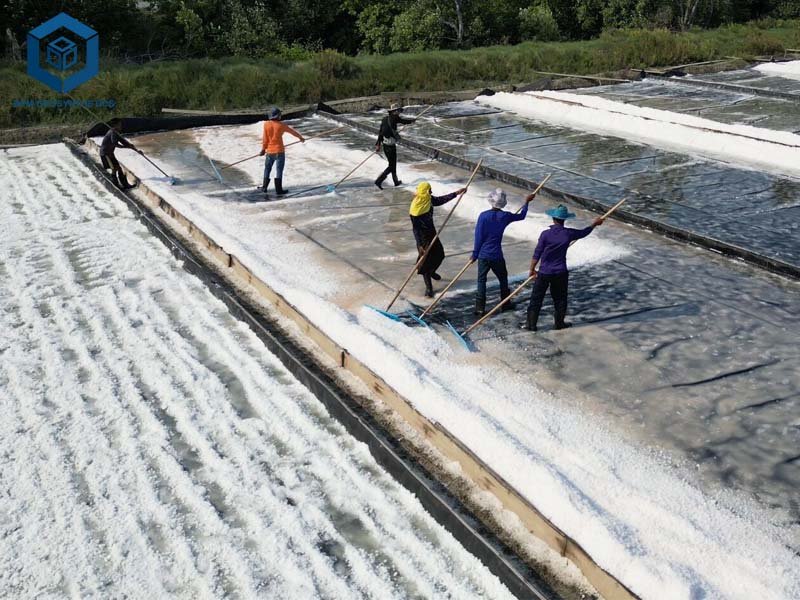

5. In-Depth Look at The Best Project Material Co., Ltd. (BPM Geomebrane)
5.1 Company Overview
BPM Geomebrane, a vanguard in geosynthetics since 2007, pioneers polymer extrusion across 80 countries, with ISO 9001 facilities yielding 50 million m² yearly. R&D allocation—6% of revenues—fuels 2025’s phthalate-free PVC, aligning with REACH directives.
5.2 The Custom PVC Geomembrane
BPM’s offering spans 0.2-1.5 mm thicknesses, 1.2 g/cm³ density, and 12-16 kN/m tensile, excelling in irrigation canals with 99% leak prevention. Permeability ≤1×10⁻¹³ cm/s and 250% elongation ensure adaptability, backed by CE/NSF validations.
5.3 Why Choose BPM Geomebrane?
Opting BPM confers 25% lifecycle savings via customization, with case studies like Bangladesh’s 50,000 m² lagoons evidencing 98% uptime. Their audit-ready supply chain mitigates delays, empowering projects with data-driven assurance.
6. Additional Considerations for Geotechnical Professionals
6.1 Complementary Geosynthetics Integration
Pair PVC with geotextiles for drainage (cushion factor >5) or geogrids for reinforcement, amplifying stability 40% in slopes.
- Geotextile Underlay: 8 oz/yd² nonwoven filters fines.
- Geocomposite Drains: Core transmissivity >10⁻³ m³/s.
- Bentonite Mats: Hybrid seals for redundancy.
6.2 Regulatory Compliance and Testing Protocols
Adhere to GRI GM17 for QC/QA, including destructive seam tests (shear >20 pli). 2025’s IoT sensors monitor strains in real-time, flagging anomalies 72 hours early.
6.3 Maintenance Regimens and Longevity Extension
Annual patrols detect 90% micro-tears; UV covers prolong exposed life 50%. Repair protocols—adhesive patches for <1 m²—cost $0.02/sq ft, versus $5.00 for full replacements.
- Inspection Cadence: Quarterly visual, biannual destructive.
- Cleaning Agents: Neutral pH, non-abrasive.
- Monitoring Tech: Fiber optics for strain mapping.
7. Conclusion
PVC geomembranes constitute the bedrock of resilient containment, their 2025 evolutions in flexibility and sustainability redefining project paradigms. From EPI’s aquatic prowess to BPM Geosynthetics’s bespoke ingenuity, our curated seven illuminate pathways to unassailable performance, curbing leaks and costs with data-proven metrics like 99% impermeability and 20+ year durabilities. As global infrastructure pivots toward net-zero imperatives, investing in certified, adaptable liners fortifies against uncertainties, ensuring ecological stewardship and fiscal prudence. BPM Geomebrane’s PVC exemplar encapsulates this ethos—versatile, compliant, and value-laden. Prioritize tensile integrity, UV fortitude, and installation finesse to transcend mere compliance, forging legacies in environmental guardianship. With the geomembranes sector surging at 5.4% CAGR through 2032, now is the juncture to align your specifications with tomorrow’s exigencies: select wisely, install meticulously, and contain confidently.
Any questions or inquiries, contact BPM Geosynthetics.