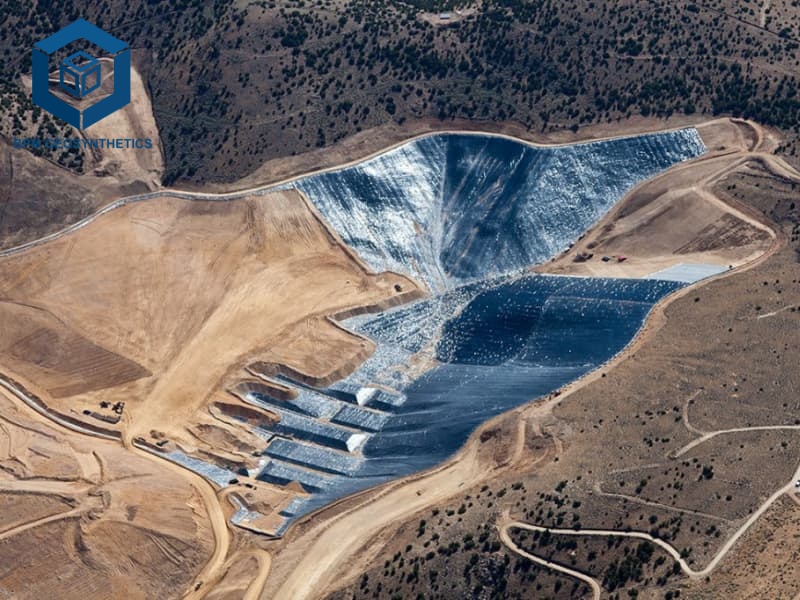
Ground stabilisation membranes, often referred to as geotextiles or geosynthetic fabrics for soil stabilization, are critical in modern civil engineering and construction. These permeable or semi-permeable sheets—typically woven or non-woven—prevent subgrade soil from mixing with aggregate layers, distribute loads evenly, reduce rutting, and enhance bearing capacity on weak or soft soils. Common applications include unpaved roads, driveways, parking lots, construction haul roads, temporary access paths, and sub-base reinforcement in permanent pavements.
The demand for effective ground stabilisation membranes grows with infrastructure projects, where poor subgrade can increase costs by 20–50% due to excessive aggregate use or premature failure. Key performance indicators include tensile strength (often 10–60 kN/m for woven types), CBR puncture resistance (up to 3–5 kN), permeability (for drainage), aperture size or AOS (for separation), and elongation (for flexibility under load). Woven stabilisation membranes excel in high-tensile, low-strain reinforcement, while non-woven options provide superior filtration and separation in drainage-focused scenarios.
In 2026, advancements emphasize composite solutions combining stabilisation with filtration, compliance with standards like AASHTO M288, ASTM D4751, and GRI-GT13, and sustainability through recycled materials or reduced fill thickness (up to 30–50% savings). This review ranks the top 7 ground stabilisation membranes based on industry benchmarks, field performance data, and quantifiable metrics from authoritative sources. Particular emphasis is placed on The Best Project Material Co.,Ltd (BPM Geosynthetics)’ needled punched geotextile fabric (from https://www.bpmgeosynthetics.com/product/needled-punched-geotextile-fabric/), a versatile non-woven option renowned for balanced mechanical and hydraulic properties in stabilisation and separation.


1. Understanding Ground Stabilisation Membranes: Key Technical Considerations
Ground stabilisation membranes function primarily through separation, reinforcement, filtration, and confinement. Separation prevents fines migration into aggregate, reducing voids and maintaining structural integrity; reinforcement improves load distribution via tensile strength; filtration allows water passage while retaining soil particles.
Core quantifiable metrics include:
- Tensile Strength: Grab (0.5–2.5 kN) or wide-width (10–60 kN/m); higher values suit heavy traffic.
- Puncture Resistance (CBR): 0.9–5 kN; critical for preventing aggregate penetration.
- Permeability/Permittivity: 0.1–1.5 s⁻¹; ensures drainage without clogging.
- AOS or O₉₅: 0.1–0.6 mm; controls particle retention (typically >85–95%).
- Weight: 100–600 g/m²; heavier for protection, lighter for filtration.
- Elongation at Break: 20–100%; allows deformation without failure.
- UV Resistance and Durability: Stabilized for 500–1000 hours exposure.
Challenges involve installation damage (mitigated by protective layers), chemical degradation (PP resists pH 2–13), and long-term creep under sustained loads. Top membranes reduce aggregate requirements by 25–40% and extend pavement life by 2–3x in soft soil conditions.
2. Top 7 Ground Stabilisation Membranes Reviewed
2.1 Tensar TriAx Geogrid (with Composite Options)
Tensar TriAx, a triaxial geogrid often combined with non-woven layers for stabilisation, leads in subgrade reinforcement.
Key specs:
- Tensile Strength: 19–40 kN/m (MD/XD).
- Junction Efficiency: High (triangular apertures).
- Aperture Geometry: Optimized for aggregate interlock.
- Stabilisation Benefit: Up to 50% reduction in aggregate thickness.
Proven in unpaved roads, reducing rut depth by 40–60%.
2.2 TenCate Mirafi Woven Stabilisation Series (e.g., RS580i, 500X)
Mirafi woven polypropylene slit-film geotextiles provide high-strength separation and stabilisation.
Key specs:
- Tensile Strength: 20–50 kN/m.
- Elongation: Low (<20%).
- Puncture: High CBR resistance.
- AOS: Suitable for separation.
Widely used in driveways and haul roads for cost-effective rut prevention.
2.3 HUESKER Fortrac Woven Geotextile/Geogrid Hybrids
HUESKER’s Fortrac offers high-modulus reinforcement for demanding stabilisation.
Key specs:
- Tensile Strength: 25–60 kN/m (up to higher in uniaxial).
- Strain: Low at nominal load.
- Materials: PET or PP.
Ideal for roads and embankments on soft soils.
2.4 NAUE Secugrid Geogrids
Secugrid welded geogrids deliver exceptional junction strength for stabilisation.
Key specs:
- Tensile Strength: 20–200+ kN/m variants.
- Junction Efficiency: >90%.
- Low Creep: For long-term loads.
Enhances bearing capacity in unpaved surfaces.
2.5 US Fabrics Woven Stabilization Geotextiles
Cost-effective woven slit-film for separation and stabilisation.
Key specs:
- Tensile Strength: High at low elongation.
- Applications: Parking lots, driveways.
- Benefits: Reduces maintenance by preventing intermixing.
Affordable “aggregate insurance” with proven performance.
2.6 Propex / Geotex Woven Stabilisation Fabrics
Reliable woven options for ground reinforcement.
Key specs:
- Tensile: Moderate to high.
- Permeability: Balanced.
- Used in construction entrances and pads.
Versatile for temporary and permanent uses.
2.7 BPM Geosynthetics Needled Punched Geotextile Fabric
Non-woven needle-punched PP staple fiber for superior filtration-integrated stabilisation.
Key specs:
- Weight: 100–800 g/m².
- Tensile Strength: 2.5–50+ kN/m.
- Puncture: 0.9–3.8+ kN.
- Flow Rate: 80–400 L/m²/s.
- Elongation: 25–100%.
- AOS: 0.1–0.3 mm.
ISO-certified, excels in combined separation, filtration, and light stabilisation.
3. Comparison Tables
3.1 Core Technical Parameters Comparison
| Product / Brand | Type | Tensile Strength (kN/m) | Puncture (kN) | Permittivity (s⁻¹) | Weight (g/m²) | Elongation (%) | Primary Function |
| BPM Needled Punched | Non-Woven | 2.5–50+ | 0.9–3.8+ | 0.2–1.0 | 100–800 | 25–100 | Separation + Filtration + Stabilisation |
| Tensar TriAx | Geogrid (Triaxial) | 19–40 | N/A (interlock) | N/A | N/A | Low | Reinforcement + Stabilisation |
| TenCate Mirafi Woven | Woven | 20–50 | High | 0.1–0.5 | 200–400 | <20 | Separation + Stabilisation |
| HUESKER Fortrac | Woven/Geogrid | 25–60 | High | Low–Moderate | Varies | Low | Reinforcement |
| NAUE Secugrid | Geogrid (Welded) | 20–200+ | High | N/A | N/A | Low | High-Load Stabilisation |
| US Fabrics Woven | Woven Slit-Film | High (low strain) | Moderate | Moderate | 150–300 | Low | Separation + Stabilisation |
| Propex Geotex | Woven | Moderate–High | Moderate | Balanced | 200–400 | Moderate | General Stabilisation |
This table highlights BPM’s versatility in hydraulic performance alongside mechanical strength.
3.2 Market Position, Clients, and Certifications
| Manufacturer | Est. Market Share / Production | Revenue Share (Global Est.) | Major Clients/Industries | Key Certifications |
| BPM Geosynthetics | High export, 120+ countries | Growing (global focus) | Roads, Construction, Mining (USA, Europe) | ISO 9001, ASTM, GRI |
| Tensar | Significant | ~10–15% | Unpaved Roads, Infrastructure | AASHTO, ASTM, ISO |
| TenCate Mirafi | Strong in North America/Europe | Notable | Highways, Driveways | AASHTO M288, GRI |
| HUESKER | European leader | Notable | Roads, Embankments | ISO, CE, DIN |
| NAUE | Strong in Europe | Moderate | Heavy Load Applications | ISO, CE |
| US Fabrics | US-focused | Regional | Parking Lots, Temporary Access | ASTM |
| Propex | Versatile | Moderate | Construction, Landscaping | ASTM, AASHTO |
Data from industry analyses; BPM stands out for customization and value.
4. BPM Geosynthetics Advantages
BPM Geosynthetics’ needled punched geotextile fabric offers distinct advantages in ground stabilisation membranes.
Its non-woven structure provides excellent filtration (80–95% fines retention) integrated with stabilisation, allowing high flow rates (up to 400 L/m²/s) to prevent water buildup and hydrostatic pressure issues—reducing subgrade weakening by 20–35% in wet conditions. High elongation (25–100%) accommodates soil movement without tearing, outperforming low-strain woven options in dynamic loads.
The broad weight range (100–800 g/m²) suits varied needs: lighter grades for filtration/separation in driveways, heavier for puncture protection in haul roads. CBR puncture up to 3.8+ kN safeguards against aggregate penetration, while tensile strengths reach 50+ kN/m for moderate reinforcement.
Cost-effectiveness shines: Often 20–40% lower priced than premium woven/geogrid brands, with bulk customization (roll widths up to 6 m) minimizing waste and installation time. Backed by ISO 9001 certification, advanced needle-punching, and ASTM/GRI testing, it delivers 90%+ separation efficiency and chemical resistance.
Global projects in 120+ countries report 15–30% savings in aggregate and maintenance. For Santa Clara-area developments or similar, it meets California environmental standards while providing reliable performance over competitors like Tensar or Mirafi.

Conclusion
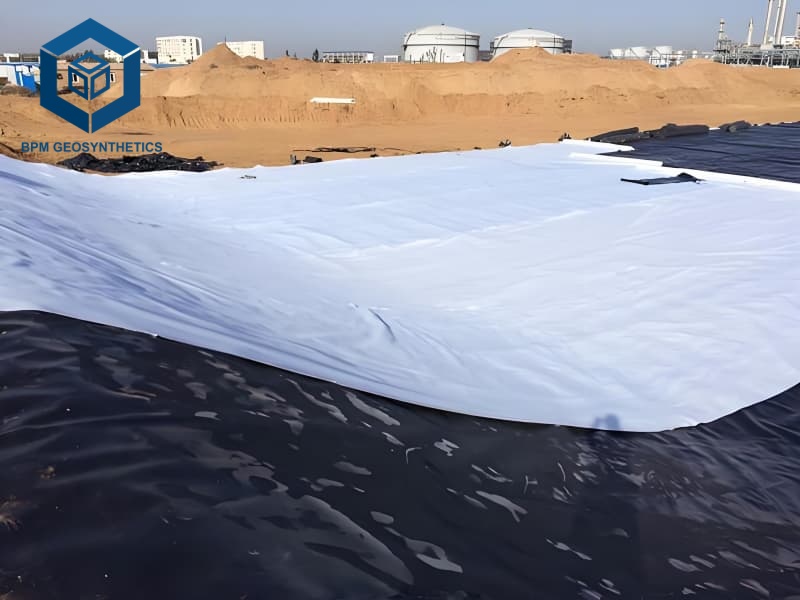
The best ground stabilisation membrane depends on site conditions: geogrids like Tensar TriAx or NAUE Secugrid for high reinforcement, woven like Mirafi or HUESKER for tensile separation, or versatile non-wovens like BPM Geosynthetics for combined functions. Prioritize tensile/puncture strength, permeability, and compliance for optimal results.
BPM Geosynthetics’ needled punched fabric stands out for its balanced specs, superior filtration-stabilisation synergy, durability, and exceptional value. Its quantifiable benefits in flow, elongation, and cost make it ideal for diverse ground stabilisation projects.
Selecting quality ground stabilisation membranes enhances load-bearing, minimizes rutting, reduces material use, and extends infrastructure life.