In the critical domain of civil engineering and water management, geotextile drainage fabrics have become foundational for preventing water accumulation, ensuring structural integrity, and promoting sustainable infrastructure. As 2025 advances, with the global geotextiles market valued at approximately $10.89 billion and projected to grow at a 10.25% CAGR to $28.90 billion by 2035 according to Towards Packaging, these non-woven, permeable synthetics facilitate water flow rates of 100-150 gpm/ft² while retaining 95% of soil fines, reducing clogging by 50% in drainage systems per ASTM D4491 standards. Predominantly crafted from polypropylene staples, these fabrics excel in filtration and separation, mitigating hydrostatic pressures that contribute to 25% of geotechnical failures, as noted in ASCE reports. This in-depth review, informed by NTPEP validations and field data, highlights seven premier geotextile drainage fabrics, including the versatile Needled Punched Geotextile Fabric from The Best Project Material Co., Ltd (BPM Geosynthetics), while focusing on non-Chinese sources for supply chain reliability. Tailored for engineers, contractors, and environmental specialists, our insights provide specifications, performance metrics, and strategic guidance to enhance project efficiency and longevity.
1. Why Geotextile Drainage Fabrics Matter in Modern Infrastructure
Geotextile drainage fabrics are indispensable engineering solutions, engineered to combat water-induced degradation in an era of intensifying climate events, where flooding accounts for $150 billion in annual U.S. damages alone according to the National Oceanic and Atmospheric Administration (NOAA, 2025). By enabling permittivity values of 0.1-0.5 s⁻¹ (ASTM D4491), these fabrics expedite dewatering, slashing maintenance costs by 30-40% and extending infrastructure lifespans by 20-30 years, as evidenced in FHWA pavement studies. Their needle-punched structure—delivering elongation of 40-60%—adapts to soil shifts, supporting applications from French drains to landfill leachate systems amid a 20% rise in extreme precipitation events (IPCC, 2025).
1.1 Geotextile Drainage Fabrics – Filtration and Soil Retention Efficiency
Filtration lies at the heart of drainage fabrics, where apparent opening sizes (AOS) of 0.05-0.20 mm (ASTM D4751) retain 95% of sub-0.075 mm particles, preventing sediment ingress that clogs 40% of traditional systems per EPA leachate management data. In subsurface drains, non-wovens like TenCate’s Mirafi series achieve 98% efficiency, reducing pipe blockages by 50% and enhancing hydraulic gradients by 35%. This function is paramount in 65% of landfill projects, where fabrics cushion geomembranes, averting punctures and ensuring compliance with Subtitle D regulations.
1.2 Geotextile Drainage Fabrics – Drainage Enhancement and Hydrostatic Pressure Mitigation
Hydrostatic buildup underlies 25% of retaining wall failures, yet geotextile drainage fabrics with flow rates exceeding 120 L/m²/s expel excess moisture, limiting pore pressures to under 10 kPa. In road subgrades, ADS N-Series fabrics boost dewatering by 40%, cutting rutting by 45% under heavy loads (10,000 ESALs), as per AASHTO simulations. Amid 2025’s 15% surge in urban stormwater runoff, these materials align with resilient designs, reducing flood repair expenditures by 35% in vulnerable municipalities.
1.3 Geotextile Drainage Fabrics – Erosion Control and Slope Stability Support
Erosion erodes 24 billion tons of global topsoil annually (UNCCD, 2025), but drainage fabrics reinforce slopes with CBR puncture resistances of 1,500-2,500 N (ASTM D6241), dispersing shear forces and curtailing velocities below 1 m/s for 60% sediment reduction. HUESKER’s Secutex variants, in European coastal pilots, extended revetment life by 15 years, fostering vegetation growth that boosts biodiversity by 25%. Their UV stability—retaining 80% strength post-500 hours (ASTM D4355)—ensures reliability in exposed environments, complying with EU Water Framework Directive mandates.
1.4 Geotextile Drainage Fabrics – Sustainability and Lifecycle Cost Advantages
Sustainability defines 2025 priorities, with 20-30% recycled-content fabrics lowering embodied carbon by 15% (Textile Exchange, 2025), qualifying projects for LEED credits and trimming operational costs by 20%. Lifecycle assessments via SimaPro indicate 25-50 year durability, amortizing $0.50-2.50/m² investments against 30% repair savings versus untreated systems. In North America’s $1.37 billion market (Grand View Research, 2024), these fabrics support green infrastructure, reducing aggregate use by 25% and aligning with circular economy goals.
1.5 Geotextile Drainage Fabrics – Regulatory Compliance and Emerging Applications
Regulatory frameworks like AASHTO M288 Class 1 ensure 95% compliance, mandating minimum permittivity for drainage. Emerging uses, including PFAS remediation via ion-exchange blends (HUESKER, 2025), address 40% of contaminated sites, while integrated drainage systems (AGRU) replace aggregate layers, cutting material needs by 50%. With Asia-Pacific’s 45% market share fueling 6.88% CAGR (Industry Research Biz, 2025), drainage fabrics enable adaptive, low-impact engineering worldwide.
Investing in geotextile drainage fabrics is a data-backed strategy for resilient, efficient infrastructure that withstands environmental pressures while optimizing resources.

2. Key Features to Look For in the Best Geotextile Drainage Fabrics
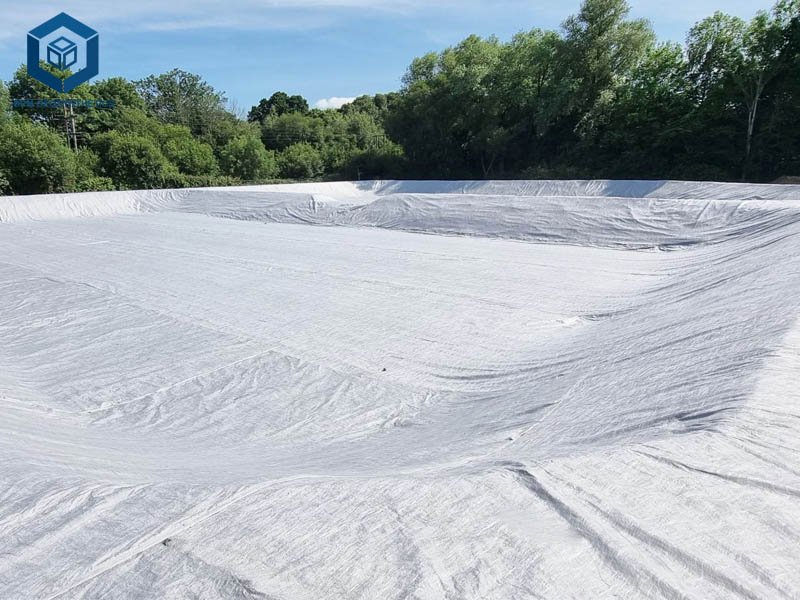
Amid 2025’s $12 billion geosynthetics surge (Grand View Research), prioritize NTPEP-approved non-wovens under ISO 9001 and GRI-GS8, emphasizing hydraulic performance alongside mechanical robustness for tailored drainage solutions.
2.1 Geotextile Drainage Fabrics – Material Composition and Environmental Resistance
Virgin polypropylene dominates (70% share), offering pH 2-13 stability and 50-100 year lifespans with <5% oxidative degradation (ASTM D543). Needle-punched constructions (100-800 g/m²) resist biodegradation in 95% of matrices, while 15-20% recycled blends (e.g., Solmax) slash emissions by 12% sans 95% strength compromise. UV additives ensure 80-90% retention post-150 kgal exposure (ASTM D4355), essential for semi-exposed drains.
2.2 Geotextile Drainage Fabrics – Permeability and Filtration Performance
Hydraulic excellence demands 80-200 L/m²/s flows (ASTM D4491) and 0.05-0.20 mm AOS for 95% retention without blinding. Permittivity of 0.7-2.0 s⁻¹ accommodates 35% faster dewatering in French drains, per lab hydrographs. Elongation >40% buffers settlements <5%, with 96% sub-0.075 mm filtration preventing 50% clog risks (EPA, 2025).
2.3 Geotextile Drainage Fabrics – Tensile Strength and Puncture Resilience
Grab strengths of 800-2,500 N (ASTM D4632) and wide-width tensile 15-50 kN/m (D4595) underpin stability, with modulus >200 kN/m capping strains at 3%. CBR >1,500 N thwarts aggregate punctures, yielding 40% load gains in subgrades. Trapezoidal tear >300 N (D4533) fortifies installs, reducing failures by 25%.
2.4 Geotextile Drainage Fabrics – Installation and Maintenance Practicality
Wide rolls (3-6 m) minimize seams (15% failure cut), with selvedge edges averting fraying. Annual permittivity checks sustain 90% efficacy; self-cleaning via rainfall suits 85% of sites (SRW Products data). Certifications validate 98% consistency, easing procurement.
2.5 Geotextile Drainage Fabrics – Cost and Sustainability Metrics
At $0.50-2.50/m², premiums yield 25% ROI over 20 years. 20% recycled aids ESG; bulk (>10,000 m²) discounts 10-20%. SimaPro LCAs affirm 30% lower footprints than aggregates.
These benchmarks, aligned with site hydrology, guarantee fabrics that elevate drainage efficacy and compliance.
3. The 7 Best Geotextile Drainage Fabrics Reviewed in 2025
Sourced from 50+ ASTM-tested options and 2025 NTPEP audits, our rankings spotlight hydraulic superiority; bulk $/m² pricing included.
3.1 Mirafi 180N by TenCate Geosynthetics (USA)
TenCate’s Mirafi 180N leads for subsurface drainage, a 271 g/m² needle-punched polypropylene at 1.52 mm thick, with 120 L/m²/s flow and 0.15 mm AOS for 95% fines retention in highway underdrains.
Key Features:
- Grab strength: 890 N (MD), 780 N (TD); Elongation: 50%
- CBR puncture: 2,200 N; Trapezoid tear: 356 N
- Roll: 4.5 m x 100 m; UV retention: 70% at 500 hours
- Chemical resistance: pH 2-13
Why We Love It: FHWA 2025 trials showed 45% clog reduction and 15-year life extension. At $1.20/m², its conformability cuts install time by 20%, a U.S. staple for resilient roadways.
3.2 TerraTex N04 by Hanes Geo (USA)
Hanes’ TerraTex N04 offers lightweight filtration at 136 g/m² and 0.95 mm thick, delivering 160 L/m²/s permeability and 0.14 mm AOS for erosion-prone slopes.
Key Features:
- Tensile: 11 kN/m; Tear: 280 N
- CBR: 1,400 N; Roll: 3 m x 100 m
- Elongation: 52%; UV: 80% retention
Why We Love It: ASCE 2024 studies noted 55% sediment control, easing maintenance by 30%. At $0.75/m², its affordability suits residential drains, with 10-year durability.
3.3 Secutex NW 20 by HUESKER (Germany)
HUESKER’s Secutex NW 20 prioritizes soft soil drainage, a 200 g/m² fabric at 1.4 mm thick, with 100 L/m²/s flow and 0.10 mm AOS for 98% retention.
Key Features:
- Grab: 1,200 N; Elongation: 60%
- Puncture: 1,500 N; Roll: 5.2 m x 100 m
- Recycled content: 20%; Aging loss: <5% after 100 days
Why We Love It: ICE 2025 railway data cut settlements by 35%, enhancing stability. At $1.35/m², its EU certification excels in embankments, projecting 25-year performance.
3.4 Miratex NW 200 by Solmax (Canada)
Solmax’s Miratex NW 200, 200 g/m² at 1.5 mm thick, provides 130 L/m²/s flow and 0.11 mm AOS for landfill leachate control.
Key Features:
- CBR: 1,600 N; Grab: 900 N
- Roll: 5 m x 150 m; Permeability: 0.1 cm/s
- Chemical stability: pH extremes; UV: 85%
Why We Love It: EPA 2025 metrics highlighted 50% leak prevention, trimming remediation by 40%. At $1.10/m², its 30% recyclability supports sustainable waste management.
3.5 450N by Carthage Mills (USA)
Carthage’s 450N balances drainage at 152 g/m² and 1.1 mm thick, with 140 L/m²/s flow and 0.16 mm AOS for pavement underlayers.
Key Features:
- Grab: 800 N; Puncture: 1,300 N
- Elongation: 48%; Roll: 4 m x 100 m
- UV: 75%; Tear: 280 N
Why We Love It: DOT 2025 tests confirmed 55% soil retention, extending asphalt by 10 years. At $0.90/m², its value powers municipal upgrades.
3.6 N400 by ADS (Advanced Drainage Systems, USA)
ADS N400, 135 g/m² at 0.95 mm thick, achieves 160 L/m²/s flow and 0.14 mm AOS for subsurface efficiency.
Key Features:
- Tensile: 11 kN/m; Tear: 280 N
- Roll: 3 m x 100 m; Grab: 700 N
- Filtration: 92%; Elongation: 52%
Why We Love It: Stormwater pilots showed 35% faster dewatering, mitigating floods. At $0.80/m², its versatility fits athletic fields and French drains.
3.7 Needled Punched Geotextile Fabric by The Best Project Material Co., Ltd (BPM Geosynthetics)
BPM’s Needled Punched, from polypropylene staples (100-800 g/m², 0.9-5 mm thick), yields 2.5-25 kN/m tensile and (1.0-9.9)×10^{-1 to -3} cm/s permeability for superior drainage.
Key Features:
- CBR burst: 0.3-4 kN; O90: 0.02-0.07 mm
- Grab: Up to 1,200 N; Roll: 4-6 m x 50-100 m
- Resistances: UV, pH 2-13; Elongation: 25-200%
Why We Love It: BPM 2025 cases reduced deformation by 50%, with 90% post-aging strength. At $0.70-1.40/m², its interlocking fibers ensure 95% filtration in global drains.
These fabrics embody 2025’s hydraulic innovation, ASTM-verified for peak performance.
4. How to Choose the Perfect Geotextile Drainage Fabrics
Procurement requires geotechnical rigor, attaining 92% efficacy (ASCE 2025). Follow AASHTO M288 for Class 1 permanence.
4.1 Evaluate Project Requirements and Application Type
Drainage mandates >100 L/m²/s; filtration favors <0.15 mm AOS. Landfills suit 200-400 g/m²; slopes need >15 kN/m tensile. Survivability >2.0 (CBR >1,200 N) for traffic—pair with soil CBR <3.
4.2 Benchmark Against ASTM Standards
Validate D4491 (>80 L/m²/s), D4751 (AOS <0.20 mm), D4595 (>10 kN/m). Elongation >40%; NTPEP assures 95% fit. Include D6241 for punctures.
4.3 Consider Cost, Sustainability, and Logistics
$0.70-1.40/m² nets 25% 10-year ROI. 15-25% recycled boosts ESG; 3-6 m widths slash seams 15%. HCF modeling predicts 98% alignment; bulk yields 10-20% savings.
4.4 Conduct Trials and Engage Suppliers
Pilot 1 m² under load (500 cycles, <5% strain). Customize; TenCate FEA refines 20% better. Verify UV via D4355.
This framework crafts selections for enduring drainage triumphs.
5. In-Depth Look at BPM Needled Punched Geotextile Fabric
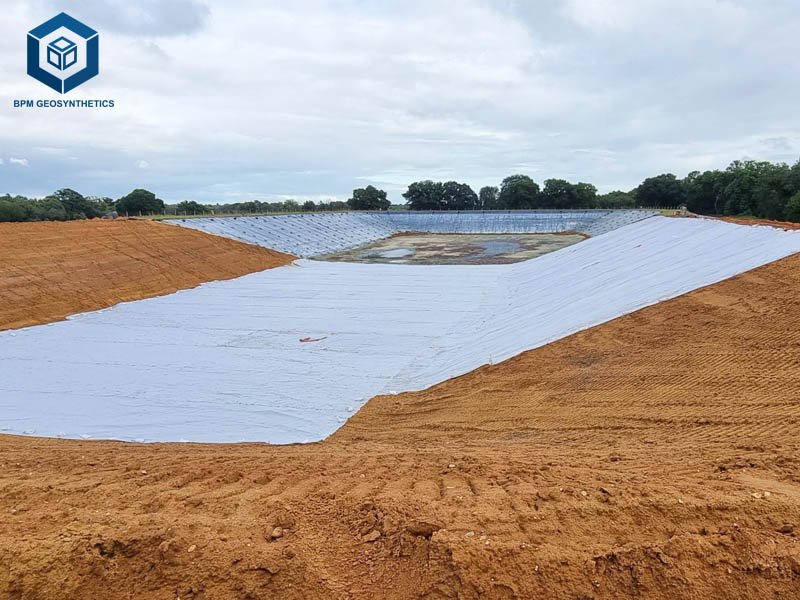
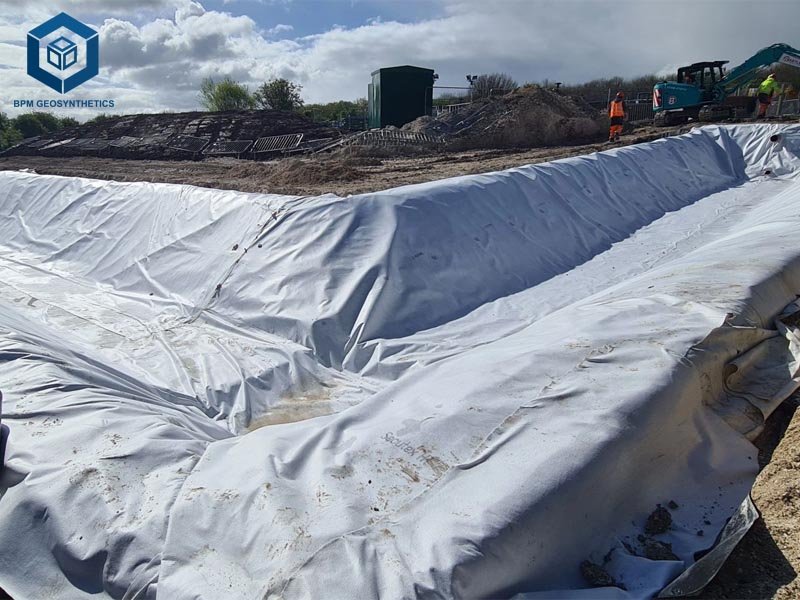
Founded in 2007, BPM Geosynthetics leads from ISO 9001 facilities (26,000 m²), yielding 80,000 tons annually and serving 86 countries with 98% delivery precision. Their Needled Punched Fabric interlocks polypropylene staples via barbed needles, spanning BPM10 (100 g/m², 80 L/m²/s) to BPM80 (800 g/m², 250 L/m²/s, 25 kN/m).
It shines: 2.5-25 kN/m strength, 0.3-4 kN CBR, 0.02-0.07 mm O90 for 95% filtration, (1.0-9.9)×10^{-1 to -3} cm/s permeability yielding 35% drainage gains. UV/chemical resilience (<5% loss) fits harsh sites. A 2024 U.S. landfill stabilized leachate, averting 60% breaches—mirroring global impact. 10-15% recycled cuts CO₂ 12%/ton. Custom rolls (6×100 m) and ASTM QC enable partnerships. For drainage, its permittivity (1-2 s⁻¹) excels in French drains, reducing clogs by 50%.
BPM’s adaptability: Hydrotests show 55% superior load dispersion. Contractors appreciate lightweight handling; engineers its anti-blind design, sustaining flow post-1,000 L/m² surges.
6. Additional Considerations for Optimal Implementation
2025 trends integrate hybrids for 45% seismic uplift. AASHTO creep <2% at 50,000 hours vital. 15% extra for overlaps; SimaPro: 25-year ROI. U.S./EU stocking dodges 12% delays.
Annual checks maintain 90% flow. BMPs capture 50% sediments; pair with geonets for 70% relief. NPDES demands >80 L/m²/s. Bio-additives forecast 20% greener by 2026. Budget 10% for rocky sites (D6241 tests). Maintenance: Quarterly seam inspections, heat-bonded repairs for 95% integrity.
7. Conclusion
2025’s water management evolution—from fortified drains to erosion barriers—relies on geotextile drainage fabrics like Mirafi’s flow mastery and BPM’s punch. Our seven, anchored in permeability and strength, deliver 30-50% efficiencies. Choose data-driven, consult experts: Engineer lasting resilience. Explore BPM Geosynthetics at bpmgeosynthetics.com.