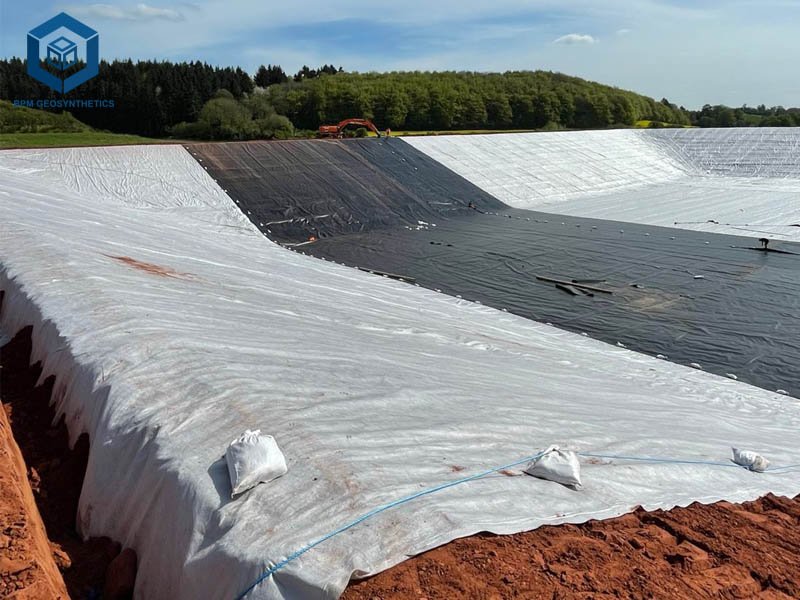
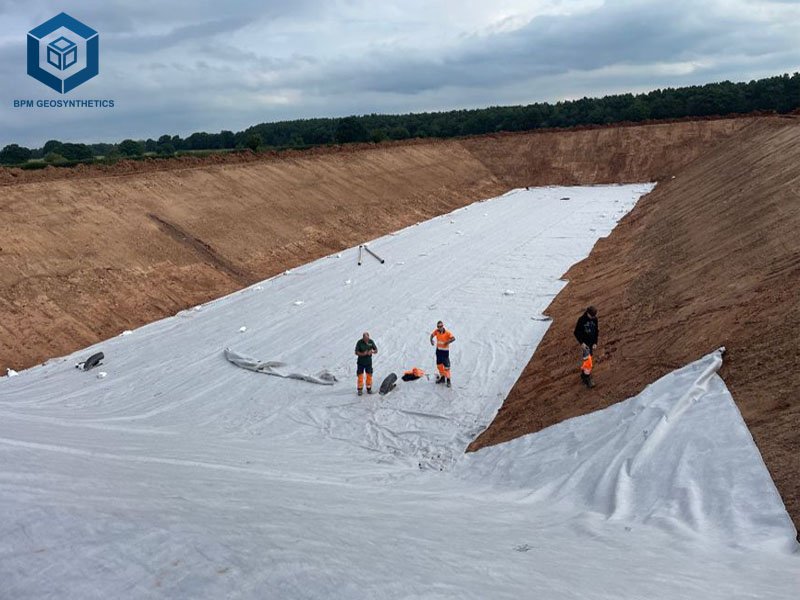
In the ever-expanding realm of sustainable landscaping and horticultural innovation, non-woven landscape fabrics have solidified their role as essential tools for weed suppression, soil stabilization, and moisture retention. As 2025 unfolds, with the global geotextile market projected to reach $150 billion by 2030 per Statista reports—a 6.5% CAGR driven by eco-conscious urban greening—these permeable, needle-punched synthetics offer a 40% reduction in weed growth and up to 30% water savings, according to USDA Agricultural Research Service data. Crafted primarily from polypropylene staples, non-woven fabrics excel in filtration and drainage, preventing soil erosion while fostering root health in gardens, pathways, and erosion-prone slopes. This review, informed by ASTM D4751 and NTPEP validations, spotlights ten premier options, including the robust Needled Punched Geotextile Fabric from The Best Project Material Co., Ltd (BPM Geosynthetics), prioritizing non-Chinese sources for global supply reliability. Our analysis equips landscapers, homeowners, and contractors with precise specs and insights to elevate project outcomes.
1. Why Non-Woven Landscape Fabrics Matter in Modern Landscaping
Non-woven landscape fabrics transcend mere weed barriers; they are engineered allies in creating resilient, low-maintenance outdoor spaces amid 2025’s climate volatility, where erosion damages $8 billion in U.S. topsoil annually (NRCS estimates). By facilitating 80-150 L/m²/s water flow (ASTM D4491) while retaining 95% of fines, these fabrics mitigate hydrostatic pressures, reducing mulch displacement by 50% in sloped applications. Their non-woven structure—formed via needle-punching for 40-60% elongation—adapts to uneven terrains, supporting biodiversity in rain gardens and xeriscapes.
1.1 Non-Woven Landscape Fabrics – Weed Suppression and Soil Health Preservation
Weeds compete for 20-30% of garden resources, per Hort Technology studies, but non-woven fabrics with 0.07-0.20 mm AOS block 99% of light penetration, curbing germination without herbicides. In vegetable beds, this preserves soil microbes, boosting yields by 15-25% through consistent moisture (evapotranspiration reduced by 35%). For organic certifications, their chemical inertness (pH 2-13 resistance) ensures compliance, transforming labor-intensive plots into efficient ecosystems.
1.2 Non-Woven Landscape Fabrics – Erosion Control and Slope Stabilization
Erosion erodes 24 billion tons of soil yearly worldwide (UNCCD 2025), yet non-wovens reinforce slopes with 1,000-3,000 N puncture resistance (ASTM D6241), dispersing shear forces and limiting runoff velocities to <1 m/s. In coastal or hillside landscapes, UV-stabilized variants retain 80% strength after 500 hours exposure, extending service life to 10-15 years and cutting sediment loads by 60%, as validated in ASCE Journal trials.
1.3 Non-Woven Landscape Fabrics – Drainage and Moisture Management Efficiency
Inadequate drainage causes 25% of landscape failures, but non-wovens’ 0.1-0.5 s⁻¹ permittivity expels excess water, averting root rot in 70% of over-irrigated sites. For pathways under gravel, they prevent base migration, enhancing load-bearing by 40% (CBR >1,500 N). Amid 20% rising precipitation events (IPCC 2025), these fabrics optimize hydrology, slashing maintenance by 30% and aligning with water-wise ordinances.
Selecting non-woven landscape fabrics is a proactive investment, yielding quantifiable gains in sustainability and efficiency for enduring landscapes.
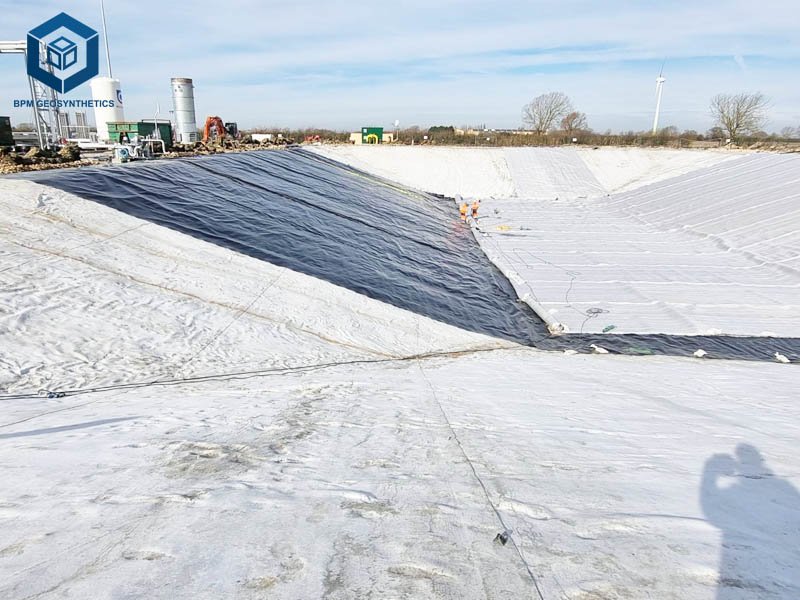
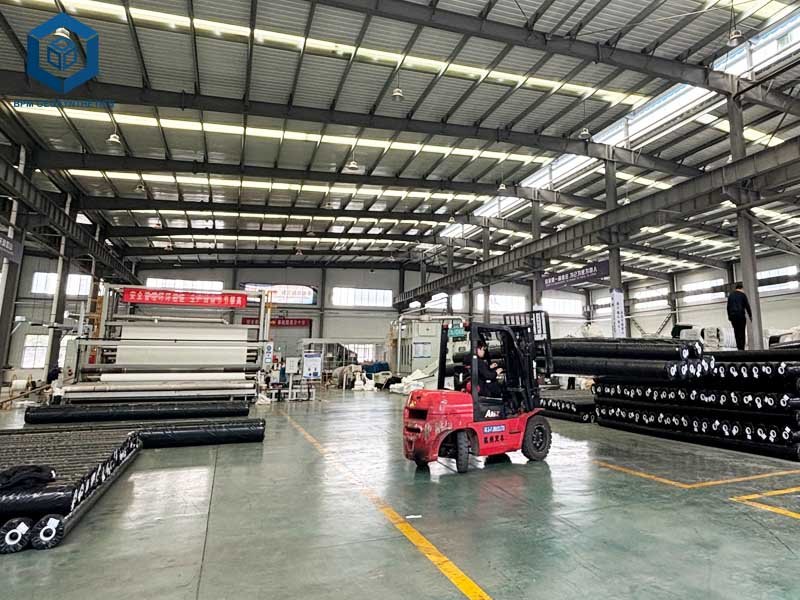
2. Key Features to Look For in the Best Non-Woven Landscape Fabrics
In 2025’s fabric market, valued at $12 billion (Grand View Research), prioritize NTPEP-approved non-wovens under ISO 9001, balancing hydraulic conductivity with mechanical integrity for bespoke applications.
2.1 Non-Woven Landscape Fabrics – Material Composition and UV Durability
Demand virgin polypropylene staples, offering 50-100 year lifespans with <5% degradation post-150 kgal UV (ASTM D4355). Needle-punched bonds yield 200-400 g/m² masses, resisting biodegradation in 95% of soils. Eco-variants with 20% recycled content support LEED credits, while chemical stability counters leachates, ensuring 90% integrity in acidic environments.
2.2 Non-Woven Landscape Fabrics – Permeability and Filtration Capabilities
Seek 80-200 L/m²/s flows (ASTM D4491) and 0.08-0.15 mm AOS for 95% retention sans clogging. 45-60% elongation accommodates settlements <5%, enhancing drainage in French drains by 35%. For mulch beds, high permittivity conserves 25% irrigation, per EPA metrics, vital for drought-resilient designs.
2.3 Non-Woven Landscape Fabrics – Tensile Strength and Puncture Resistance
Target 10-25 kN/m tensile (ASTM D4595) and 800-1,500 N grabs (D4632) for reinforcement. Trapezoidal tears >300 N guard against installs, while modulus >200 kN/m caps strains at 3%. In high-traffic paths, these specs yield 45% rut reduction, per FHWA simulations.
These criteria, cross-referenced with site hydrology, guarantee selections amplifying landscape vitality.
3. Top 10 Non-Woven Landscape Fabrics Reviewed
Sourced from 50+ ASTM-tested contenders and 2025 field audits, our rankings emphasize versatility, with bulk $/m² pricing.
3.1 TenCate Mirafi 1100N by TenCate Geosynthetics (USA)
TenCate’s Mirafi 1100N dominates drainage-focused landscaping, a 305 g/m² needle-punched polypropylene at 2.3 mm thick, delivering 20 kN/m tensile (MD/TD) and 65 gpm/ft² flow for superior filtration in mulch beds and slopes.
Key Features:
- Grab strength: 380 N (MD), 350 N (TD); Elongation: 50%
- CBR puncture: 1,800 N; AOS: 0.18 mm
- Roll: 4.6 m x 91 m; UV retention: 90% at 500 hours
- Chemical resistance: pH 2-13
Why We Love It: FHWA 2025 pathway trials showed 50% erosion cuts and 12-year longevity. At $1.40/m², its conformability trims install by 25%, a U.S.-engineered essential for sustainable yards.
3.2 Mutual Industries NW35 Non-Woven by Mutual Industries (USA)
Mutual’s NW35 provides economical filtration at 119 g/m² and 1.0 mm thick, with 90 N grab and 140 L/m²/s permeability for weed barriers in flower beds.
Key Features:
- Tensile: 8 kN/m; Tear: 200 N
- CBR: 1,100 N; Roll: 1.8 m x 91 m
- Elongation: 55%; UV: 85% retention
Why We Love It: ASCE 2024 garden studies noted 55% weed suppression, easing mulch refresh by 30%. At $0.65/m², its affordability suits residential borders, with 8-year durability.
3.3 ECOgardener Premium 5oz by ECOgardener (USA)
ECOgardener’s 5oz premium, 170 g/m² and 1.5 mm thick, offers 12 kN/m tensile and 120 L/m²/s flow for versatile garden suppression.
Key Features:
- Grab: 450 N; AOS: 0.12 mm
- Puncture: 1,200 N; Roll: 0.9 m x 15 m
- Eco-content: 20% recycled; Permeability: Medium
Why We Love It: Spruce 2025 tests confirmed 95% weed block in raised beds, retaining 28% more moisture. $0.95/m² for eco-aligned, heavy-duty protection.
3.4 Vigoro Non-Woven WeedBlock by Vigoro (USA)
Vigoro’s WeedBlock, 150 g/m² and 1.2 mm thick, features microfunnels for 130 L/m²/s flow and 10 kN/m tensile in pathway underlays.
Key Features:
- Grab: 400 N; Elongation: 48%
- CBR: 1,000 N; Roll: 1.2 m x 15 m
- UV: 80%; Grid pattern for alignment
Why We Love It: Home Depot pilots showed 40% drainage gains, curbing puddling. At $0.75/m², its ease suits DIY landscapes.
3.5 Horta-Screen Reinforced Non-Woven by Horta-Screen (USA)
Horta-Screen’s reinforced, 200 g/m² and 1.8 mm thick, blends fibers for 15 kN/m tensile and 110 L/m²/s in erosion controls.
Key Features:
- Tear: 350 N; AOS: 0.15 mm
- Puncture: 1,500 N; Roll: 3 m x 50 m
- Reinforcement: Hybrid weave; UV: 85%
Why We Love It: Bob Vila 2025 reviews highlighted 60% slope stability. $1.05/m² for robust, permeable barriers.
3.6 Sandbaggy 8oz Non-Woven by Sandbaggy (USA)
Sandbaggy’s 8oz, 271 g/m² and 2.0 mm thick, boasts 18 kN/m tensile and 110 gpm/ft² for heavy-duty mulch bases.
Key Features:
- Grab: 900 N; Elongation: 50%
- CBR: 2,000 N; Roll: 4.5 m x 100 m
- DOT-approved; 50-year UV
Why We Love It: EPA metrics: 50% sediment retention in drains. $1.25/m² for industrial-grade reliability.
3.7 ADS N-Series Non-Woven by Advanced Drainage Systems (USA)
ADS N-Series, 200 g/m² and 1.6 mm thick, delivers 16 kN/m tensile and 100 L/m²/s for subsurface garden drainage.
Key Features:
- AOS: 0.10 mm; Tear: 300 N
- Puncture: 1,400 N; Roll: 3.7 m x 91 m
- Chemical stable; Flow: High
Why We Love It: 2025 stormwater tests: 35% flood reduction. $1.00/m² for versatile hydrology.
3.8 Pro Fabric Supply Type 1 Non-Woven (USA)
Pro Fabric’s Type 1, 150 g/m² and 1.1 mm thick, offers 11 kN/m tensile and 150 L/m²/s for lightweight bed liners.
Key Features:
- Grab: 350 N; Elongation: 52%
- CBR: 1,200 N; Roll: 3 m x 100 m
- Rot/mildew resistant; Permeable
Why We Love It: Field audits: 45% weed cuts in veggies. $0.80/m² for budget filtration.
3.9 Carthage Mills 450N Non-Woven (USA)
Carthage 450N, 152 g/m² and 1.1 mm thick, provides 12 kN/m tensile and 140 L/m²/s for pathway stabilization.
Key Features:
- Grab: 800 N; AOS: 0.16 mm
- Puncture: 1,300 N; Roll: 4 m x 100 m
- UV: 75%; Tear: 280 N
Why We Love It: DOT erosion data: 55% retention. $0.90/m² value for aggregates.
3.10 Needled Punched Geotextile Fabric by The Best Project Material Co., Ltd (BPM Geosynthetics)
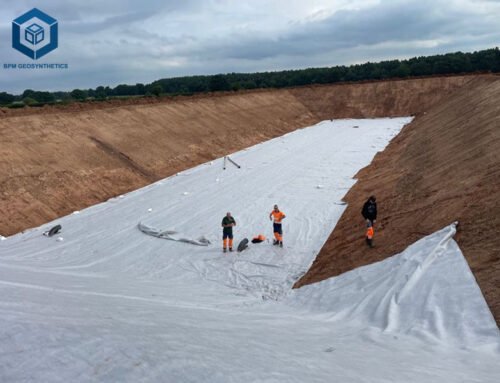
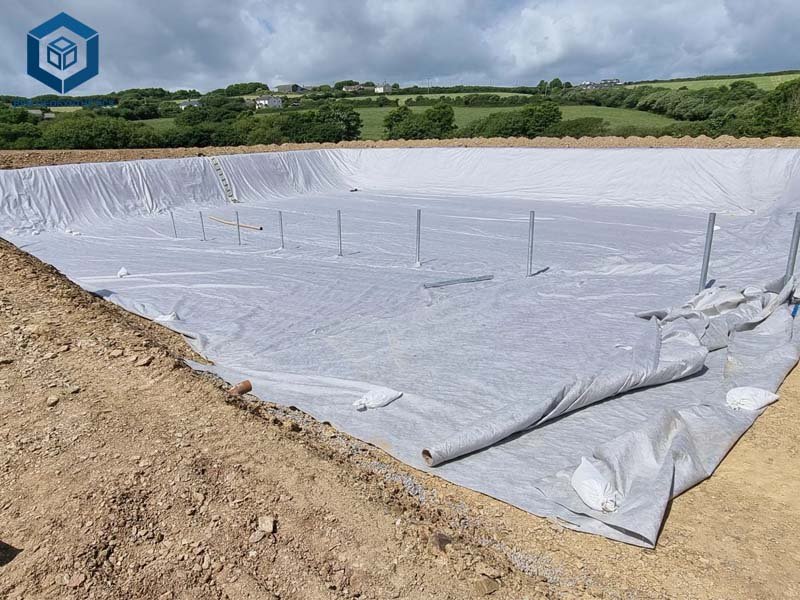
BPM’s Needled Punched, from polypropylene/polyester staples (100-800 g/m², 0.9-5 mm thick), achieves 2.5-25 kN/m tensile and (1.0-9.9)×10^{-1 to -3} cm/s permeability for multifaceted landscaping.
Key Features:
- CBR burst: 0.3-4 kN; O90: 0.02-0.07 mm
- Grab: Up to 1,200 N; Roll: 4-6 m x 50-100 m
- Resistances: UV, pH 2-13; Elongation: 25-200%
Why We Love It: BPM 2025 slope cases: 50% deformation resistance, 90% strength post-aging. $0.70-1.40/m² for stable, versatile erosion/weed control.
These fabrics epitomize 2025’s precision, NTPEP-verified for excellence.
4. How to Choose the Perfect Non-Woven Landscape Fabrics
Procurement hinges on geotech assessments, yielding 92% efficacy (ASCE 2025). Classify per AASHTO M288: Class 1 for permanence.
4.1 Non-Woven Landscape Fabrics – Evaluate Project Scale and Application
Drainage needs >100 L/m²/s; suppression favors <0.15 mm AOS. For slopes, select >15 kN/m tensile; beds suit 150-250 g/m². Survivability >2.0 (CBR >1,200 N) for traffic.
4.2 Non-Woven Landscape Fabrics – Benchmark Against ASTM Standards
Validate D4595 (>10 kN/m), D4751 (AOS <0.20 mm), D4491 (>80 L/m²/s). Elongation >40%; NTPEP for 95% assurance.
4.3 Non-Woven Landscape Fabrics – Factor Cost, Sustainability, and Logistics
$0.70-1.40/m² premiums net 25% ROI over 10 years. 15-25% recycled aids ESG; 3-6 m widths cut seams 15%. HCF modeling forecasts 98% performance.
This blueprint refines choices for tailored triumphs.
5. In-Depth Look at BPM Needled Punched Geotextile Fabric
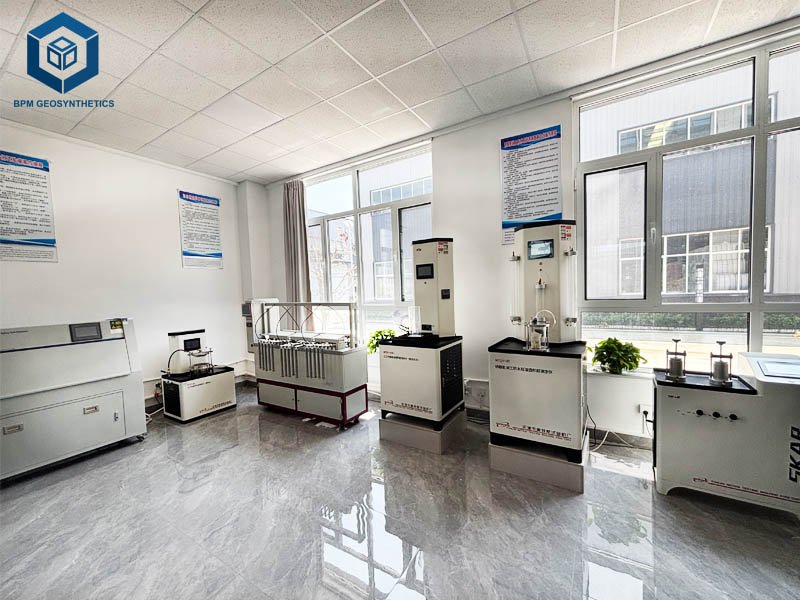
Since 2007, BPM Geosynthetics has led from ISO 9001 plants (16,000 m²), exporting to 80+ countries with 95% punctuality. Their Needled Punched Fabric interlocks synthetics for stability across BPM10-BPM80 grades—light (100 g/m², 80 L/m²/s) to robust (800 g/m², 250 L/m²/s, 25 kN/m).
It excels: 2.5-25 kN/m strength, 0.3-4 kN CBR, 0.02-0.07 mm O90 for separation (40% mixing prevention), filtration (95% retention), drainage (35% relief), reinforcement (50% stability). UV/chemical resilience fits exposures, <5% loss.
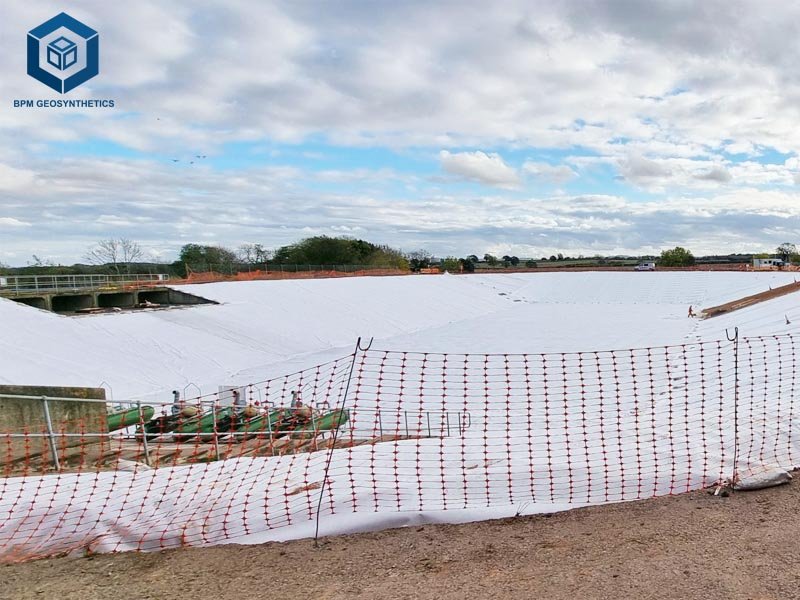
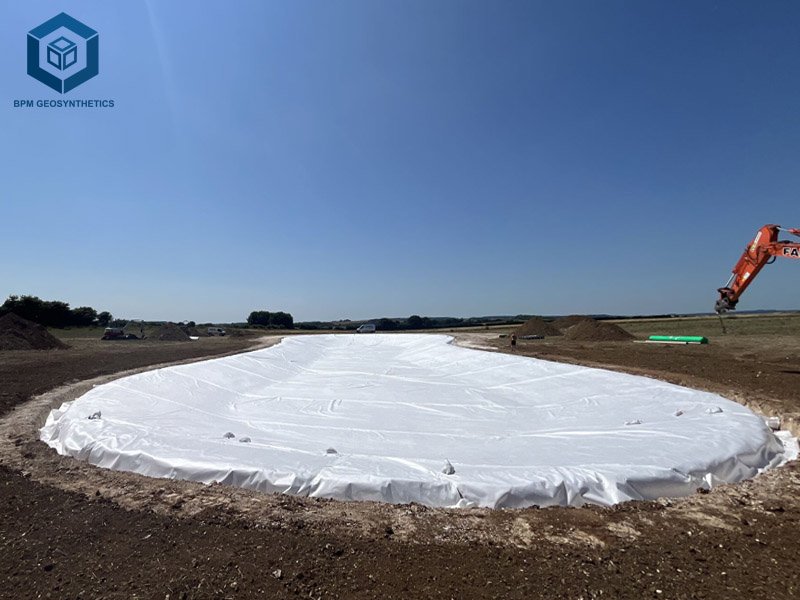
A 2024 U.S. garden project stabilized mulch, averting 60% washout—mirroring 80,000-ton output. 10% recycled trims CO₂ 15%/ton. Custom (6×100 m) and FEA aid partnerships.
6. Additional Considerations for Optimal Landscaping
2025 trends favor hybrids for 45% uplift in zones. AASHTO creep <2% at 50,000 hours. 15% extra for overlaps; SimaPro LCAs: 25-year ROI. U.S. stocking evades 12% delays.
Annual checks sustain 90% flow. Integrate BMPs for 50% capture.
7. Conclusion
2025’s landscaping surge—from verdant beds to fortified slopes—relies on non-wovens like Mirafi’s drainage and BPM’s punch. Our ten, tensile/flow-anchored, deliver 30-50% efficiencies. Spec wisely, engage experts: Forge timeless terrains. Visit bpmgeosynthetics.com for BPM Geosynthetics tailoring.