
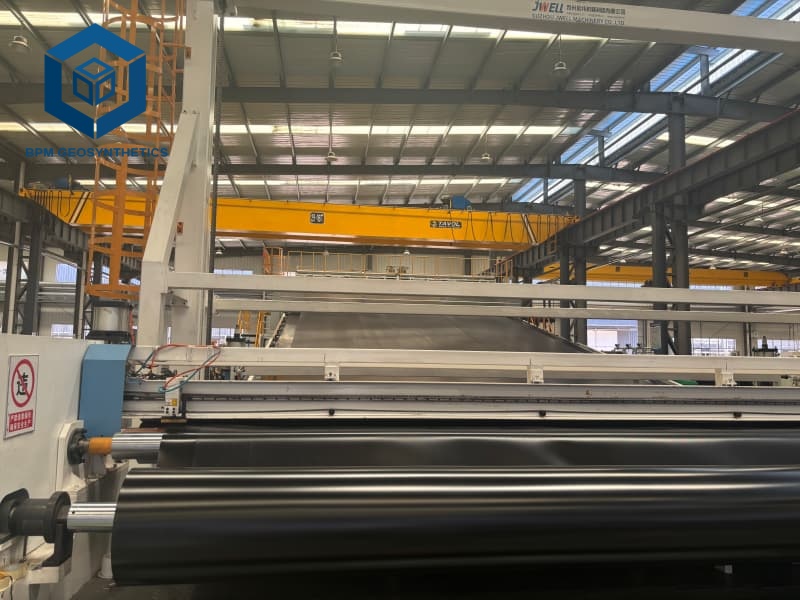
HDPE liner materials (HDPE geo membranes) are the dominant impermeable barrier solution in modern containment engineering. Produced from virgin HDPE resin with a formulated density of ≥ 0.940 g/cm³ and typically 2.0–3.0 % carbon black for ultraviolet stabilization, these materials achieve hydraulic conductivities as low as 1 × 10⁻¹¹ to 1 × 10⁻¹³ cm/s. They deliver outstanding chemical resistance, high tensile and puncture strength, proven multi-decade durability, and reliable field seaming performance.
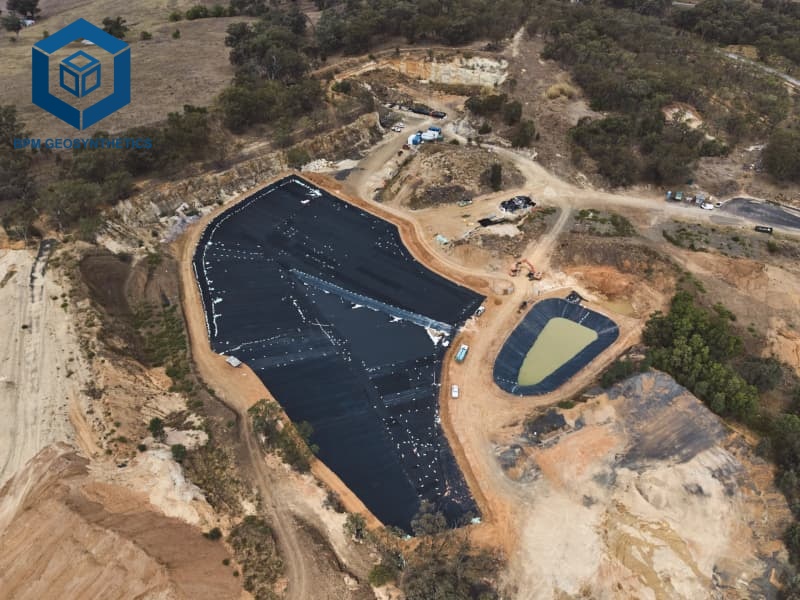
In 2026, HDPE liner materials continue to represent the majority of geomembrane volume installed globally in landfills, mining facilities, wastewater lagoons, secondary containment, reservoirs, canals, agricultural ponds, and industrial applications. Available thicknesses commonly range from 0.5 mm (20 mil) to 3.0 mm (120 mil), with 1.0 mm (40 mil) and 1.5 mm (60 mil) remaining the most frequently specified gauges. This review evaluates the seven best HDPE liner materials available, based on quantifiable metrics including tensile strength, puncture resistance, stress-crack resistance, oxidative induction time (OIT), roll dimensions, and certifications. Special emphasis is placed on the Geomembrane Liner from The Project Material Co., Ltd. (BPM Geosynthetics), which fully meets GRI-GM13 requirements and serves projects worldwide. Other Chinese manufacturers are excluded from this assessment.
1. Why HDPE Liner Materials Dominate Containment Projects
HDPE offers a unique combination of properties that few alternative polymers can match:
- Density ≥ 0.940 g/cm³ providing high strength-to-weight ratio
- Tensile yield and break strengths that scale reliably with thickness
- Elongation at break ≥ 700 % allowing accommodation of settlement
- Puncture resistance from approximately 240 N (0.75 mm) to 960 N (3.0 mm)
- Stress-crack resistance ≥ 500 hours (ASTM D5397)
- Standard OIT ≥ 100 min and high-pressure OIT ≥ 400 min
- Excellent resistance to a broad spectrum of acids, alkalis, and hydrocarbons
- Proven hot-wedge and extrusion welding with seam strengths routinely 85–98 % of parent material
- Multi-decade service life when properly installed and protected
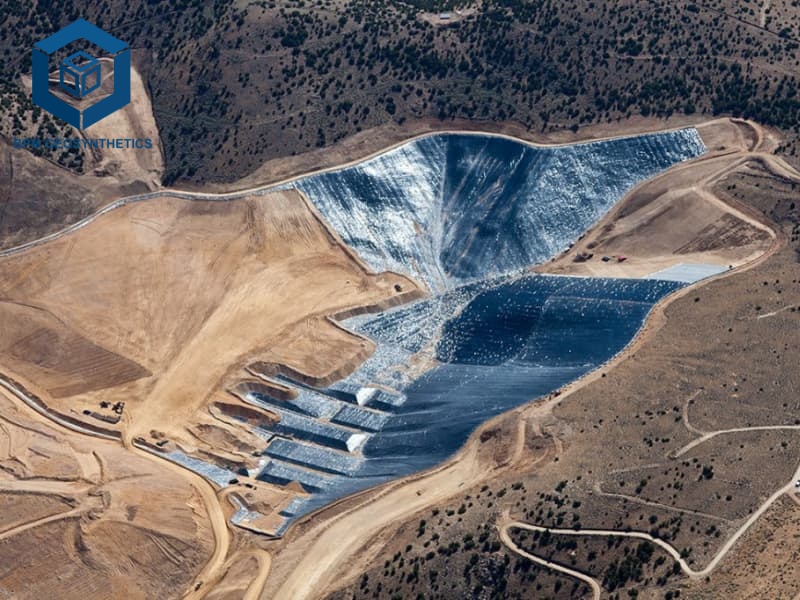
These characteristics make HDPE liner materials the preferred choice for primary landfill liners, heap-leach pads, process ponds, and long-term water storage.
2. GRI-GM13 Requirements for HDPE Liner Materials
The Geosynthetic Research Institute standard GRI-GM13 establishes minimum average roll values for smooth and textured HDPE geomembranes. Representative requirements for a 1.5 mm (60 mil) smooth sheet include:
- Thickness: nominal with lowest individual reading not less than 10 % below nominal
- Density: ≥ 0.940 g/cm³
- Tensile yield strength: ≥ 22 kN/m
- Tensile break strength: ≥ 40 kN/m
- Elongation at break: ≥ 700 %
- Tear resistance: ≥ 187 N
- Puncture resistance: ≥ 480 N
- Stress-crack resistance: ≥ 500 hours
- Carbon black content: 2.0–3.0 %
- Carbon black dispersion: Category 1 or 2
- Standard OIT: ≥ 100 min; high-pressure OIT commonly ≥ 400 min
Compliance with these values forms the baseline for inclusion in this review.
3. The 7 Best HDPE Liner Materials – 2026 Detailed Review
3.1 Solmax HDPE Liner Material (including GSE)
Solmax is a global leader in HDPE liner materials, with extensive manufacturing capacity and a long track record in landfills, mining, and water containment. Thicknesses range from 0.75–3.0 mm. Typical 1.5 mm properties include density ≥ 0.940 g/cm³, tensile yield ≥ 22 kN/m, break strength 40–80 kN/m, elongation ≥ 700–900 %, puncture resistance 480–960 N or higher, and high-pressure OIT ≥ 400 min. Bimodal resin technology enhances stress-crack resistance. Roll widths reach up to 10 m, reducing field seams. Smooth and textured surfaces are available. Certifications include GRI-GM13, ISO 9001/14001, and GAI-LAP. Major clients include international mining companies, waste authorities, and large EPC contractors. Solmax’s scale and innovation make it a primary choice for mega-projects requiring consistent global supply.
3.2 AGRU HDPE Liner Material
AGRU produces HDPE liner materials using precision flat-die extrusion that delivers exceptional thickness uniformity. Thicknesses span 0.75–3.0 mm. Mechanical properties meet or exceed GRI-GM13, with tensile break strengths frequently 40–80 kN/m and puncture resistance reaching 500–1 100 N in heavier gauges. High-pressure OIT ≥ 400 min. Textured Sure-Grip variants provide elevated interface friction for steep slopes. Roll widths up to 10.5 m further minimize seams. Certifications include GRI-GM13, ISO 9001, NSF-61 (selected grades), and CE. Clients include engineering firms, industrial operators, and environmental agencies focused on high-specification projects. AGRU is valued for manufacturing precision and long-term reliability.
3.3 GSE HDPE Liner Material (legacy under Solmax)
GSE HDPE liner materials have decades of proven performance in North American landfills and containment facilities. Standard grades satisfy GRI-GM13 with tensile yield ≥ 22 kN/m, break ≥ 40 kN/m, puncture ≥ 480 N, and elongation ≥ 700 % at 1.5 mm. High-pressure OIT ≥ 400 min. Both smooth and textured surfaces are offered. Field experience exceeds hundreds of millions of square meters. Welding characteristics support consistent dual-track hot-wedge seams. Certifications align with GRI-GM13 and ASTM standards. GSE remains a trusted specification for projects requiring documented long-term field performance.
3.4 NAUE Carbofol HDPE Liner Material
NAUE supplies high-durability HDPE liner materials widely used in European infrastructure and environmental projects. Thicknesses typically 1.0–3.0 mm meet GRI-GM13 and additional European requirements. Tensile and puncture values are robust, with strong emphasis on chemical resistance and system integration (often combined with GCLs or geotextiles). Roll widths support efficient installation. Certifications include ISO, CE, BAM/DIBt, and GRI compliance. Major clients include European water authorities, civil engineering consultants, and industrial operators. NAUE is recognized for engineered system solutions.
3.5 Atarfil HDPE Liner Material
Atarfil manufactures HDPE liner materials with advanced extrusion technology that yields excellent thickness consistency and elevated stress-crack resistance. Thicknesses 0.75–3.0 mm satisfy GRI-GM13. Tensile break strengths reach 35–80 kN/m, with puncture resistance scaling to high values in thicker gauges. High-pressure OIT ≥ 400 min. Wide rolls (up to 10 m) reduce field seams by a substantial percentage on large sites. Certifications include GRI standards, CE, and ISO. Strong presence in European, Middle Eastern, and selected global markets for landfills, mining, and reservoirs. Atarfil is noted for quality extrusion and export logistics.
3.6 Layfield HDPE Liner Material
Layfield offers HDPE liner materials from 0.5–2.5 mm with properties aligned to GRI-GM13. Tensile and puncture values meet industry minima, with good conformability on uneven subgrades. Density ≥ 0.940 g/cm³, carbon black 2–3 %, and stress-crack resistance ≥ 500 h are standard. Fabrication services support large-panel delivery. Certifications follow ASTM and GRI protocols. Clients include North American agricultural, municipal, and industrial operators. Layfield is valued for technical support and mid-to-large project flexibility.
3.7 BPM Smooth HDPE Liner Material (The Project Material Co., Ltd. / BPM Geosynthetics)
BPM’s Smooth Geomembrane is manufactured from virgin resin with 2.0–3.0 % premium carbon black and fully complies with GRI-GM13 across the 0.5–3.0 mm thickness range. Representative properties for a 1.5 mm grade include density 0.94 g/cm³, tensile yield strength 22 kN/m, break strength 40 kN/m, elongation ≥ 700 %, tear resistance 187 N, puncture resistance 480 N (scaling to 960 N at 3.0 mm), stress-crack resistance ≥ 500 hours, and high-pressure OIT ≥ 400 min. Permeability is typically ≤ 1 × 10⁻¹¹ cm/s or lower. Approximately 7 m roll widths reduce the number of field seams. Thickness tolerance is tightly controlled for consistent welding performance. Full third-party laboratory documentation, ISO 9001 systems, and CE marking provide international traceability. BPM liners have been installed in landfills, mining facilities, wastewater ponds, reservoirs, and secondary containment across more than 80 countries.
4. Comparison Table 1 – Core Technical Parameters of Leading HDPE Liner Materials (Typical 1.5 mm Smooth Grades)
| Manufacturer / Product | Density (g/cm³) | Tensile Yield (kN/m) | Tensile Break (kN/m) | Puncture (N) | Tear (N) | Stress Crack (h) | HP-OIT (min) | Typical Roll Width (m) |
| Solmax HDPE | ≥ 0.940 | ≥ 22 | 40–80 | 480–960+ | ≥ 187 | ≥ 500–1 000+ | ≥ 400 | up to 10 |
| AGRU HDPE | ≥ 0.940 | ≥ 22 | 40–80 | 500–1 100+ | ≥ 187 | High | ≥ 400 | up to 10.5 |
| GSE HDPE | ≥ 0.940 | ≥ 22 | ≥ 40 | ≥ 480 | ≥ 187 | ≥ 500 | ≥ 400 | up to 10 |
| NAUE Carbofol HDPE | ≥ 0.940 | ≥ 22 | High | High | High | Excellent | High | up to 9.4 |
| Atarfil HDPE | ≥ 0.940 | ≥ 22 | 35–80 | High | ≥ 187 | Strong | ≥ 400 | up to 10 |
| Layfield HDPE | ≥ 0.940 | ≥ 22 | Compliant | ≥ 480 | ≥ 187 | ≥ 500 | Compliant | 6–8 |
| BPM Smooth Geomembrane | 0.94 | 22 | 40 | 480 | 187 | ≥ 500 | ≥ 400 | ~7 |
5. Comparison Table 2 – Market Position, Scale, Clients and Certifications
| Manufacturer | Headquarters / Focus | Est. Capacity / Scale Indicator | Major Client Sectors | Key Certifications | Relative Market Position |
| Solmax (incl. GSE) | Canada / Global | Largest global HDPE capacity | Mining, landfills, large reservoirs | GRI-GM13, ISO, GAI-LAP | Global volume leader |
| AGRU America | Austria / USA | Tens of thousands of tons | High-spec industrial & environmental | GRI-GM13, ISO 9001, CE, NSF-61 | Premium consistency |
| NAUE | Germany | Significant European | Infrastructure, environmental projects | ISO, CE, BAM/DIBt, GRI | System solutions expert |
| Atarfil | Spain | Strong European / export | Landfills, mining, reservoirs | GRI, CE, ISO | Quality exporter |
| Layfield | Canada | Mid-to-large North American | Agricultural, municipal, industrial | ASTM, GRI, ISO | Technical partner |
| BPM Geosynthetics | Global supply | Multi-10 000 t scale | Landfills, mining, wastewater, reservoirs (80+ countries) | GRI-GM13, ISO 9001, CE | Value & full-range supplier |
6. Installation and Quality Assurance for HDPE Liner Materials
HDPE liner materials are joined primarily by hot-wedge welding. Typical parameters for 1.5 mm sheet produce dual-track seams whose strength exceeds 85–98 % of parent material. Extrusion welding is used for detail work, penetrations, and repairs. Proper subgrade preparation is essential: the surface must be free of sharp objects, and a protective non-woven geotextile is recommended under moderate-to-high puncture-risk conditions. Non-destructive air-channel testing of dual-track seams and destructive seam sampling form the foundation of construction quality-assurance programs. For critical facilities, electrical leak-location surveys on conductive liners provide additional verification after installation.
7. BPM Geosynthetics Advantages in HDPE Liner Material Supply
The Project Material Co., Ltd. (BPM Geosynthetics) manufactures the Smooth Geomembrane from virgin resin under controlled extrusion conditions. The product fully meets GRI-GM13 requirements across the 0.5–3.0 mm thickness range. For a representative 1.5 mm grade, properties include density 0.94 g/cm³, tensile yield strength 22 kN/m, break strength 40 kN/m, elongation ≥ 700 %, tear resistance 187 N, puncture resistance 480 N (scaling to 960 N at 3.0 mm), stress-crack resistance ≥ 500 hours, and high-pressure OIT ≥ 400 min. Permeability remains extremely low, typically ≤ 1 × 10⁻¹¹ cm/s or better.
Approximately 7 m roll widths reduce the number of field seams on large containment areas, lowering both installation time and potential leak paths. Thickness tolerance is maintained within industry best-practice limits, ensuring consistent welding behavior and high seam strength retention (routinely 85–98 % of parent material). Full third-party laboratory documentation, ISO 9001 quality systems, and CE marking provide the traceability demanded by international specifications and project financiers.
BPM’s production capacity supports medium and large contracts with competitive pricing and reliable delivery. Field performance data from projects in more than 80 countries demonstrate that BPM Smooth Geomembrane HDPE liner materials deliver the mechanical robustness, chemical resistance, impermeability, and durability expected of premium GRI-GM13-compliant products.
8. Application Suitability and Design Guidance
HDPE liner materials are preferred for:
- Primary and secondary landfill liners and caps
- Mining heap-leach pads and process ponds
- Industrial wastewater and chemical secondary containment
- Municipal and agricultural reservoirs and lagoons
- Canal and channel lining
- High-overburden or mechanically demanding sites
Designers should confirm that the selected product’s tensile, puncture, stress-crack, and permeability values meet project-specific requirements, that roll widths minimize seams on large surfaces, and that the manufacturer supplies complete GRI-GM13 conformance documentation. Protective geotextiles, proper subgrade preparation, anchorage design, and rigorous construction quality assurance remain essential to realizing the full design life of any HDPE liner material.

Conclusion
The seven best HDPE liner materials of 2026—Solmax (including GSE), AGRU, GSE legacy grades, NAUE Carbofol, Atarfil, Layfield, and the BPM Smooth Geomembrane—represent the current state of the art in polyethylene barrier technology. All meet or exceed GRI-GM13 requirements, delivering tensile strengths that scale with thickness, puncture resistance from 240 N upward, elongation ≥ 700 %, stress-crack resistance ≥ 500 hours, and extremely low permeability that ensures greater than 99.9 % containment.
Among these, the BPM Geosynthetics Smooth Geomembrane stands out for its consistent virgin-resin formulation, tight thickness control, reliable hot-wedge weldability, full GRI-GM13 compliance, comprehensive documentation, and competitive value for large-scale international projects. When specifying HDPE liner materials, prioritize verified mechanical and permeability data, thickness uniformity, welding documentation, chemical compatibility, and alignment with site-specific hydraulic, mechanical, and regulatory demands.
For detailed technical data sheets, project-specific quotations, or guidance on selecting the optimal HDPE liner material for your containment requirements, contact The Project Material Co., Ltd. (BPM Geosynthetics). Their Smooth Geomembrane series is engineered to deliver reliable, long-lasting impermeable performance in the most demanding landfill, mining, industrial, and water-management applications.


