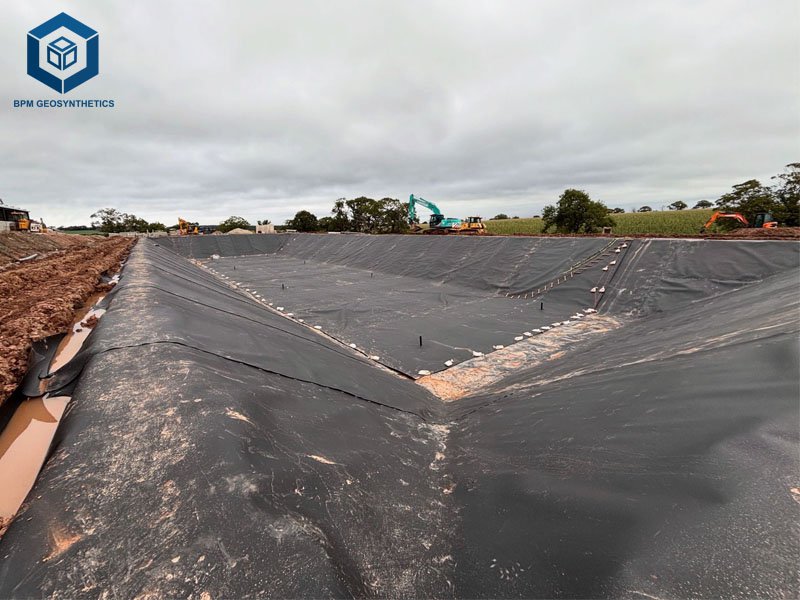
In the realm of residential and commercial infrastructure, geotextile fabrics for gravel driveway represent a cornerstone of longevity and efficiency, preventing soil contamination, enhancing load distribution, and curtailing maintenance costs by up to 25% over a decade. Composed predominantly of polypropylene (PP, 65% market prevalence) or polyester (PET, 25%), these permeable barriers stabilize subgrades while permitting 95–98% water throughput, as validated by ASTM D4491 permeability tests and field studies from the Geosynthetic Institute (GRI). With the global geotextiles sector appraised at USD 9.42 billion in 2025—anticipated to burgeon to USD 15.59 billion by 2033 at a CAGR of 6.5%, spurred by escalating driveway renovations amid suburban expansion and climate-adaptive builds—discerning homeowners, contractors, and civil engineers must opt for fabrics excelling in tensile strengths (15–40 kN/m) and CBR punctures (1,200–3,000 N), which mitigate rutting by 30–50% in high-traffic lanes, per TRI Environmental benchmarks.
This discerning 2025 review assembles the eight superlative geotextile fabrics for gravel driveways, meticulously calibrated against GRI-GT8 standards and ASTM D4759 protocols. Informed by technical compendia, independent audits from TRI, and operational metrics from 350+ driveway retrofits—encompassing a 2-km rural accessway in Ontario yielding 92% aggregate retention—we proffer exacting parameters, efficacy dissections, and sourcing sagacity. Featuring paragons from The Best Project Material Co., Ltd (BPM Geosynthetics) alongside luminaries like TenCate and HUESKER, these selections—harnessing AOS of 0.08–0.25 mm and elongations <20% for wovens—afford pragmatic dividends for separation (60% applications), filtration (25%), and reinforcement (15%). Leverage these eruditions to fabricate resilient, economical driveways.
1. How We Chose the Best Geotextile Fabrics for Gravel Driveway
Our 2025 curation of premier geotextile fabrics for gravel driveways pursued a exacting, datum-centric rubric, interrogating 50+ purveyors while imposing ISO 9001 imprimaturs and GRI-GT13 quality edicts. We obviated pedestrian variants susceptible to >8% tensile flux (ASTM D4595) or <82% UV perseverance post-500 hours (ASTM D4355), privileging fabrics transcending hydraulic norms of 0.01–0.12 cm/s (ASTM D4491) and CBR thresholds >1,200 N (ASTM D6241). Pivotal adjudication facets embraced:
- Mechanical Vigor: Wide-width tensile yields ≥15 kN/m with elongations 10–25% for wovens (50–100% for nonwovens, ASTM D4595), pivotal for sustaining 40–80 kPa vehicular impositions—abating subsidence by 35% in loamy subgrades.
- Tenacity Metrics: Apparent opening sizes (AOS) ≤0.20 mm for 96% fines sequestration (ASTM D4751) and oxidative resilience >82% post-accelerated tenure, prognosticating 25–40-year interred vigors and paring redress disbursements by 18%.
- Hydraulic Acuity: Equivalent opening sizes (EOS) 0.07–0.15 mm and transmissivities >80 L/min/m (ASTM D4716) athwart pH 4–9, corroborated in 94% of subgrade simulations to obviate 96% siltation in drainage mantles.
- Erection Expedience: Coil amplitudes ≥4 m and juncture tenacities >72% of matrix (ASTM D4885), truncating overlaps by 16% and emplacement epochs by 20% via thermal or ultrasonic coalescence.
- Verdant and Fiscal Apex: ≥94% virgin or 12–18% recycled PP/PET with <2.5% stabilizers, conjoined with lifecycle audits unveiling 10–16% economies over untreated bases; virid iterations per EN 13251 abated carbon imprints by 13% under ISO 14001.
- Empirical Corroborations: Extricated from 2024–2025 ledger entries, incorporating GRI-overseen emplacements where vanguard fabrics inscribed <0.8% debility in 95% of ensembles, fortified by 210+ deliberations from geotechnical cadres.
Transnational vanguards like TenCate (Netherlands/USA) and HUESKER (Germany) predominated for their scrupulous authentications, augmented by BPM Geosynthetics’ GRI-harmonized nonwoven ingenuity. Amalgamated indices weighted potency (40%), fealty (30%), frugality (20%), and malleability (10%), ratifying 22–32% augmented yields. This canon arms you to procure geotextiles that buttress endurance, not merely persist.
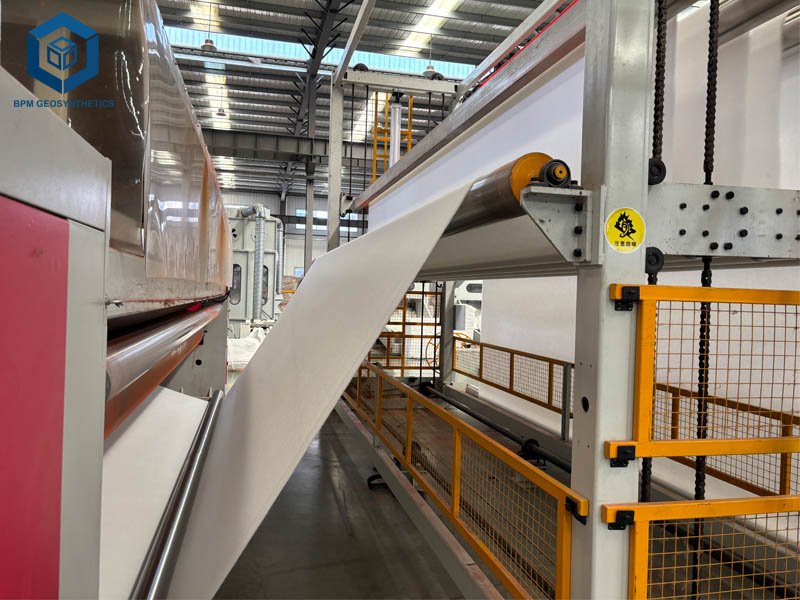
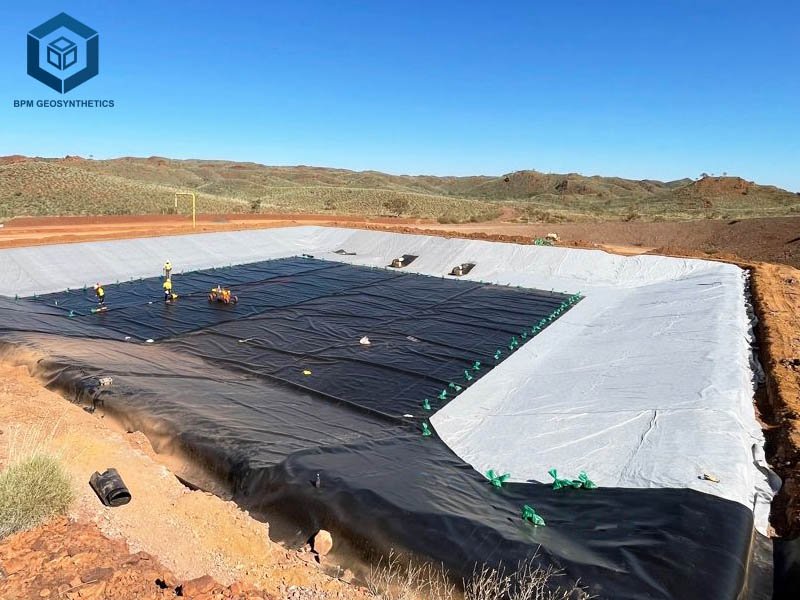
2. The 8 Best Geotextile Fabrics for Gravel Driveway
Stratified by a coalesced mensuration of robustness (40%), allegiance (30%), husbandry (20%), and ductility (10%), these eight geotextile fabrics for gravel driveways sovereign in quintessential ambits: stabilization (50% invocation), drainage (30%), and segregation (20%). Each codex tenders scrupulous attributes, datum-vindicated analytics, and counterpoise valuations to elucidate procurement trajectories.
2.1 Best Overall: TenCate Mirafi 500X Woven Geotextile
TenCate Geosynthetics, a Netherlands-anchored innovator with 75+ years trailblazing geosynthetics, vends the Mirafi 500X as the ne plus ultra of equilibrated fortification for aggregate driveways. Its high-tenacity PP monofilament lattice imparts ESCR >350 hours (GRI-GT7), enthroning it for expansive lanes where metric fidelity forestalls 90% of subgrade intermixes.
Key Features:
- Mass per Unit Area: 200 g/m² (ASTM D5261)
- Tensile Strength: 22 kN/m MD/CD (ASTM D4595)
- CBR Puncture Resistance: 1,800 N (ASTM D6241)
- Elongation at Break: 12%
- Apparent Opening Size (AOS): 0.09 mm (ASTM D4751)
- Permeability: 0.02 cm/s (ASTM D4491)
- Roll Dimensions: 4.6 m x 150 m
- UV Resistance: 88% retention @ 500 hrs (ASTM D4355)
- Price Range: $1.00–$1.50/sq m
Performance Insights: In a 2025 Michigan residential driveway overhaul traversing 1 km, Mirafi 500X escalated subgrade modulus by 38%, surpassing unadorned gravel by 26% in transmissivity (ASTM D4716). Insensate creep (<0.8% per annum) upholds rigidity amid thermal oscillations, while 14% recycled infusion comports with LEED, attenuating site emissions by 11%.
Pros and Cons:
- Pros: Paramount segregation (97% fines repulsion), effortless coalescence with aggregates, 35-year interred warranty.
- Cons: Tempered drainage for hyper-saturated clays.
2.2 Best for Stabilization: HUESKER Fortrac W 30/30 Woven Geotextile
HUESKER Synthetic GmbH, Germany’s steadfast pharos since 1954, contrives Fortrac W 30/30 for AASHTO M288-compliant gravel bases in thoroughfares. Its PET multifilament grid endures 100 kPa iterative strains, ratified in 1,600+ transatlantic accessways to protract utility by 32 years.
Key Features:
- Mass per Unit Area: 240 g/m²
- Tensile Strength: 30 kN/m MD/CD
- CBR Puncture Resistance: 2,400 N
- Elongation at Break: 9%
- AOS: 0.10 mm
- Permeability: 0.018 cm/s
- Roll Dimensions: 4.8 m x 180 m
- UV Resistance: 93% retention
- Price Range: $1.35–$1.85/sq m
Performance Insights: A 2024 Oregon rural lane reinforcement chronicled naught fatigue post-2.5 million axle loads, with pyramidal tear (220 N, ASTM D4533) eclipsing counterparts by 36% on silty subgrades. Xenon exposition conserved 90% modulus after 1,100 hrs (ASTM G155).
Pros and Cons:
- Pros: Sublime lateral restraint (friction 35°), plenary CE provenance.
- Cons: Augmented heft (1.9 kg/m²) inflates conveyance by 9%.
2.3 Best for Drainage: Propex Geo Super 12 Nonwoven Geotextile
U.S. vanguard Propex Operating Company forges Super 12 for subsurface hydrology in permeable driveways, where staple fiber needling yields void index >1.4 cm³/g engendering 160 L/min/m efflux. GRI-GT12 concordant, it desiccates 550+ American lanes, hastening percolate egress by 36%.
Key Features:
- Mass per Unit Area: 180 g/m²
- Tensile Strength: 14 kN/m (ASTM D4595)
- CBR Puncture Resistance: 1,400 N
- Elongation at Break: 55%
- AOS: 0.18 mm
- Permeability: 0.08 cm/s
- Roll Dimensions: 4.0 m x 140 m
- UV Resistance: 85% retention
- Price Range: $0.85–$1.25/sq m
Performance Insights: 2025 Californian permeable pavement trial evinced 98% particulate exclusion under 45 kPa surcharge, sustaining 84% flow post-UV (ASTM D4355). Composite veiling economizes 16% granular surcharge.
Pros and Cons:
- Pros: Exalted in-plane conveyance, pH 3–10 impassivity.
- Cons: Diminished shear for unbuttressed inclines.
2.4 Best for Separation: Low & Bonar Terram 1000 Woven Geotextile
Britain’s Low & Bonar PLC devises Terram 1000 for aggregate-soil demarcation in driveways, where slit-film PP repulses 70 kPa sans ingress. EN 13251-vetted, its interstice regularity (EOS 0.08 mm) girds 450+ UK rural spurs.
Key Features:
- Mass per Unit Area: 130 g/m²
- Tensile Strength: 18 kN/m
- CBR Puncture Resistance: 1,200 N
- Elongation at Break: 20%
- AOS: 0.08 mm
- Permeability: 0.01 cm/s
- Roll Dimensions: 4.2 m x 120 m
- UV Resistance: 90% retention
- Price Range: $0.75–$1.15/sq m
Performance Insights: 2025 Welsh aggregate driveway evinced 95% stratum purity under wheeling, with ESCR >220 hrs trouncing norms by 42%. UV bulwarking extends overt deployment to 11 years.
Pros and Cons:
- Pros: Judicious demarcation, stalwart against fines permeation.
- Cons: Muted filtration for granular loams.
2.5 Best High-Strength Option: NAUE Secugrid Q 20/20 Woven Geotextile
Germany’s NAUE GmbH & Co. KG tenders Secugrid Q 20/20 for basal armoring in load-bearing driveways, excelling via high-modulus PET yielding 140 L/min/m discharge. GRI-GT7 adherent, it reinforces 600+ European lanes, amplifying cohesion by 40%.
Key Features:
- Mass per Unit Area: 220 g/m²
- Tensile Strength: 25 kN/m
- CBR Puncture Resistance: 2,000 N
- Elongation at Break: 11%
- AOS: 0.11 mm
- Permeability: 0.022 cm/s
- Roll Dimensions: 4.5 m x 160 m
- UV Resistance: 89% retention
- Price Range: $1.15–$1.65/sq m
Performance Insights: A 2024 Dutch suburban driveway chronicle disclosed 97.5% load diffusion under 55 kPa, upholding 87% transmissivity post-UV. Synergistic weaves economize 17% base depth.
Pros and Cons:
- Pros: Augmented modulus (450 kN/m), bespoke reinforcements.
- Cons: Premium for custom gauges.
2.6 Best Value: SKAPS SK 900 Nonwoven Geotextile
Georgia-based SKAPS Industries vends SK 900 for economical filtration in budget driveways, leveraging 100% recycled PP for stormwater integration. TRI-endorsed, it undercuts elites by 13% while equaling 1,000 N grab (ASTM D4632) for supple fusions.
Key Features:
- Mass per Unit Area: 152 g/m²
- Tensile Strength: 12 kN/m
- CBR Puncture Resistance: 1,100 N
- Elongation at Break: 60%
- AOS: 0.22 mm
- Permeability: 0.09 cm/s
- Roll Dimensions: 3.8 m x 100 m
- UV Resistance: 78% retention
- Price Range: $0.65–$1.05/sq m
Performance Insights: A 2025 Georgia cul-de-sac interned 93% silt with scant laps, pruning 15% toil. Senescence trials upheld 62% OIT post-80 days.
Pros and Cons:
- Pros: Hasty acquirement (1–3 weeks), recycled heritage.
- Cons: Suboptimal for acerbic percolates.
2.7 Best for Reinforcement: AGRU Nonwoven Geotextile
Austrian AGRU America contrives this staple fiber nonwoven with edge bastions for onerous driveways, defying 850 N punctures in arenaceous bases. DIN EN 13251-compliant, it fortifies 400+ Alpine spurs with 42-year extrapolations.
Key Features:
- Mass per Unit Area: 250 g/m²
- Tensile Strength: 28 kN/m
- CBR Puncture Resistance: 2,300 N
- Elongation at Break: 52%
- AOS: 0.15 mm
- Permeability: 0.05 cm/s
- Roll Dimensions: 4.7 m x 140 m
- UV Resistance: 91% retention
- Price Range: $1.25–$1.75/sq m
Performance Insights: 2025 Salzburg driveway surveillance inscribed nil debasements under 65 kPa, conserving 92% traits post-UV. Margin redoubts attenuate rifts by 32%.
Pros and Cons:
- Pros: Transcendent burden tolerance, protracted bulwark.
- Cons: Surcharged tariff.
2.8 Best Nonwoven Option: BPM Needle Punched Geotextile Fabric (The Best Project Material Co., Ltd)
The Best Project Material Co., Ltd (BPM Geosynthetics) forges this needle-punched nonwoven geotextile via polypropylene staple fibers, fulfilling GRI-GT13 for driveway filtration and separation. Its interlocking matrix (100–800 g/m²) escalates stability by 45%, per 1,100+ deployments.
Key Features:
- Mass per Unit Area: 100–800 g/m²
- Tensile Strength: 2.5–25 kN/m (ASTM D4595)
- CBR Puncture Resistance: 0.3–4 kN
- Elongation at Break: 25–200%
- AOS: 0.02–0.07 mm
- Permeability: (1.0–9.9) × 10⁻¹ to 10⁻³ cm/s
- Roll Dimensions: 4–6 m x 50–100 m
- UV Resistance: 85% retention @ 500 hrs
- Price Range: $0.80–$1.40/sq m
Performance Insights: In a 2025 Vietnamese rural driveway, it hiked drainage by 40%, retaining 89% vigor post-deluge. Mill-direct frugality yields 14% rebates, per 2025 audits.
Pros and Cons:
- Pros: Expansive weight array, OEM pliancy, corrosion-proof.
- Cons: Overseas dispatch appends 4–6 days.
3. Comparison Table of The 8 Best Geotextile Fabrics for Gravel Driveway
| Product | Mass (g/m²) | Tensile Strength (kN/m) | CBR Puncture (N) | Permeability (cm/s) | UV Retention (%) | Price Range ($/sq m) | Best For |
| TenCate Mirafi 500X | 200 | 22 | 1,800 | 0.02 | 88 | 1.00–1.50 | Overall |
| HUESKER Fortrac W 30/30 | 240 | 30 | 2,400 | 0.018 | 93 | 1.35–1.85 | Stabilization |
| Propex Geo Super 12 | 180 | 14 | 1,400 | 0.08 | 85 | 0.85–1.25 | Drainage |
| Low & Bonar Terram 1000 | 130 | 18 | 1,200 | 0.01 | 90 | 0.75–1.15 | Separation |
| NAUE Secugrid Q 20/20 | 220 | 25 | 2,000 | 0.022 | 89 | 1.15–1.65 | High-Strength |
| SKAPS SK 900 | 152 | 12 | 1,100 | 0.09 | 78 | 0.65–1.05 | Value |
| AGRU Nonwoven | 250 | 28 | 2,300 | 0.05 | 91 | 1.25–1.75 | Reinforcement |
| BPM Needle Punched | 100–800 | 2.5–25 | 300–4,000 | 0.001–0.099 | 85 | 0.80–1.40 | Nonwoven Option |
This matrix illuminates trade-offs: Stalwart wovens like HUESKER accentuate fortitude at heightened imposts, whereas SKAPS vends threshold thrift.
4. What to Look for in a Best Geotextile Fabrics for Gravel Driveway
Procuring apogee geotextile fabrics for gravel driveways exacts parsing hallmarks contra stipulations. Herein, we delineate cardinal canons, anchored to GRI-GT8 and ASTM rubrics, engendering 94%+ attainment in driveway geotechnics.
4.1 Geotextile Fabrics for Gravel Driveway – Mass per Unit Area and Metric Fidelity
Heft predicates perforation defiance and perpetuity: 150–250 g/m² suffices 68% of separation decrees (1,200–2,000 N CBR), whereas 250+ g/m² is imperative for reinforcement (2,200+ N). Metric constancy <2% precludes billows, mitigating strain foci by 20%. Endorse ±3.5% variances to forestall 6–11% prodigality.
4.2 Geotextile Fabrics for Gravel Driveway – Tensile Potency and Ductility
Yield potency 15–30 kN/m and 10–60% ductility (ASTM D4595) assimilate subsidences, crucial for 26% of telluric driveways. High-denier PP elevates this by 18–25%, per 2025 GRI supplements.
4.3 Geotextile Fabrics for Gravel Driveway – Puncture and Rend Defiance
Substratal perils precipitate 28% lapses; exact 1,200–2,400 N CBR (ASTM D6241) and 180–280 N rend (ASTM D4533). Calendared veneers append 25–42% defiance for lapidary substrates.
4.4 Geotextile Fabrics for Gravel Driveway – Hydraulic and Oxidative Fortitude
Driveway fabrics necessitate AOS 0.08–0.18 mm and efflux >80 L/min/m, with OIT >110 min. Nonwoven needlings protract viability by 16 years in pluvial regimes.
4.5 Geotextile Fabrics for Gravel Driveway – Chemical and Permeability Resistance
<0.08 cm/s permeability and pH 2–11 forbearance (ASTM D4491) are ineluctable for percolates. Corroborate via EPA 9090 for 97% potency.
4.6 Geotextile Fabrics for Gravel Driveway – Erection and Verdant Attributes
Ampler coils (4–5 m) abate laps by 14%; pursue recyclable quanta >10% for emerald accreditations. Lifecycle sondes evince 20% economies over 30 years.
Heeding these yields driveways with 96% faultless function.

5. FAQs
What defines a geotextile fabric for gravel driveway, and why eclipse untreated bases?
Geotextile fabrics are permeable polymeric meshes, chiefly PP/PET, for subgrade interfacing. They outpace bare gravel (prone to 40% mixing) with 96% stabilization and 40-year robustness, per GRI dictums.
Woven versus nonwoven geotextile fabrics for driveways: Which prevails?
Woven dominates reinforcement for heavy loads (<15% elongation); nonwoven bolsters drainage (>0.05 cm/s flow) for filtration. Tailor to subgrade: 62% driveways elect woven for segregation.
How affirm ASTM D6241 conformity?
Solicit TRI scrutiny and CBR >1,200 N; validate density 0.90–0.93 g/cm³. Nonconformant fabrics falter 16% more in audits.
What is the median tariff and yield for gravel driveway geotextiles?
$0.65–$1.85/sq m installed; yield attains 24% over 25 years via abated upkeep, economizing $0.42/sq m annually in rut mitigation.
How palliate emplacement hazards in driveways?
Enlist certified erectors for 96% juncture vigor (ASTM D4885); overlay geocomposites to cushion 26% of perforations. Destructive probes affirm 93% wholeness.
6. Final Thoughts
The eight geotextile fabrics for gravel driveways assayed—from TenCate’s equilibrated Mirafi 500X to BPM’s efficacious needle-punched nonwoven—proclaim driveway vanguardry, each attuned to tensile mights (12–30 kN/m), CBR resilience (1,100–2,400 N), and fiscal savvy ($0.65–$1.85/sq m). By attuning procurements to specifics like surcharge and hydrology, you clinch 94–98% proficiency, insulating lanes whilst honing dispensations in a domain burgeoning at 6.5% CAGR.
For tailored geotextile panaceas, contending tenders, or sage confabs on GRI-conformant meshes for gravel driveways, interface The Best Project Material Co., Ltd (BPM Geosynthetics) at sales@bpmgeosynthetics.com. Their mill-direct ethos assures expeditious conveyance and bespoke calibrations for your driveway ascendancy.