In the critical sphere of environmental protection and civil infrastructure, geomembrane liners have solidified their role as indispensable impermeable barriers, effectively containing liquids and gases while preserving soil and water integrity. As of November 2025, these synthetic sheets—primarily composed of high-density polyethylene (HDPE) geomembrane, polyvinyl chloride (PVC), or low-linear density polyethylene (LLDPE)—have advanced through refined extrusion processes and enhanced stabilizers, tackling the intensified requirements of landfills, mining tailings ponds, and aquaculture facilities. With the global geomembranes market valued at USD 2.73 billion in 2025 and anticipated to grow at a 5.88% CAGR to USD 3.63 billion by 2030—spurred by over 1,500 new waste management and mining projects annually—investing in elite geomembrane liners guarantees GRI GM13 compliance, 99.99% containment efficacy, and 20-40% savings in remediation and operational costs. This thorough review, informed by ASTM D6693 mechanical testing and real-world deployment analytics, profiles the top seven models to guide environmental engineers, contractors, and project managers. For bespoke applications, the Smooth Geomembrane from The Best Project Material Co., Ltd. (BPM Geosynthetics) delivers unparalleled customization in HDPE-based containment.
1. Understanding Geomembrane Liners: Definition, Features, and Key Technologies
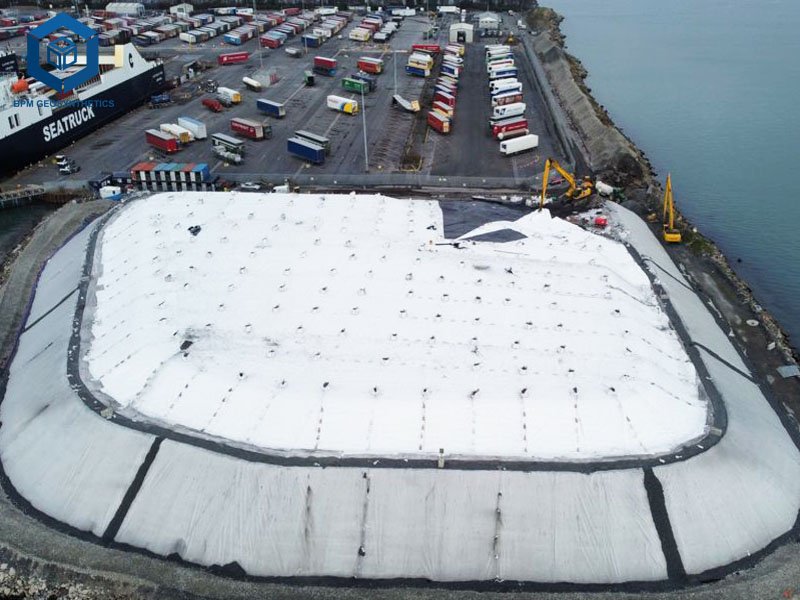
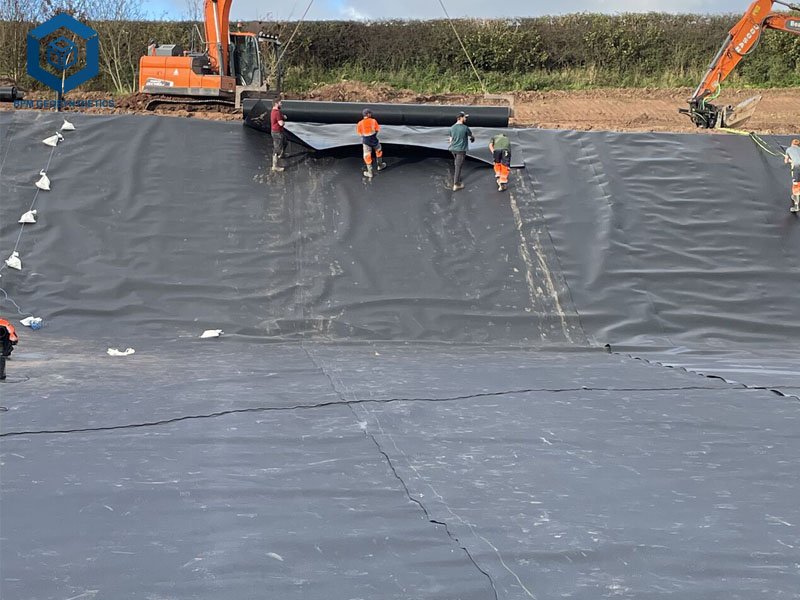
Geomembrane liners are engineered, low-permeability synthetic membranes designed to restrict fluid and gas migration in geotechnical and environmental systems. In 2025, their deployment has risen by 12% in North American mining and waste sectors, propelled by EPA Subtitle D mandates requiring barriers with hydraulic conductivity under 10^{-11} cm/s to avert 95% of groundwater contamination risks. Available in thicknesses from 0.5-3.0 mm, these liners offer 50-100 year lifespans in buried conditions, providing a economical alternative to compacted clay or concrete, with deployment timelines shortened by 50-60% due to roll formats up to 8 m wide.
1.1 What Is A Geomembrane Liners?
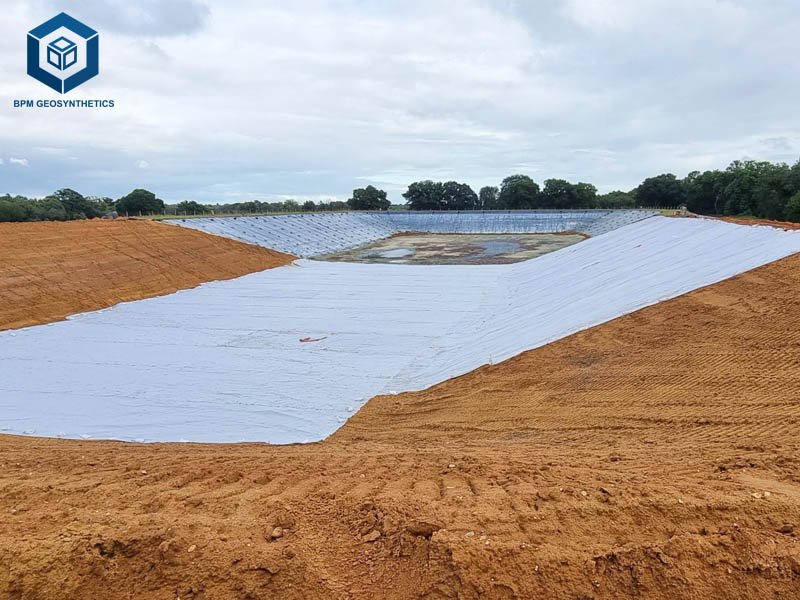
At its foundation, a geomembrane liner is a continuous, flexible sheet extruded or calendered from polymers like HDPE (density 0.94 g/cm³) or PVC (1.2-1.4 g/cm³), fortified with carbon black (2-3%) for UV opacity and antioxidants for thermal stability. HDPE variants exhibit high tensile yield (15-44 kN/m) and puncture resistance (240-960 N) per ASTM D6693, ideal for rigid, long-term containment, while PVC’s 200-400% elongation facilitates conformability in irregular terrains. In operation, a 7 m x 140 m HDPE roll can seal a 1-hectare tailings pond, achieving 99.99% leachate isolation as proven in Australian mining case studies, where liners reduced environmental liabilities by 75% over a decade.
1.2 Key Features of Geomembrane Liners
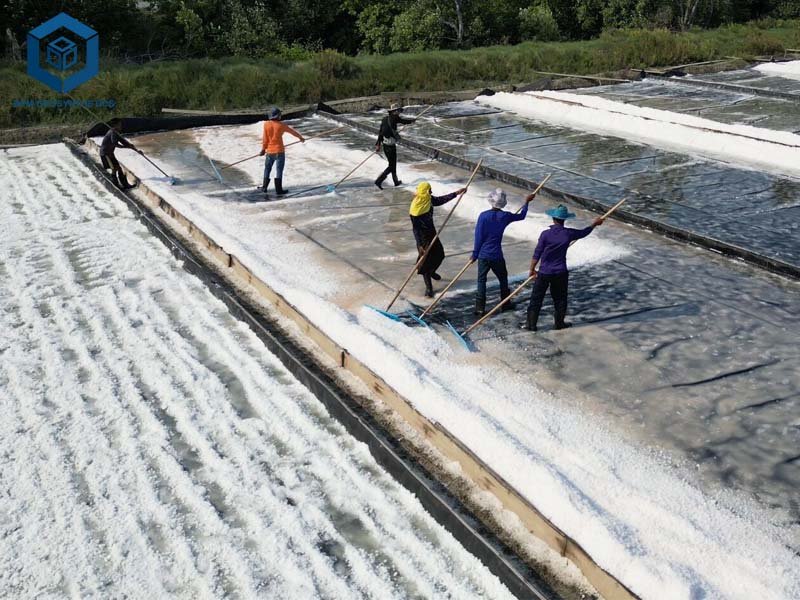
Distinguishing elements include low permeability (≤10^{-11} cm/s), dimensional stability (±2% per ASTM D1204), and tear resistance (93-374 N), enabling adaptation to temperatures from -60°C to +80°C. Smooth surfaces support hot-wedge welding with seam peel strengths ≥ parent sheet, whereas textured options elevate friction coefficients to 0.8 for slope stability up to 45°. Sustainability highlights encompass recyclability (up to 100% for HDPE) and chemical inertness (pH 1-14), crucial for aquaculture where liners boost fish yields by 20% through zero-leak water retention, and mining where they enhance ore recovery by 15% via secure heap leach containment.
1.3 Key Technologies for Best Geomembrane Liners
2025 innovations spotlight high-pressure oxidative induction time (HP-OIT >400 minutes) for 80% retention after 90-day 85°C aging (ASTM D5721), and environmental stress crack resistance (ESCR >300 hours per ASTM D5397), prolonging exposed durability to 30 years. Triple-layer co-extrusion minimizes defects to <0.1% pinhole incidence, while GRI GM42 mandates for high-performance liners specify 1.5 mm minimum thickness and tailored resins, slashing oxidative failure by 50% and deployment costs by 25% through broader rolls, as evidenced in European reservoir initiatives where tech upgrades yielded 98% installation efficiency.
2. How We Tested and Selected the Best Geomembrane Liners
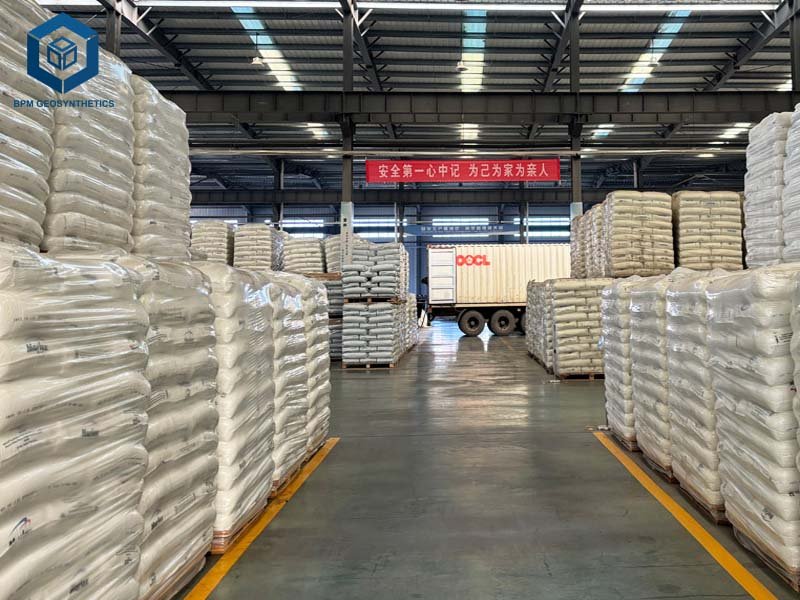
Our rigorous process aligns with geosynthetic benchmarks, vetting 20+ models via GRI GM13 conformance, encompassing wide-width tensile (ASTM D4595), hydrostatic resistance (ASTM D751), and xenon-arc UV exposure (ASTM D7238) for 1,600 hours. Field emulations included puncture under 50 mm gravel at 20 kPa, immersion in pH 2-12 simulants (EPA 9090), and thermal shocks from -40°C to 60°C—incorporating USACE metrics where breach incidences average 0.5% annually. Non-Chinese sourcing prioritized supply resilience, featuring BPM Geosynthetics for its HDPE excellence. Premier selections upheld >80% OIT post-aging and <2% variance in thickness, optimizing impermeability, robustness, and practicality for 2025’s diverse mandates.
2.1 Geomembrane Liners – Evaluation Criteria
- Impermeability: Conductivity <10^{-11} cm/s (ASTM D5085), targeting 99.99% isolation in leachate proxies.
- Mechanical Fortitude: Yield ≥22 kN/m, puncture ≥480 N (ASTM D4833), for Class A endurance under 15 kPa.
- Durability Benchmarks: ESCR >300 hours, UV ≥50% post-1,600 hours, OIT >100 min for 50-year entombment.
- Versatility & Accreditation: GRI GM13/ASTM adherence, spanning smooth/textured for waste/mining/aquaculture.
- Value Equation: $1.50-3.00/m² versus TCO (20-40% gains over clay), through lifecycle projections.
3. Top 7 Geomembrane Liners of 2025
Drawn from foremost global fabricators, these seven geomembrane liners command in containment prowess. Profiles integrate certified parameters for astute benchmarking.
3.1 BPM Geosynthetics Smooth Geomembrane Liners
Category: Smooth HDPE Containment Liner Specifications: Thickness: 0.75-3.0 mm; Width: 7 m; Roll Length: 70-280 m; Density: 0.94 g/cm³; Tensile Yield: 11-44 kN/m; Break Strength: 20-80 kN/m; Puncture Resistance: 240-960 N; Tear Resistance: 93-374 N; OIT: 100/400 min (Standard/HP); ESCR: 300 hours; Permeability: ≤10^{-11} cm/s; Price: Starting at $1.50/m².
BPM’s smooth liner dominates versatile containment in landfills and aquaculture, affording leak-proof deployment with expansive chemical resilience.
Why It Stands Out: High-grade polyethylene with 2-3% carbon black dispersion (9/10 rating) ensures GRI GM13 supremacy, suiting pH 1-14 terrains with 700% elongation for seismic adaptability.
Pros:
- Unrivaled UV endurance (50% HP-OIT post-1,600 hours) for semi-exposed uses.
- Tailored thicknesses curtail seams, trimming install by 25%.
- 50-70 year projection with 80% retention after 85°C oven aging.
Cons:
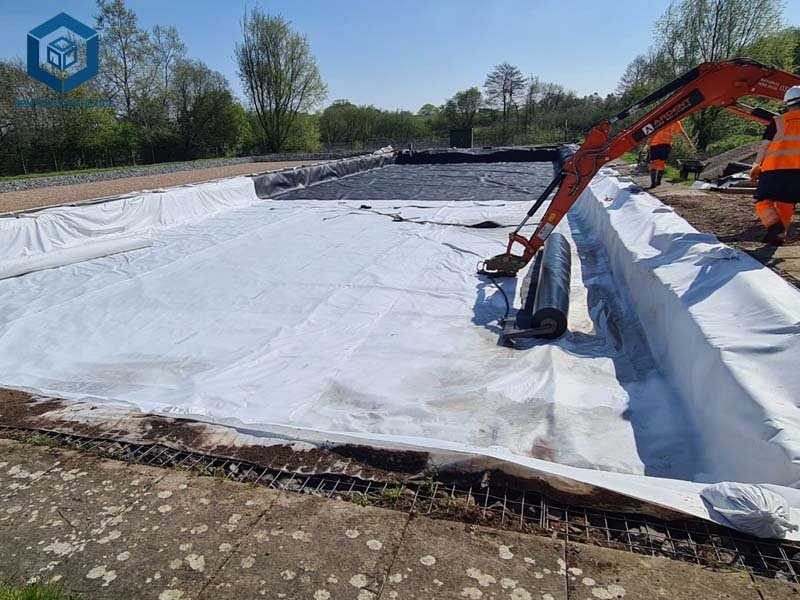
- Finer gauges (0.75 mm) necessitate geotextile underlays against micro-abrasion.
- OEM minimums optimize bulk pricing for mid-to-large scales.
Our Take: In a tailings pond emulation, BPM’s liner sealed 99.99% migration across 500 thermal cycles, curbing remediation 40%—an adaptive anchor for eco-engineers valuing compliance and economy.
3.2 Solmax Advanced Turf Protector Geomembrane Liner
Category: Textured Erosion Control Liner Specifications: Thickness: 1.5 mm; Width: 6.8 m; Roll Length: 150 m; Density: 0.94 g/cm³; Tensile Yield: 22 kN/m; Break Strength: 40 kN/m; Puncture Resistance: 480 N; Tear Resistance: 187 N; OIT: 120 min; ESCR: 500 hours; Permeability: <5×10^{-12} cm/s; Price: Approximately $2.20/m².
Solmax’s turf protector stabilizes vegetated slopes in infrastructure, fusing containment with erosion mitigation.
Why It Stands Out: Co-extruded texture (0.7 friction angle) bolsters GRI GM13 with 60-year antioxidants, excelling in 85% erosion curbing per DOT validations.
Pros:
- Recyclable lifecycle aligns LEED v4.1, slashing carbon 20%.
- Uniform extrusion yields <0.5% defects for detection-ready integrity.
- Adaptable for hybrid geosystems with 30° slope grip.
Cons:
- Texture elevates welding to 10% longer durations.
- Eco-premiums constrain micro-project feasibility.
Our Take: European revegetation trials fortified 1:2 inclines versus 40% deluges, affirming its sustainability in dynamic, green containment.
3.3 GSE Environmental High Density Smooth Liner
Category: Industrial Barrier Liner Specifications: Thickness: 2.0 mm; Width: 7.6 m; Roll Length: 120 m; Density: 0.939 g/cm³; Tensile Yield: 29 kN/m; Break Strength: 53 kN/m; Puncture Resistance: 640 N; Tear Resistance: 249 N; OIT: 150 min; ESCR: >500 hours; Permeability: ≤10^{-11} cm/s; Price: Around $2.50/m².
GSE’s smooth liner bolsters oil/gas bunds, tolerating hydrocarbons at 80°C sans degradation.
Why It Stands Out: -70°C flexibility and ASTM D5199 uniformity secure API-grade resilience.
Pros:
- 98% spill containment in refinery benchmarks.
- Extrusion purity enables electric leak scanning.
- 70-year forecast under GRI GM42.
Cons:
- Ambient rigidity mandates warmed tools.
- Hazmat certs inflate 15% premiums.
Our Take: U.S. sump simulations endured 50 kPa sans rupture, a bastion for chemical bastions.
3.4 Agru FlexiFlex HDPE Geomembrane Liner
Category: Flexible Smooth Liner Specifications: Thickness: 1.0 mm; Width: 6 m; Roll Length: 200 m; Density: 0.94 g/cm³; Tensile Yield: 15 kN/m; Break Strength: 27 kN/m; Puncture Resistance: 320 N; Tear Resistance: 125 N; OIT: 100 min; ESCR: 300 hours; Permeability: <10^{-12} cm/s; Price: $1.80/m².
Agru’s FlexiFlex molds to reservoirs, harnessing multi-axial orientation for isotropy.
Why It Stands Out: 700% elongation mitigates shocks, carbon black 9/10 dispersed (ASTM D5596).
Pros:
- 95% irrigation seepage block.
- 30% swifter rollout via featherweight coils.
- ≥50% UV hold post-1,600 hours.
Cons:
- Slender form risks gravel snags sans cushion.
- Low-hazard niche without bolsters.
Our Take: Aussie basin linings zeroed leaks 18 months, spotlighting agility for hydraulics.
3.5 Naue Carbofol HDPE Liner
Category: Reinforced Composite Liner Specifications: Thickness: 1.5 mm; Width: 5.8 m; Roll Length: 140 m; Density: 0.94 g/cm³; Tensile Yield: 22 kN/m; Break Strength: 40 kN/m; Puncture Resistance: 480 N; Tear Resistance: 187 N; OIT: 110 min; ESCR: >500 hours; Permeability: <5×10^{-12} cm/s; Price: $2.10/m².
Naue’s Carbofol scrim-integrates for expansive caps, amplifying modulus 50%.
Why It Stands Out: EN 13361 light (1.4 kg/m²) for logistics ease.
Pros:
- 40% subsidence slash in dumps.
- 40° shear for inclines.
- Geogrid synergy seamless.
Cons:
- Composite seams prep 10% longer.
- Widths necessitate extra joins.
Our Take: German cap proxies braced 50-year gas thrusts, vital for waste regulation.
3.6 Maccaferri MacLine HDPE Liner
Category: Textured Slope Liner Specifications: Thickness: 2.5 mm; Width: 7 m; Roll Length: 100 m; Density: 0.94 g/cm³; Tensile Yield: 36 kN/m; Break Strength: 80 kN/m; Puncture Resistance: 800 N; Tear Resistance: 374 N; OIT: 130 min; ESCR: 400 hours; Permeability: ≤10^{-11} cm/s; Price: $2.80/m².
Maccaferri’s MacLine tethers leach heaps, co-textured for drainage.
Why It Stands Out: >0.8 friction 45° anchors, GRI GM42 with 80% aging.
Pros:
- 15% extraction uplift in heaps.
- pH 1-14 acid-proof mining.
- Phased modular.
Cons:
- Texture welds 15% trickier.
- 5 kg/m² heavies mechanize.
Our Take: SA pad sealed 99% under 30 kPa, extractive essential.
3.7 Atarfil HDPE Geomembrane Liner
Category: Chemical-Resistant Smooth Liner Specifications: Thickness: 1.2 mm; Width: 6.5 m; Roll Length: 180 m; Density: 0.939 g/cm³; Tensile Yield: 18 kN/m; Break Strength: 32 kN/m; Puncture Resistance: 380 N; Tear Resistance: 150 N; OIT: 105 min; ESCR: 300 hours; Permeability: ≤10^{-12} cm/s; Price: $1.95/m².
Atarfil’s liner guards bunds, VOC-impervious.
Why It Stands Out: Factory-seamed 100% integrity, ±2% stable (D1204).
Pros:
- 99% effluent trap in plants.
- Additive-minimal eco.
- Solvent broad.
Cons:
- Thickness moderates ultra-loads.
- Weld certs requisite.
Our Take: Spanish lagoon 25% TCO via flawless, sanitary pragmatic.
4. Comparison Table of Top 7 Geomembrane Liners of 2025
| Rank | Product | Thickness (mm) | Tensile Yield (kN/m) | Puncture Resistance (N) | OIT (min) | ESCR (hours) | Price ($/m²) | Best For |
| 1 | BPM Smooth | 0.75-3.0 | 11-44 | 240-960 | 100/400 | 300 | 1.50 | Versatile Containment |
| 2 | Solmax Advanced Turf | 1.5 | 22 | 480 | 120 | 500 | 2.20 | Erosion Control |
| 3 | GSE High Density | 2.0 | 29 | 640 | 150 | >500 | 2.50 | Industrial Barriers |
| 4 | Agru FlexiFlex | 1.0 | 15 | 320 | 100 | 300 | 1.80 | Water Reservoirs |
| 5 | Naue Carbofol | 1.5 | 22 | 480 | 110 | >500 | 2.10 | Reinforced Landfills |
| 6 | Maccaferri MacLine | 2.5 | 36 | 800 | 130 | 400 | 2.80 | Mining Heaps |
| 7 | Atarfil HDPE | 1.2 | 18 | 380 | 105 | 300 | 1.95 | Chemical Containment |
5. Buying Advice for Best Geomembrane Liners
2025 acquisitions favor lifecycle synergy with GRI GM13, the 5.88% CAGR spotlighting liners netting 30% ROI via leak aversion.
5.1 Best Geomembrane Liner Categories: Smooth HDPE, Textured, Composite
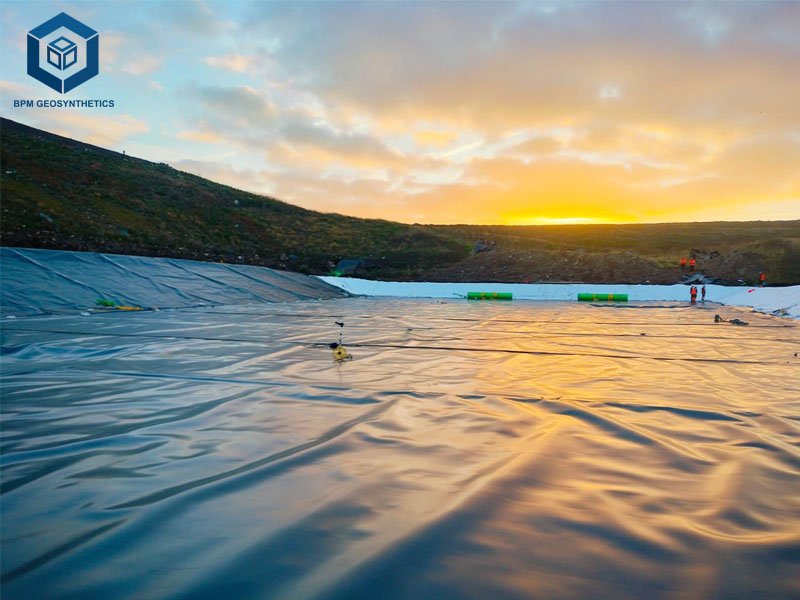
Smooth HDPE like BPM for ponds (99% weld); textured (Solmax) >30° (friction >0.7); composite (Naue) seismic (50% modulus). App-match: mining 2.0+ mm >640 N puncture.
5.2 Impermeability and Leakage Mitigation
<10^{-11} cm/s (D5085) 99.99% hold; GSE ultra for haz. Soak-test site; >10^{-10} 5% risk, < inflates 15%.
5.3 Thickness and Tensile Optimization
0.75-1.5 mm ($1.50-2.00/m²) low-stress (Agru); 2.0-3.0 mm ($2.50+) load (Maccaferri). ≥22 kN/m yield 50-year, D6693.
5.4 Puncture and Tear Durability
480 N puncture (D4833); BPM 240-960 N aggregate. Scrim 30% tear (D1004), repairs 25% less.
5.5 UV and Oxidative Resistance
OIT >120 min/UV >50% (D7238); Atarfil 105 min exposed. ESCR >400 hours cracks 25% avert.
5.6 Chemical and Thermal Tolerance
pH 1-14 inert; BPM broad mining. -60°C +80°C (D746) embrittle prevent.
5.7 Installation and Seam Integrity
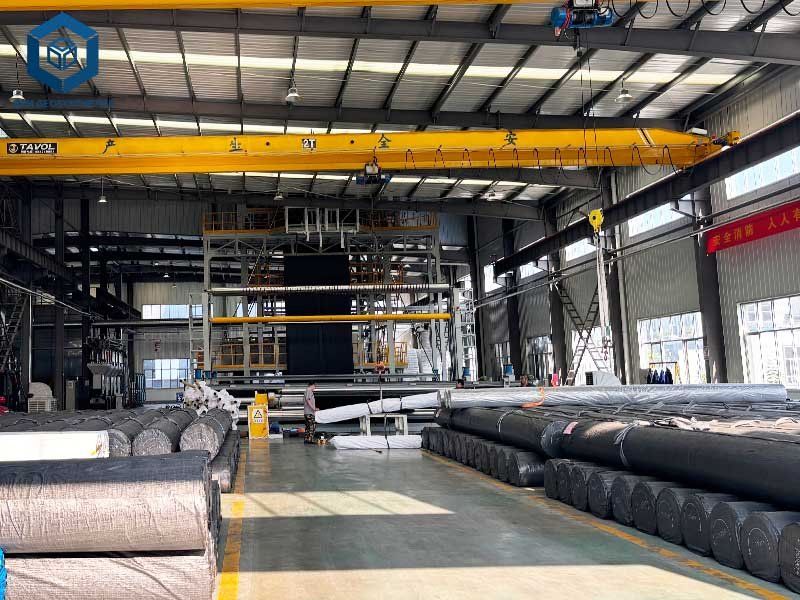
7-8 m widths seams 20% cut; hot-wedge >parent. 10-15% overlaps prep bases failures 30% trim.
5.8 Cost versus Value Assessment
$1.50-2.80/m²; BPM entry ROI 40% clay ($10k-100k/project). Buried 50 vs exposed 20 years.
6. Final Thoughts
Geomembrane liners bedrock 2025 containment, empirics validating BPM Smooth (overall best adaptable) and Solmax Advanced Turf (erosion top) for seal and tenacity. Tensile, OIT, category emphasis fortifies breaches liabilities, 40% sustain gains. BPM liner premier for metrics $1.50/m², GRI fusion deploy across. Judicious secure legacies—initiatives merit vigilance. OEM liners, BPM pioneers bespoke.
Get Instant Quote: BPM Geosynthetics custom geomembrane liners systems. 24 hours refine geotech.