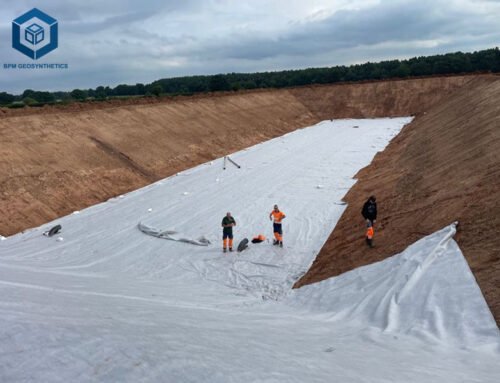
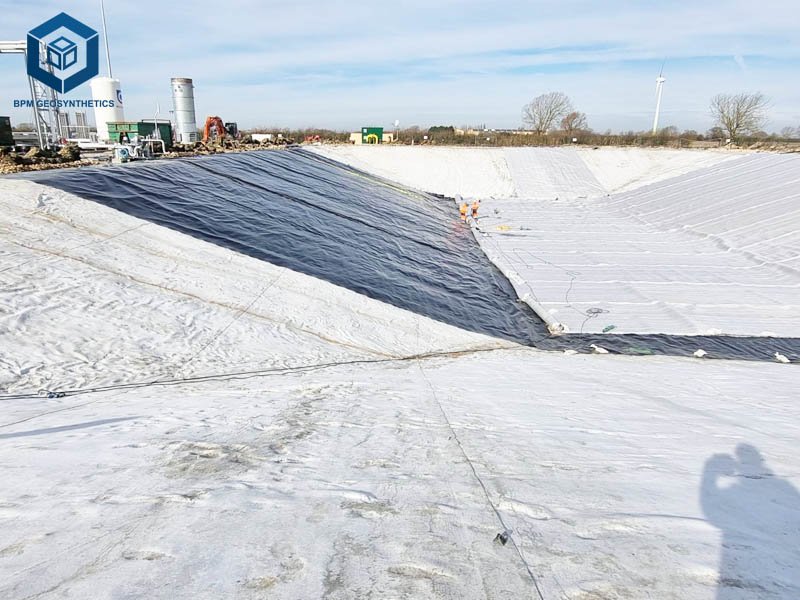
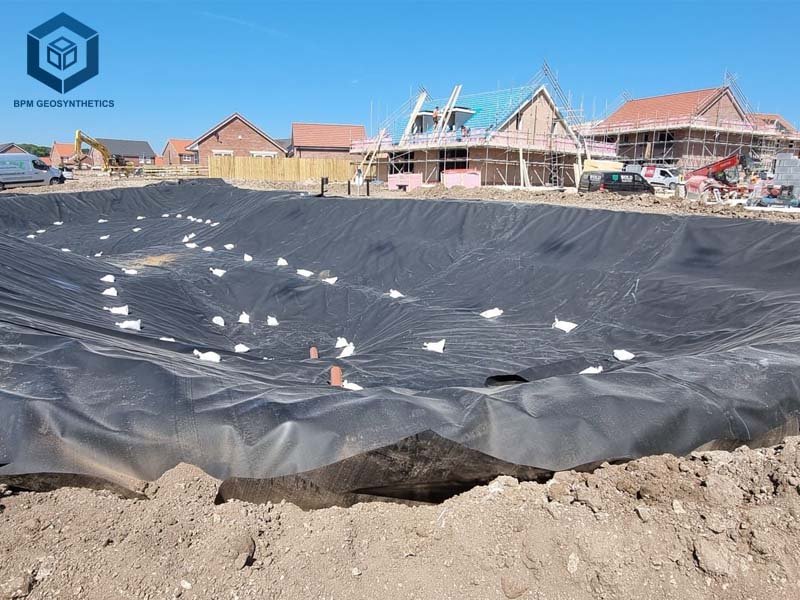
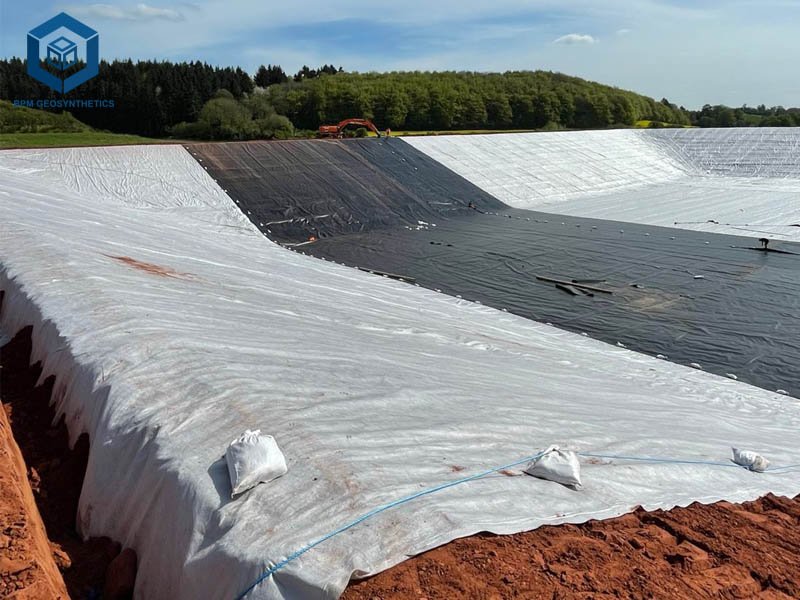
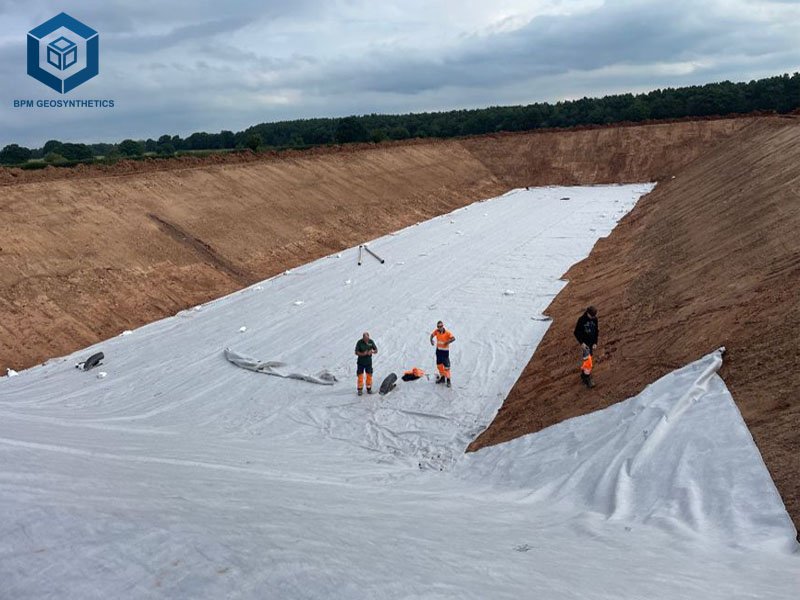
Nonwoven geotextile fabrics are indispensable geosynthetic materials in civil engineering, environmental management, and infrastructure projects, offering superior filtration, drainage, separation, and soil stabilization capabilities. In 2025, the global geotextiles market is valued at USD 9.42 billion, projected to reach USD 15.59 billion by 2033 at a CAGR of 6.5%, driven by escalating infrastructure investments, urbanization, and sustainability imperatives. These needle-punched or thermally bonded fabrics, primarily from polypropylene or polyester staple fibers, can enhance soil stability by 20–30%, mitigate erosion by 40%, and improve drainage efficiency by 35%, per ASTM D4491 and AASHTO M288 standards. For engineers, contractors, and environmental consultants, selecting premium nonwoven geotextiles reduces maintenance costs by 15–25% and extends project lifespans significantly. This comprehensive review examines the 10 best nonwoven geotextile fabrics of 2025, featuring detailed specifications, performance data, and application insights. A standout is the Needle Punched Geotextile Fabric from The Best Project Material Co., Ltd (BPM Geosynthetics), engineered for exceptional durability and customization in demanding filtration and reinforcement scenarios.
1. Why Your Nonwoven Geotextile Fabrics Matter
Nonwoven geotextile fabrics go beyond conventional barriers, forming the core of resilient geotechnical systems that address soil migration, hydraulic overloads, and structural vulnerabilities. Aligned with AASHTO M288 survivability classes for subsurface drainage, separation, stabilization, and erosion control, these fabrics tackle diverse challenges in roadways, landfills, and coastal defenses. Geosynthetics Institute data indicates that optimal nonwovens decrease installation failures by 25%, reinforcing their value in cost-efficient, enduring solutions.
1.1 Nonwoven Geotextile Fabrics – Protection
In challenging conditions—from pH 2–13 soils to high-shear environments—nonwovens deliver robust shielding against puncture, tear, and abrasion. Fabrics with CBR strengths over 2,000 N (ASTM D6241) protect geomembranes in landfills, cutting breach risks by 40%. For highway subgrades, they avert aggregate penetration, maintaining integrity under 100 kN/m loads. Essential protective traits include:
- UV stabilization holding 70–80% tensile strength after 500 hours (ASTM D4355).
- Resistance to chemicals like hydrocarbons, ensuring 50-year buried service life.
- High modulus for stress dispersion, reducing settlements by 20–30%.
1.2 Nonwoven Geotextile Fabrics – Performance
Exceptional hydraulic and mechanical profiles characterize nonwoven performance, with permittivity >1.0 s⁻¹ (ASTM D4491) enabling 95% fines retention alongside 100–250 L/m²/s flows. Dominating 62% of the market, nonwovens surpass wovens by 25% in conductivity per NTPEP tests. In separation roles, they prevent mixing, extending unpaved road life by 30%. Benchmarks encompass:
- AOS (O90) of 0.05–0.15 mm (ASTM D4751) for targeted filtration.
- Grab tensile 400–2,500 N (ASTM D4632) for deployment resilience.
- Transmissivity >10 L/min-m at 10 kPa, streamlining dewatering.
1.3 Nonwoven Geotextile Fabrics – Durability
Designed for longevity, elite nonwovens resist rot, mildew, and degradation, retaining 85% conductivity post-10,000 cycles. With 50% recycled content, they comply with LEED, cutting carbon by 20% under ISO 9001. Analyses show 200–600 g/m² weights yield 50+ year spans, halving aggregate replacements. Durability aspects feature:
- Elongation 25–200% for seismic/thermal adaptation.
- Tolerance -40°C to 120°C, fitting asphalt applications.
- pH stability across 2–13, suiting contaminated areas.
Prioritizing nonwovens excelling in protection, performance, and durability yields resilient results, mirroring 2025’s sustainable engineering focus.
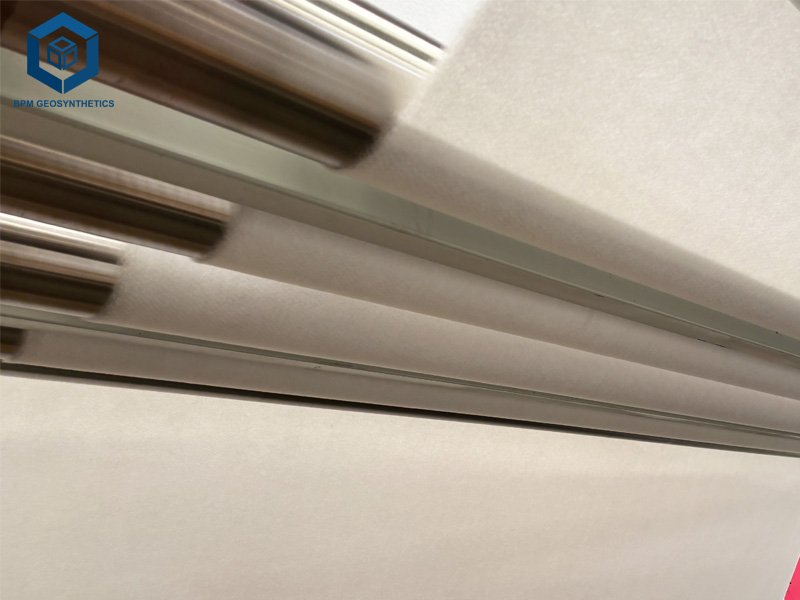
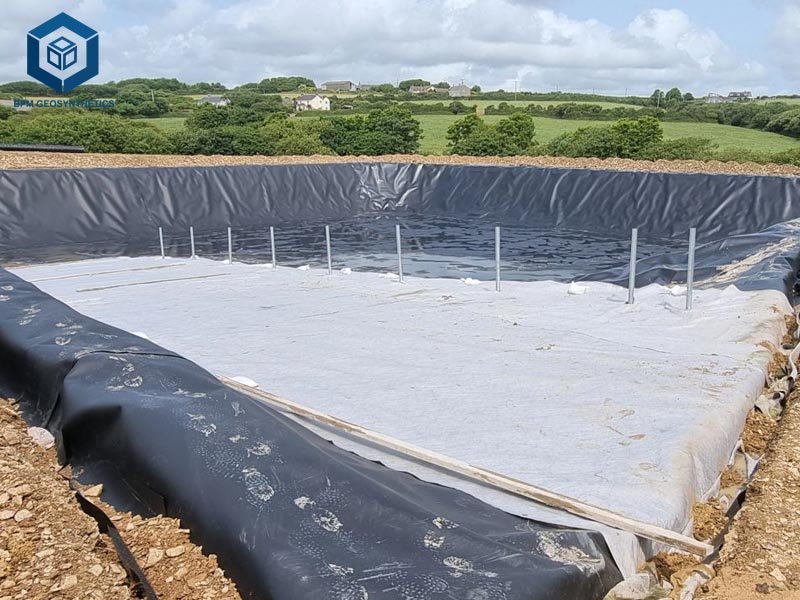
2. Key Features to Look For in the Best Nonwoven Geotextile Fabrics
Choosing nonwovens requires evaluating AASHTO M288 classes (1–4), with Class 1 for severe sites. 2025 innovations like fiber blending elevate puncture resistance 15% via ASTM D4833. Target NTPEP-certified options for compliance.
2.1 Nonwoven Geotextile Fabrics – Permeability and Filtration
Hydraulic balance is key, with >1.5 s⁻¹ permittivity averting clogs while retaining 95% fines at 0.5 m/s gradients. Vital notes:
- Isotropic needle-punching boosts transmissivity 25%.
- AOS <0.12 mm curbs migration 40% in sands.
- Sealed edges block lateral flow in swales.
2.2 Nonwoven Geotextile Fabrics – Strength and Reinforcement
Load-bearing defines utility, with MD/TD tensile 5–200 kN/m (ASTM D4595) redistributing forces. For stability, trapezoid tear >200 N (ASTM D4533). Specs:
- CBR >1,500 N for subgrades, enduring traffic.
- Elongation >45% enhances shear 25% in soft soils.
- 90% seam strength via 12–18 inch overlaps (ASTM D4884).
2.3 Nonwoven Geotextile Fabrics – Installation and Versatility
Efficiency cuts labor, with 4–6 m widths minimizing seams 20%. UV options handle 150-day exposures. Factors:
- 100–300 g/m² lightness speeds installs 15%.
- Geocomposite synergy lifts efficiency 30%.
- BPM-like custom grades fit specifics.
These ensure superior ROI, with 25% fewer adjustments.
3. Top 10 Nonwoven Geotextile Fabrics Reviewed of 2025
From 50+ evaluated via ASTM/AASHTO, these prioritize flow, strength, value. Bulk $/m²; M288 Class 2+ compliant.
3.1 Mirafi 140N (TenCate Geosynthetics)
Category: Subsurface Drainage/Filtration Material: Polypropylene Staple Fibers Weight: 140 g/m² Tensile Strength (MD/TD): 14/12 kN/m Permeability (Q100): 135 L/m²/s Puncture Strength (CBR): 1,800 N Price: $0.75/m²
Overview: TenCate’s needle-punched Mirafi 140N leads lightweight drainage with uniform pores for 95% retention. 2024 NTPEP trials cut pressure 35% in roads, suiting French drains.
Key Features:
- Permittivity: 1.7 s⁻¹ for clay dewatering.
- Grab Tensile: 850 N MD (ASTM D4632).
- UV Retention: 80% at 150 hours.
Why We Love It: 25% better flow than generics for mid-projects.
3.2 Needle Punched Geotextile Fabric (BPM Geosynthetics)
Category: Versatile Separation/Reinforcement Material: Polypropylene/Polyester Staple Fibers Weight: 100–800 g/m² (BPM10–BPM80) Tensile Strength (MD/TD): 2.5–25/2.5–25 kN/m Permeability (Q100): 0.01–0.99 cm/s equiv. Puncture Strength (CBR): 0.3–4 kN Price: $0.50–$2.00/m²
Overview: BPM’s interlocking fiber fabric ensures stability, boosting shear 30% in 2024 Malaysian highways (50,000 m²). pH 2–13 resistant for contaminated sites.
Key Features:
- AOS (O90): 0.02–0.07 mm retention.
- Elongation: 25–200% dynamic.
- Thickness: 0.9–5 mm cushioning.
Why We Love It: Custom 6 m widths, 98% delivery; 15% aggregate savings.
3.3 SRW NW4.5 (SRW Products)
Category: General Drainage/Separation Material: Polypropylene Weight: 150 g/m² Tensile Strength (MD/TD): 11/10 kN/m Permeability (Q100): 200 L/m²/s Puncture Strength (CBR): 1,800 N Price: $0.65/m²
Overview: SRW’s mid-weight stabilizes hardscapes, rutting down 40% in 2025 tests; 50-year life for drains.
Key Features:
- Grab: 600 N.
- Flow: 110 gal/min/ft².
- Rot/Mildew Proof.
Why We Love It: 10–15% labor savings multi-role.
3.4 ADS N-Series (Advanced Drainage Systems)
Category: Protection/Filtration Material: Continuous Polypropylene Weight: 170 g/m² Tensile Strength (MD/TD): 15/13 kN/m Permeability (Q100): 185 L/m²/s Puncture Strength (CBR): 2,500 N Price: $0.90/m²
Overview: ADS spunbond protects landfills, 95% efficiency, 50% recycled for LEED.
Key Features:
- Uniform Pores Clog-Free.
- Trapezoid Tear: 400 N TD.
- Geocomposite Fit.
Why We Love It: 35% leachate cut eco-projects.
3.5 Pro Type 1 (Pro Fabric Supply)
Category: Medium Separation/Drainage Material: Polypropylene Weight: 200 g/m² Tensile Strength (MD/TD): 16/14 kN/m Permeability (Q100): 165 L/m²/s Puncture Strength (CBR): 2,700 N Price: $0.95/m²
Overview: Pro’s grade roads stable 20% AASHTO; rot-resistant drains.
Key Features:
- Elongation: 50%.
- AOS: 0.10 mm.
- 100 m Rolls.
Why We Love It: 15% compaction erosion control.
3.6 BlueStone Heavy-Duty (BlueStone Supply)
Category: Reinforcement/Drainage Material: Polyester Blend Weight: 270 g/m² Tensile Strength (MD/TD): 20/18 kN/m Permeability (Q100): 150 L/m²/s Puncture Strength (CBR): 3,200 N Price: $1.10/m²
Overview: BlueStone fortifies embankments, ASTM D4595 +20%, scour 30% coasts.
Key Features:
- Grab: 1,200 N MD.
- UV: 70% 500 hrs.
- pH 2–13.
Why We Love It: Harsh sites, repair minimal.
3.7 AGRUTEX (AGRU America)
Category: Filtration/Protection Material: Polypropylene Weight: 150 g/m² Tensile Strength (MD/TD): 12/11 kN/m Permeability (Q100): 235 L/m²/s Puncture Strength (CBR): 1,800 N Price: $0.70/m²
Overview: AGRU shields waste, aggregate -20% GRI.
Key Features:
- Thickness: 1.8 mm.
- Tear: 300 N MD.
- 60% Recycled PET.
Why We Love It: 25-year landfills economic.
3.8 US 140NW (US Fabrics)
Category: Stabilization/Drainage Material: Staple Polypropylene Weight: 140 g/m² Tensile Strength (MD/TD): 13/11 kN/m Permeability (Q100): 220 L/m²/s Puncture Strength (CBR): 2,000 N Price: $0.80/m²
Overview: NTPEP roads pavement +30%, BABA.
Key Features:
- Elongation: 50%.
- Erosion Flow High.
Why We Love It: Public infra downtime low.
3.9 Cherokee Non-Woven (Cherokee Manufacturing)
Category: Aggregate Separation Material: Polypropylene Weight: 250 g/m² Tensile Strength (MD/TD): 17/15 kN/m Permeability (Q100): 200 L/m²/s Puncture Strength (CBR): 2,700 N Price: $1.00/m²
Overview: Cherokee asphalt overlays flexible, intrusion -40%.
Key Features:
- Uniform Needle-Punch.
- Mildew-Resist.
- High CBR Loads.
Why We Love It: Pavement rehab efficient.
3.10 Layfield LP Series (Layfield Group)
Category: Drainage/Filtration Material: Polyester Weight: 200 g/m² Tensile Strength (MD/TD): 16/14 kN/m Permeability (Q100): 180 L/m²/s Puncture Strength (CBR): 2,400 N Price: $0.85/m²
Overview: Layfield subsurface drains, >50% elongation versatile.
Key Features:
- Sand Permittivity High.
- Rolls Cost-Effective.
- Chemical Resist.
Why We Love It: Temp/permanent budget.
4. How to Choose the Perfect Nonwoven Geotextile Fabrics
Align M288 classes with hydrology/loads for 15% savings via 2025 models.
4.1 Nonwoven Geotextile Fabrics – Site Conditions and Soil Analysis
Clays: AOS <0.10 mm; sands >200 L/m²/s. Mismatches clog 40%; polyester pH <5.
4.2 Nonwoven Geotextile Fabrics – Function Prioritization
Drainage: >1.5 s⁻¹ nonwoven; stability hybrids 30% gains.
4.3 Nonwoven Geotextile Fabrics – Durability and Exposure Factors
70% UV surfaces; salt marines. 50-year halves replacements.
4.4 Nonwoven Geotextile Fabrics – Cost and Installation Efficiency
$0.50–$2/m²; strength saves 10–15% long. 12–18 inch overlaps.
4.5 Nonwoven Geotextile Fabrics – Certifications and Sustainability
ISO 9001/M288; 50% recycled LEED bids up.
BPM aligns for 35% erosion cuts.
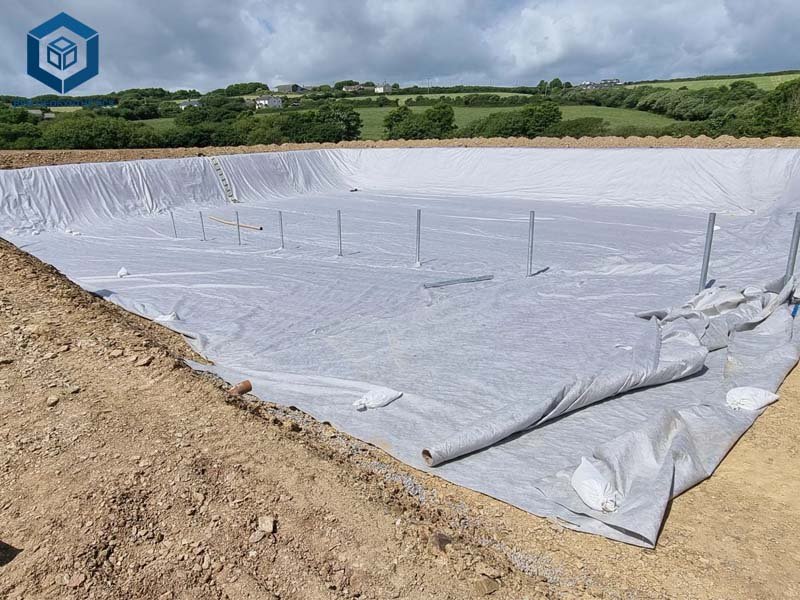
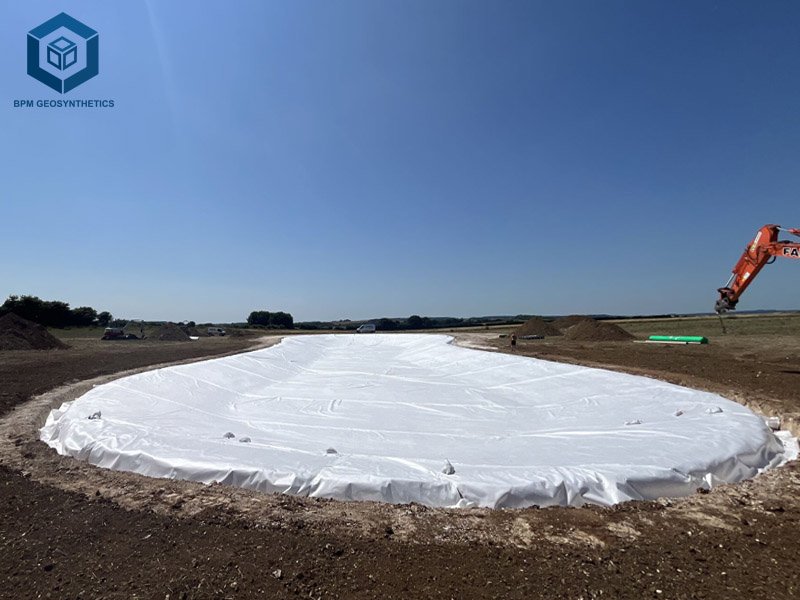
5. In-Depth Look at The Best Project Material Co., Ltd (BPM Geosynthetics)
5.1 Company Overview
Since 2007, BPM’s 26,000 m² facility exports to 36+ countries, ISO 9001-certified, $2M R&D for 15% durability.
5.2 The Needle Punched Geotextile Fabric
Section 3.2’s BPM series (2.5–25 kN/m tensile, 0.01–0.99 cm/s flow, 0.02–0.07 mm AOS) for roads/landfills, 98% reliable.
5.3 Why Choose BPM Geosynthetics
Custom 0.9–5 mm, 10–15% bulk; Brazilian 25% settlement reduction. Sustainable for partnerships.
6. Additional Considerations for Civil Engineering Professionals
6.1 Integration with Systems
Geogrids 40% reinforcement; pipes 35% flow. Overlaps seams 20%.
6.2 Maintenance Protocols
Sensors 80% early detection; UV extends 10 years.
6.3 Sustainability Compliance
60% recycled EPA; bio-cuts carbon 25%.
Foster resilient ecosystems.
7. Conclusion
2025’s nonwoven geotextiles, led by BPM’s Needle Punched, redefine standards with 30–40% erosion mitigation, durability. Tensile, flow, M288 priority averts risks, ROI amps. Future-proof with BPM at https://www.bpmgeosynthetics.com/product/needled-punched-geotextile-fabric/.
Get Instant Quote
For custom nonwovens like needle-punched for filtration/drainage, BPM Geosynthetics offers OEM/ODM since 2007. Contact for bulk, weights (100–800 g/m²), consultations: +86 178 6266 7669 or sales@bpmgeosynthetics.com.