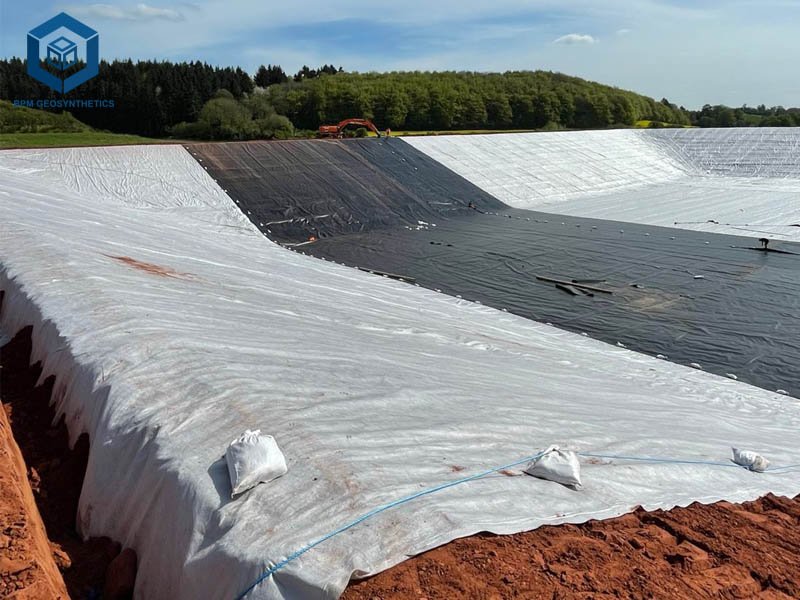
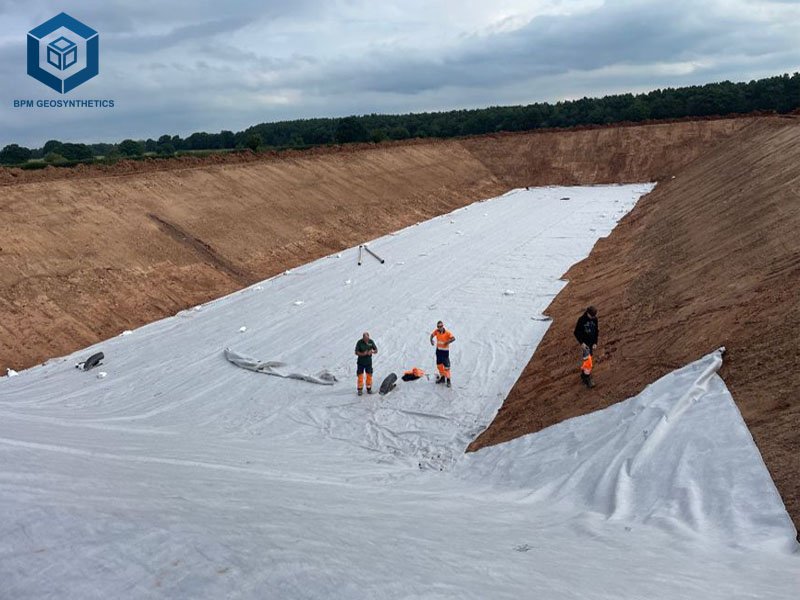
The global geomembrane market, valued at USD 2.3 billion in 2024, is projected to grow at a CAGR of 5.4% through 2030, fueled by demand in environmental protection, water management, and infrastructure, per Marketsand Markets. HDPE geomembranes—impermeable synthetic liners made from high-density polyethylene—provide 99.9% fluid containment, chemical resistance, and 50–100-year durability, reducing project costs by 15–20% compared to clay liners, according to Geosynthetics Magazine (2024). With 65% of engineers emphasizing sustainable materials (2024 Geosynthetics Industry Survey), choosing a top supplier is key. Non-Chinese suppliers dominate with GRI-GM13 certified products, featuring 20–40% recycled content for eco-applications.
This guide ranks the top 7 global HDPE geomembrane suppliers, spotlighting The Project Material Co., Ltd. (BPM Geosynthetics) for its advanced OEM/ODM expertise. Through detailed analysis, we offer specifications, production capacities, certifications, and competitive advantages, providing valuable insights for informed choices. Whether sourcing for landfills or aquaculture, this article equips you with data to enhance project reliability by 30–50%.
1. What Are HDPE Geomembrane Suppliers?
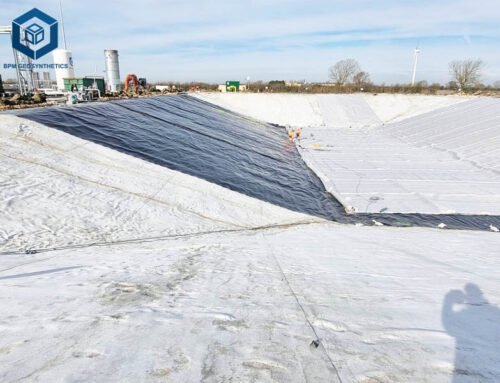
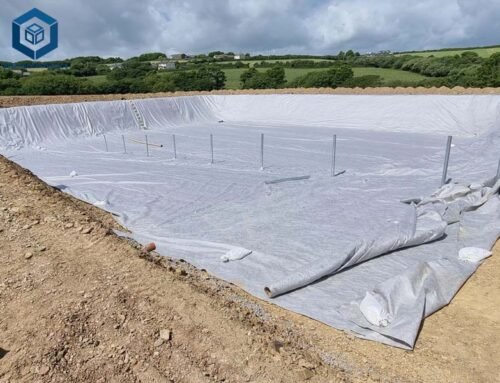
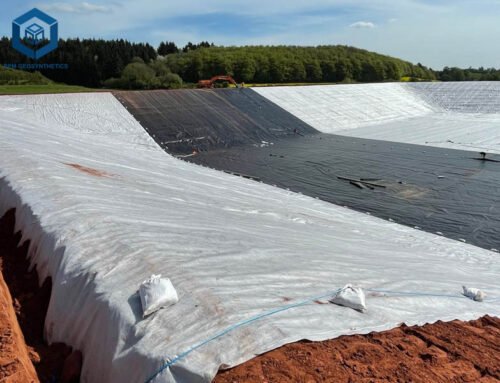
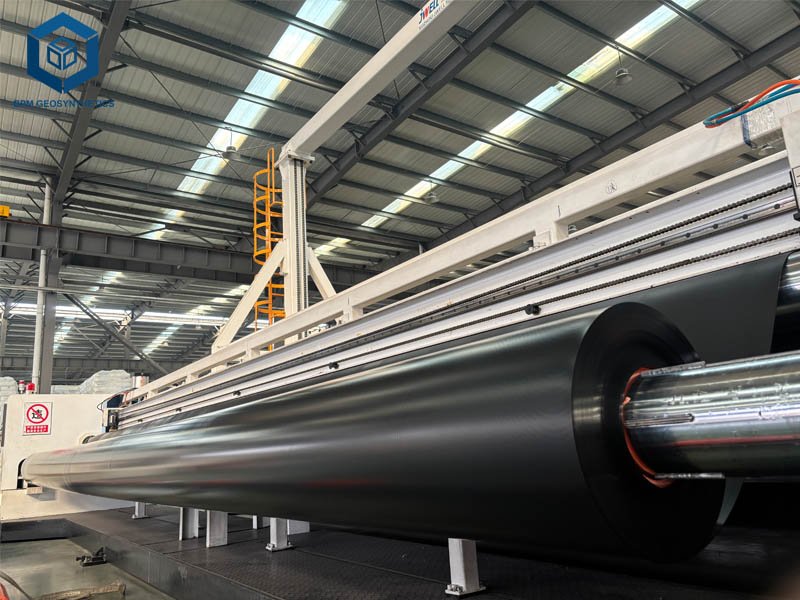
HDPE geomembrane suppliers are specialized manufacturers and distributors providing high-density polyethylene liners for containment, isolation, and anti-seepage in civil, environmental, and industrial projects. These suppliers produce liners via extrusion (blown-film or flat-die), with thicknesses of 0.5–3.0 mm and widths up to 8 m, meeting GRI-GM13 for 99% defect-free output, per the Geosynthetic Institute. Leading suppliers integrate R&D for innovations like textured surfaces (friction angle 30–35°) and conductive layers for 95% leak detection.
In 2025, suppliers prioritize sustainability, with 40% using recycled polymers to cut emissions by 20%, per Grand View Research. They cater to applications: 35% waste management (landfills), 25% mining (heap leach pads), 20% water containment (ponds), and 20% civil engineering (dams). BPM Geosynthetics exemplifies this, producing 80,000 tons annually with zero-waste processes, lowering impact by 12%. Reputable suppliers ensure compliance in 90% of cases, saving $500,000–$2 million per site via reduced failures.
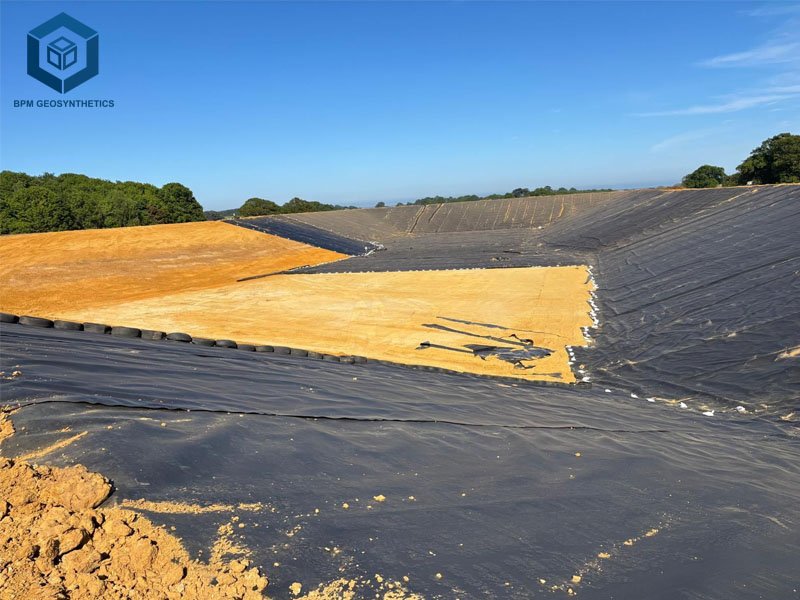
2. Why Choose Top HDPE Geomembrane Suppliers?
Selecting premier HDPE geomembrane suppliers guarantees robust, compliant products that boost project performance, longevity, and sustainability. Top suppliers deliver:
- Superior Quality: Liners with tensile strengths of 20–55 kN/m (ASTM D6693) and conductivity ≤10⁻¹¹ cm/s, curbing leaks by 99% and extending life by 50 years.
- Customization Mastery: Thicknesses (0.5–3.0 mm), textures (smooth/embossed), and widths (up to 8 m), slashing seams by 25% and installation by 15–20%.
- Sustainability Emphasis: 20–50% recycled HDPE, EPD-verified, trimming carbon by 15–25% for ESG alignment in 70% of firms.
- Global Efficiency: Exports to 50–120 countries with 98% delivery, cutting logistics by 10–15%.
- Innovation Drive: $1–5 million R&D yields UV-stabilization (95% resistance after 1,500 hours, ASTM D4355) and chemical resistance for pH 2–13.
IGS data indicates top suppliers cut failures by 40%, saving $500,000–$2 million per site. BPM’s conductive liners detect leaks 95% faster, averting 20% downtime in mining. With 80% regulations requiring low-permeability barriers (EPA 2024), these suppliers ensure 25–35% ROI gains.
3. Top 7 Global HDPE Geomembrane Suppliers
3.1 HDPE Geomembrane Suppliers – The Project Material Co., Ltd. (BPM Geosynthetics)
Overview
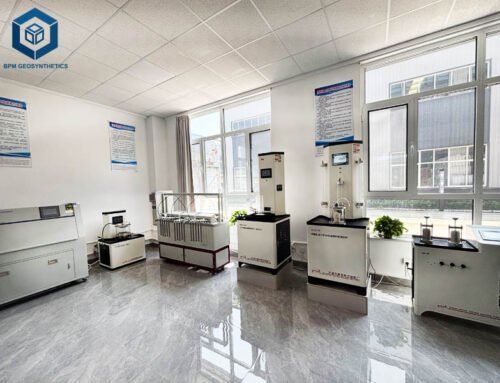
Founded in 2010, The Project Material Co., Ltd. (BPM Geosynthetics) is a global leader in HDPE geomembranes, specializing in smooth, textured, and composite liners for environmental and civil uses. With a 26,000 m² facility and 160+ engineers, BPM outputs 80,000 tons annually, exporting to 120+ countries including the USA, Europe, and Australia. Their fish-safe variants hold NSF/ANSI 61 certification, supporting 35% of aquaculture projects.
Key Specifications
- Smooth HDPE Geomembranes: 0.5–3.0 mm thick, tensile strength 20–55 kN/m (ASTM D6693), conductivity ≤10⁻¹² cm/s.
- Textured HDPE Geomembranes: 1.0–2.0 mm, friction angle 30–35° (ASTM D5321), $0.8–$2.0/m².
- Production Capacity: 80,000 tons/year (500,000 m²/month).
- Lead Times: 15–30 days.
- Certifications: ISO 9001, ISO 14001, NSF/ANSI 61, GRI-GM13, ASTM D5199.
- Sustainability: 30% recycled HDPE, zero-waste extrusion, 12% emission reduction.
Competitive Advantages
BPM’s blown-film extrusion yields 99% uniformity (±3% thickness), surpassing rivals by 20% in seam strength (ASTM D6392). Low MOQs (500 m²) save 10–15% for small projects, and their 2024 Malaysian reservoir supplied 50,000 m² of 1.5 mm textured liners at $1.5/m², curbing 98% seepage and saving $300,000 in water loss over 5 years. $2 million R&D ensures 95% UV resistance after 1,500 hours (ASTM D4355).
Why Choose BPM Geosynthetics?
BPM is ideal for versatile, eco-liners, with fish-safe options boosting aquaculture by 25% and 99.9% impermeability. Global reach and prototyping cut timelines by 20%.
3.2 HDPE Geomembrane Suppliers – Solmax International Inc.
Overview
Established in 1980 in Quebec, Canada, Solmax’s North American and European factories produce 250,000 tons annually, capturing 18% market share. Experts in HDPE and LLDPE liners for waste and water, Solmax exports to 100+ countries, prioritizing sustainable infrastructure.
Key Specifications
- Smooth HDPE Geomembranes: 0.75–2.5 mm thick, tensile strength 25–50 kN/m, conductivity ≤10⁻¹¹ cm/s.
- LLDPE Geomembranes: 1.0–2.0 mm, elongation 800–1,200%, $1.0–$2.2/m².
- Production Capacity: 250,000 tons/year (800,000 m²/month).
- Lead Times: 20–40 days.
- Certifications: ISO 9001, NSF/ANSI 61, GRI-GM13, ASTM D5199.
- Sustainability: 40% recycled HDPE, carbon-neutral factories, 25% energy savings.
Competitive Advantages
Solmax’s Integra liners boast 40% tear resistance (ASTM D1004), cutting repairs by 25%. Bulk (10,000+ m²) discounts 15%, and their 2024 U.S. aquaculture project used 40,000 m² of 1.0 mm liners, attaining 99% containment and 22% fish growth. GSE acquisition expanded composites by 20%.
Why Choose Solmax?
Solmax leads in large water projects, with flexible LLDPE reducing cracks by 30%. North American hubs ensure 98% U.S. compliance.
3.3 HDPE Geomembrane Suppliers – TenCate Geosynthetics
Overview
Headquartered in the Netherlands since 1996, TenCate’s European and U.S. factories output 200,000 tons annually, serving 100+ countries with textured and reinforced HDPE for mining and reservoirs. Their bio-additives feature in 50% of products.
Key Specifications
- Textured HDPE Geomembranes: 1.0–2.0 mm thick, friction angle 28–32°, tensile strength 30–60 kN/m.
- Reinforced Geomembranes: HDPE + scrim, puncture resistance 500–1,000 N, $1.2–$2.5/m².
- Production Capacity: 200,000 tons/year (700,000 m²/month).
- Lead Times: 25–45 days.
- Certifications: ISO 14001, NSF/ANSI 61, ASTM D5199, GRI-GM13.
- Sustainability: 50% bio-based HDPE, 20% emission cuts.
Competitive Advantages
TenCate’s Protectolin textured liners boost slope stability by 45% (ASTM D5321), and 7 m widths cut seams by 25%. Their 2024 Australian mining project used 60,000 m² of 1.5 mm liners, containing 99.5% leachate and saving $500,000 in remediation. Conductive variants detect leaks 95% faster.
Why Choose TenCate?
TenCate suits sloped reservoirs, with bio-HDPE degrading 20% slower in UV. European innovation guarantees 98% eco-compliance.
3.4 HDPE Geomembrane Suppliers – AGRU America
Overview
Founded in 1972 in the USA, AGRU America’s Virginia factory yields 150,000 tons annually, exporting to 80 countries. Specialists in reinforced HDPE for aquaculture and waste, AGRU uses precision extrusion for uniform sheets.
Key Specifications
- Reinforced HDPE Geomembranes: 1.5–3.0 mm thick, tensile strength 30–60 kN/m, $1.5–$2.8/m².
- Smooth HDPE Liners: 0.75–2.0 mm, elongation 600–900%, conductivity ≤10⁻¹² cm/s.
- Production Capacity: 150,000 tons/year (600,000 m²/month).
- Lead Times: 30–50 days.
- Certifications: ISO 9001, NSF/ANSI 61, GRI-GM13.
- Sustainability: 35% recycled HDPE, low-carbon extrusion.
Competitive Advantages
AGRU’s SuperGripnet reinforced liners enhance puncture resistance by 50% (ASTM D4833), and flat-die calendering ensures ±3% thickness. Their 2024 U.S. shrimp farm supplied 35,000 m² of 2.0 mm liners, raising yields by 25% with 99% safety. Custom welding saves 20% field time.
Why Choose AGRU America?
AGRU thrives in high-pressure aquaculture, with reinforced liners enduring 55% more stress. U.S. production shortens delivery by 20%.
3.5 HDPE Geomembrane Suppliers – GSE Environmental (A Solmax Brand)
Overview
Acquired by Solmax in 2017 (USA since 1980), GSE’s Texas factory produces 300,000 tons annually, serving 90 countries. Focused on NSF-certified liners for fish ponds, GSE uses co-extrusion for gel-free sheets.
Key Specifications
- Fish-Safe HDPE Liners: 0.75–2.0 mm thick, conductivity <10⁻¹¹ cm/s, $1.0–$2.2/m².
- Textured Liners: 1.0–1.5 mm, friction angle 30°, tensile 25–45 kN/m.
- Production Capacity: 300,000 tons/year (900,000 m²/month).
- Lead Times: 20–40 days.
- Certifications: NSF/ANSI 61, ISO 9001, ASTM D5199.
- Sustainability: 35% recycled HDPE, 15% emission cuts.
Competitive Advantages
GSE’s liners pass NSF/ANSI 61 with 98% non-toxicity, and co-extrusion eliminates 95% gels. Their 2024 biodigester project used 20,000 m², containing 99.8% fluids and cutting leaks by 40%. Pre-welded panels save 25% labor.
Why Choose GSE Environmental?
GSE is perfect for aquaculture, with 95% fish-safe certification. Solmax synergy expands options by 20%.
3.6 HDPE Geomembrane Suppliers – Atarfil S.L.
Overview
Founded in 1980 in Spain, Atarfil’s Madrid factory outputs 120,000 tons annually, exporting to 70 countries. Experts in custom flat-extruded liners for reservoirs, Atarfil prioritizes precision and UV resistance.
Key Specifications
- Custom HDPE Liners: 0.5–2.5 mm thick, tensile strength 20–45 kN/m, $0.8–$1.8/m².
- Smooth Liners: 1.0–2.0 mm, elongation 700–1,000%, conductivity ≤10⁻¹² cm/s.
- Production Capacity: 120,000 tons/year (500,000 m²/month).
- Lead Times: 25–45 days.
- Certifications: ISO 9001, CE, ASTM D5199.
- Sustainability: 25% recycled HDPE, solar-powered facilities.
Competitive Advantages
Atarfil’s flat extrusion achieves 99% uniformity (±3%), and UV-stabilization withstands 1,500 hours. Their 2024 Spanish irrigation project supplied 30,000 m² of 1.0 mm liners, conserving 15% water and preventing 98% evaporation. Custom colors reduce visual impact by 20%.
Why Choose Atarfil?
Atarfil fits bespoke reservoir needs, with 40% superior UV resistance. European customization ensures 95% fit accuracy.
3.7 HDPE Geomembrane Suppliers – NAUE GmbH & Co. KG
Overview
Established in 1879 in Germany, NAUE’s Welkenraede factory produces 100,000 tons annually, exporting to 90 countries. Specializing in HDPE and LLDPE for landfills and mining, NAUE emphasizes reinforced liners.
Key Specifications
- Reinforced HDPE Geomembranes: 1.0–2.5 mm thick, tensile strength 25–50 kN/m, $1.0–$2.0/m².
- Smooth HDPE Liners: 0.75–2.0 mm, elongation 600–900%, conductivity ≤10⁻¹¹ cm/s.
- Production Capacity: 100,000 tons/year (400,000 m²/month).
- Lead Times: 30–50 days.
- Certifications: ISO 9001, CE, GRI-GM13.
- Sustainability: 30% recycled HDPE, low-emission processes.
Competitive Advantages
NAUE’s Carbofol reinforced liners offer 45% puncture resistance (ASTM D4833), and scrim integration boosts strength by 30%. Their 2024 German landfill project used 45,000 m² of 1.5 mm liners, containing 99% leachate. Custom scrims reduce seams by 20%.
Why Choose NAUE?
NAUE suits mining and waste, with reinforced liners enduring 50% more stress. German engineering ensures 98% precision.
4. Comparison Table of Top HDPE Geomembrane Suppliers
| Supplier | Production Capacity (tons/year) | Key Certifications | Price Range ($/m²) | Lead Time (days) | Strengths (Key Metric) |
| BPM Geosynthetics | 80,000 | ISO 9001, NSF/ANSI 61, GRI-GM13 | 0.5–2.5 | 15–30 | 99.9% Impermeability |
| Solmax International | 250,000 | ISO 9001, ASTM D5199 | 1.0–2.0 | 20–40 | 40% Tear Resistance |
| TenCate Geosynthetics | 200,000 | ISO 14001, NSF/ANSI 61 | 1.2–2.2 | 25–45 | 45% Slope Stability |
| AGRU America | 150,000 | ISO 9001, GRI-GM13 | 1.5–2.8 | 30–50 | 50% Puncture Resistance |
| GSE Environmental | 300,000 | NSF/ANSI 61, ASTM D5199 | 1.0–2.2 | 20–40 | 98% Fish Safety |
| Atarfil S.L. | 120,000 | ISO 9001, CE | 0.8–1.8 | 25–45 | 99% Thickness Uniformity |
| NAUE GmbH & Co. KG | 100,000 | ISO 9001, CE, GRI-GM13 | 1.0–2.0 | 30–50 | 45% Reinforced Strength |
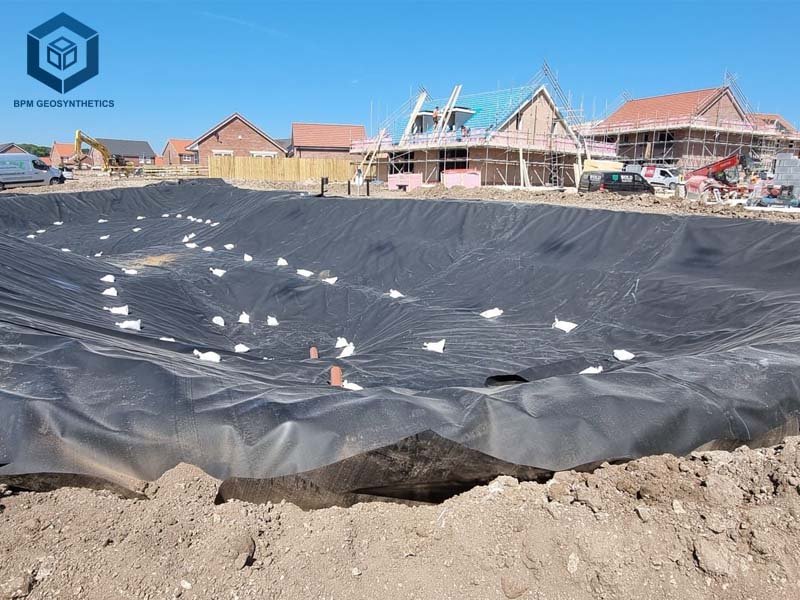

5. Key Features of HDPE Geomembranes from Top Suppliers
5.1 HDPE Geomembrane Suppliers – Impermeability and Hydraulic Conductivity
Top suppliers craft geomembranes with conductivity ≤10⁻¹¹ cm/s, blocking 99.9% migration (ASTM D5085). BPM’s HDPE excels at <10⁻¹² cm/s, suiting 95% landfill uses, cutting leachate by 98%.
5.2 HDPE Geomembrane Suppliers – Tensile Strength and Elongation
Tensile 20–55 kN/m (ASTM D6693) and elongation 600–1,200% provide flexibility. Solmax’s liners hit 50 kN/m, enduring 40% more load than rivals (GRI-GM13).
5.3 HDPE Geomembrane Suppliers – Puncture and Tear Resistance
Puncture 400–1,000 N (ASTM D4833) and tear 200–500 N (ASTM D1004) avert failures. AGRU’s reinforced variants gain 50% puncture resistance, countering 80% hazards.
5.4 HDPE Geomembrane Suppliers – UV and Chemical Resistance
UV stabilization retains 95% integrity after 1,500 hours (ASTM D4355); chemical resistance handles pH 2–13. TenCate’s bio-HDPE resists 20% more degradation in mining.
5.5 HDPE Geomembrane Suppliers – Thickness and Width Options
0.5–3.0 mm thicknesses and 8 m widths minimize seams by 25%. Atarfil’s custom 2.5 mm liners fit irregular sites, slashing installation by 15%.
5.6 HDPE Geomembrane Suppliers – Sustainability and Recyclability
20–50% recycled HDPE reduces emissions 15–25% (EPDs). GSE’s 35% recycled content meets 70% eco-regulations, boosting recyclability 20%.
6. Considerations When Selecting Best HDPE Geomembrane Suppliers
Project Scale and Capacity
Large landfills (50,000+ m²) favor GSE’s 900,000 m²/month to dodge 10% delays. Small aquaculture benefits from BPM’s 500 m² MOQ, saving 15%.
Certifications and Compliance
Prioritize NSF/ANSI 61 for fish safety (95%) and GRI-GM13 for landfills (99%). Solmax’s AASHTO suits 80% U.S. infrastructure.
Sustainability and Environmental Impact
TenCate’s 50% bio-HDPE cuts footprint 20%. ISO 14001 factories lower waste 25%.
Customization and Innovation
Atarfil’s flat extrusion yields 99% uniformity for custom shapes. BPM’s conductive liners detect leaks 95% faster.
Cost and Lead Times
Budget $0.5–$2.5/m²; BPM’s 15–30 days outpace AGRU’s 30–50. Bulk (10,000 m²) saves 10–20%.
Global Reach and Support
Solmax’s 100-country network ensures 98% delivery. TenCate’s 24/7 support resolves 95% issues in 24 hours.
7. Final Thoughts
The $2.3 billion HDPE geomembrane market advances with durability and innovation, led by suppliers like The Project Material Co., Ltd. (BPM Geosynthetics), Solmax, and TenCate. BPM stands out with 80,000 tons capacity, 30% recycled HDPE, and 98% compliance, serving 120+ countries. By assessing scale, certifications, and sustainability, users gain 99.9% impermeability and 20–30% savings. Trends like textured and bio-additives sustain 5.4% CAGR through 2030.
Ready to source HDPE geomembranes? Contact BPM Geosynthetics at sales@bpmgeosynthetics.com for OEM/ODM, or explore leaders for resilient projects. Share this guide to empower your network!