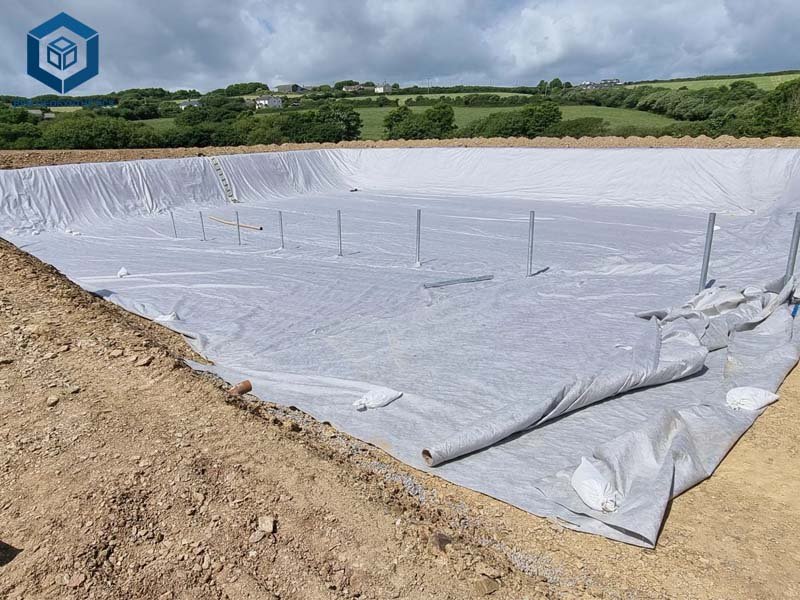
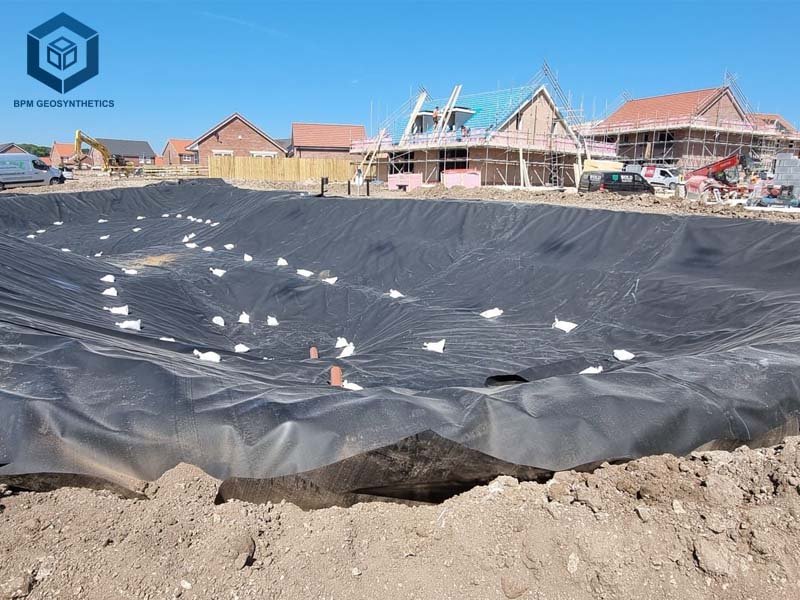
Geotextile fabrics, also known as geosynthetics, are permeable materials used in civil engineering, construction, and environmental projects to enhance soil stability, control erosion, and improve drainage. Made from synthetic fibers like polypropylene or polyester, or natural fibers like jute and coir, these fabrics are integral to applications such as road construction, agriculture, and waste management. As infrastructure development and environmental sustainability gain global focus, understanding the cost of geotextile fabrics is essential for project planners, contractors, and engineers. This comprehensive guide explores the pricing, specifications, applications, and market trends for geotextile fabrics, providing actionable insights to optimize your project budget.
1. Specifications of Geotextile Fabrics
Geotextile fabrics are engineered with specific properties to meet diverse project needs. Below are key specifications based on industry standards:
- Tensile Strength: 10–100 kN/m for woven (ASTM D4595), 5–30 kN/m for non-woven (ASTM D5261).
- Puncture Resistance: 200–800 N for woven, 100–400 N for non-woven (ASTM D4833).
- Permeability: 0.01–0.1 cm/s, ensuring effective filtration and drainage (ASTM D4491).
- UV Resistance: Standard in synthetic geotextiles, extending lifespan by 20–30%.
- Weight: 100–800 GSM, with 200–400 GSM common for most applications.
- Thickness: 0.5–5.0 mm, with 1.0–2.0 mm typical for medium-duty projects.
- Roll Sizes: Widths of 4m, 6m, 8m, or 15m; lengths up to 500m.
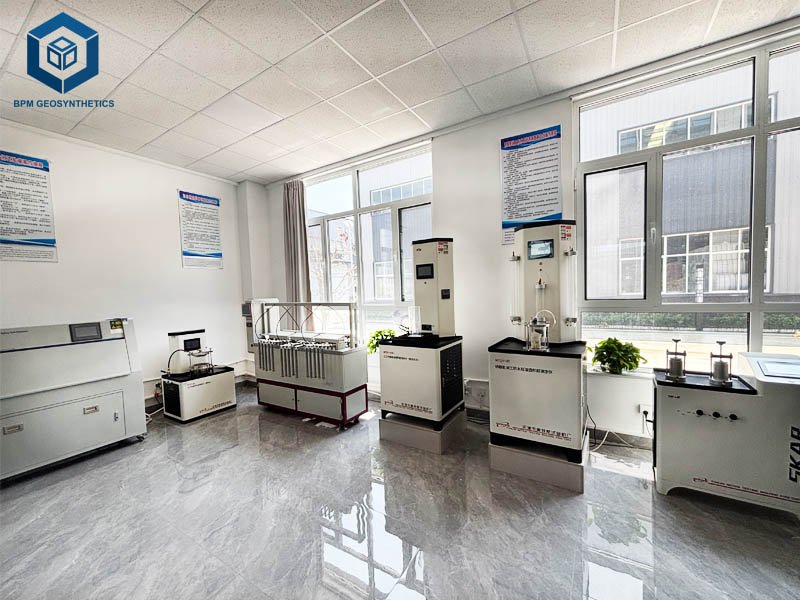
- Certifications: ISO 9001, SGS, and TUV for quality assurance.
These specifications make geotextiles suitable for road construction, erosion control, and drainage systems.
2. Applications of Geotextile Fabrics
Geotextile fabrics are versatile, supporting a wide range of applications:
Road Construction and Pavement Repair
Geotextiles enhance road stability by separating soil layers and distributing loads, increasing pavement lifespan by 20–50%. Woven geotextiles dominate, with 45% market share, costing $0.30–$0.70 per square foot.
Erosion Control
Used in riverbanks, slopes, and coastal areas, geotextiles prevent soil loss by 80–90%. Non-woven and natural fiber geotextiles (jute, coir) cost $0.10–$0.50 per square foot.
Drainage Systems
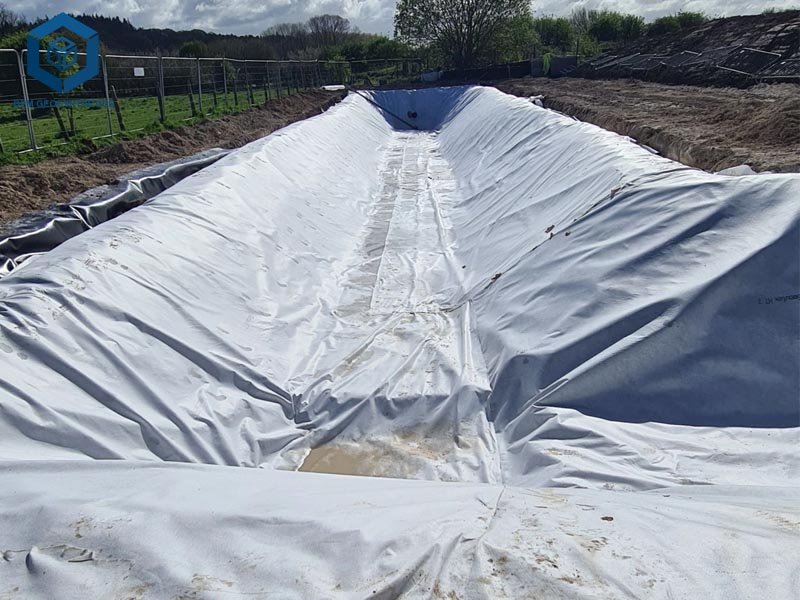
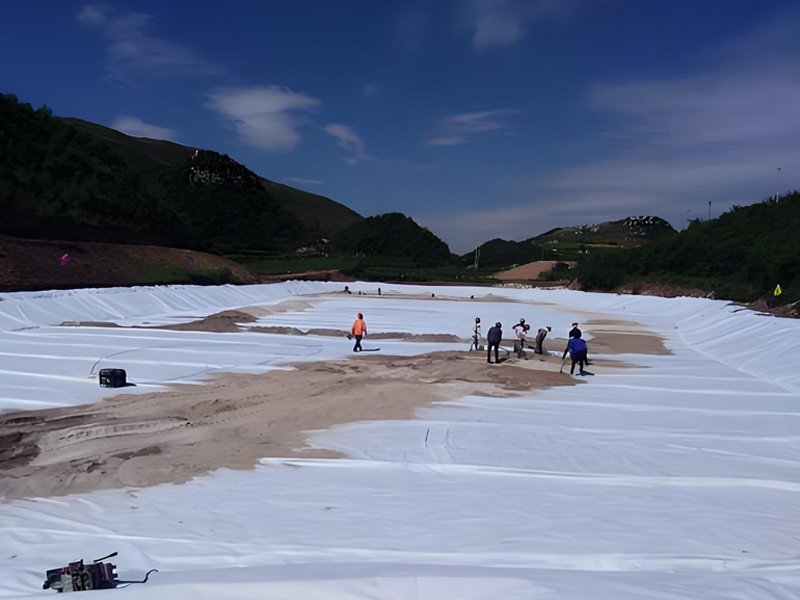
Non-woven geotextiles filter water while preventing soil clogging in drainage systems, costing $0.15–$0.50 per square foot. They are critical for landfills and retaining walls.
Agriculture
Geotextiles control weeds, stabilize soil, and promote vegetation, with natural fibers like jute costing $0.10–$0.40 per square foot. They reduce pesticide use by 30%.
Waste Management
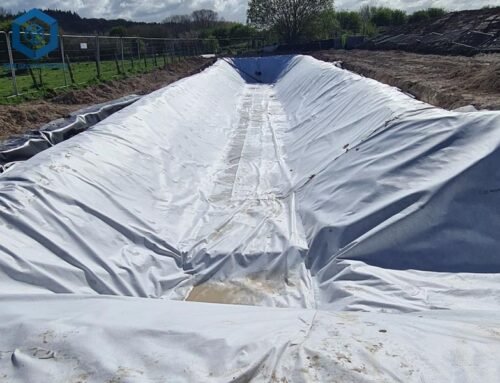
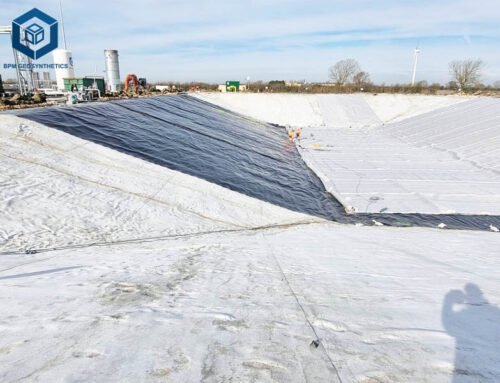
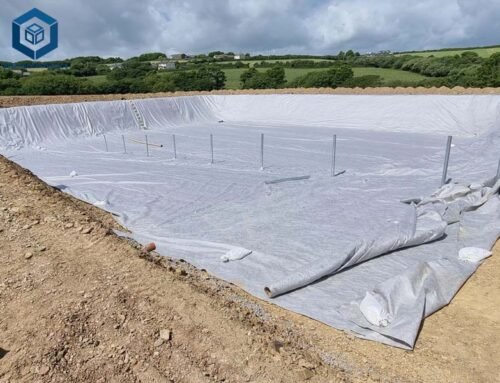
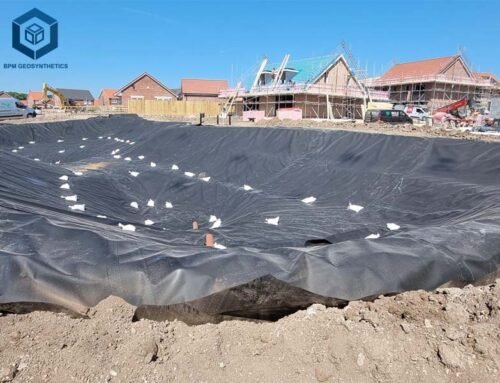
HDPE-based geotextiles line landfills and ponds, preventing contamination by 95%. Prices range from $0.25–$0.55 per square foot.
3. Factors Influencing Geotextile Fabric Costs
The cost of geotextile fabrics varies based on several key factors, each contributing to the overall price and suitability for specific projects. Below, we break down these factors to help you make informed purchasing decisions.
Type of Geotextile Fabric
Geotextile fabrics are categorized into three main types, each with distinct properties and price points:
- Woven Geotextiles: Made by interlocking polypropylene or polyester strips, woven geotextiles offer high tensile strength (up to 100 kN/m) and are ideal for soil reinforcement and stabilization. Prices range from $0.30–$0.70 per square foot in the U.S. and KSh 100–250 per square meter ($0.07–$0.17 per square foot) in Kenya.
- Non-Woven Geotextiles: Produced by bonding fibers through chemical, thermal, or mechanical methods, non-woven geotextiles are lightweight and excel in filtration and drainage. They cost $0.15–$0.50 per square foot in the U.S. and KSh 80–200 per square meter ($0.06–$0.14 per square foot) in Kenya.
- Knitted Geotextiles: Created by interlocking yarn loops, knitted geotextiles combine flexibility and strength, used in specialized applications like erosion control. Prices range from $0.20–$0.60 per square foot globally, with limited availability in Kenya.
The choice of type depends on the project’s requirements, such as load-bearing capacity or filtration needs.
Material Composition
The material used in geotextile fabrics significantly impacts cost and performance:
- Polypropylene: The most common synthetic material, offering high strength and low cost. It accounts for 60% of the market and costs $0.15–$0.50 per square foot for non-woven and $0.30–$0.70 for woven.
- Polyester: Offers durability and UV resistance, used in heavy-duty applications, costing $0.20–$0.60 per square foot.
- Polyethylene: Less common, used in specific applications like landfill liners, priced at $0.25–$0.55 per square foot.
- Natural Fibers (Jute, Coir): Eco-friendly and biodegradable, ideal for temporary erosion control. Prices range from $0.10–$0.40 per square foot, but availability is limited in Kenya.
Synthetic materials dominate due to their durability, while natural fibers are gaining traction for sustainable projects.
Weight and Thickness
Geotextile fabrics are measured in grams per square meter (GSM) or ounces per square yard (oz/yd²), with heavier fabrics costing more due to increased material usage:
- Lightweight (100–200 GSM): Used for filtration and separation, costing $0.15–$0.30 per square foot.
- Medium Weight (200–400 GSM): Suitable for drainage and protection, priced at $0.30–$0.50 per square foot.
- Heavyweight (400+ GSM): Ideal for reinforcement, costing $0.50–$0.70 per square foot.
In Kenya, lightweight non-woven geotextiles (150 GSM) cost KSh 80–120 per square meter ($0.06–$0.08 per square foot), while heavyweight woven geotextiles (400 GSM) cost KSh 200–250 per square meter ($0.14–$0.17 per square foot).
Roll Size and Dimensions
Standard roll sizes range from 4m to 15m in width and 50m to 500m in length, affecting pricing. Larger rolls reduce seams, lowering installation costs by 10–15%, but custom sizes increase prices by 5–10%. For example, a 6m × 100m roll of 200 GSM non-woven geotextile costs $0.20–$0.30 per square foot, while custom cuts may cost $0.25–$0.35 per square foot.
Manufacturing Processes and Additives
Advanced manufacturing techniques, such as UV stabilization or nanotechnology coatings, add $0.05–$0.15 per square foot but enhance durability by 20–30%. For instance, UV-treated polypropylene geotextiles last 10–20 years longer in sunny regions like Kenya.
Purchase Volume
Bulk purchases reduce costs by 10–20%. For example, buying 10,000 square feet of non-woven geotextile may lower the price from $0.30 to $0.24 per square foot. In Kenya, bulk orders of 1,000m² or more from suppliers like Aqua Hub Kenya offer similar discounts.
Geographic Location and Market Conditions
Prices vary by region due to transportation, labor, and raw material costs:
- North America: High labor and regulatory costs result in prices of $0.15–$0.70 per square foot.
- Europe: Import duties and standards add 5–10%, with prices at $0.20–$0.80 per square foot.
- Asia (China, India): Lower production costs lead to competitive pricing at $0.10–$0.50 per square foot.
- Kenya: Prices range from KSh 80–250 per square meter ($0.06–$0.17 per square foot), with higher costs in remote areas due to transportation.
Global oil price fluctuations, impacting polypropylene and polyester resin costs ($1,300 per metric ton in 2025), have increased prices by 5–8% since 2023.
Supplier and Brand Reputation
Reputable suppliers like HUESKER, BPM Geosynthetics, and Grekkon Limited offer certified products with warranties, costing 10–15% more than lesser-known vendors. Recycled geotextiles, 20% cheaper, may compromise durability and lack certifications.
4. Price Breakdown for Geotextile Fabrics (2025)
Below is a detailed price breakdown for geotextile fabrics based on recent market data:
| Type | U.S. Price ($/sq ft) | Kenya Price (KSh/m²) | Kenya Price ($/sq ft) | Lifespan (Years) | Applications |
| Woven | 0.30–0.70 | 100–250 | 0.07–0.17 | 20–50 | Road construction, stabilization |
| Non-Woven | 0.15–0.50 | 80–200 | 0.06–0.14 | 10–20 | Drainage, filtration |
| Knitted | 0.20–0.60 | 90–220 | 0.06–0.15 | 15–30 | Erosion control |
| Natural (Jute/Coir) | 0.10–0.40 | 50–150 | 0.03–0.10 | 2–5 | Temporary erosion control |
Note: Prices are approximate and may vary by supplier, location, and market conditions.
5. Installation Process and Costs
Proper installation ensures geotextile performance and longevity. Below is a step-by-step guide with associated costs:
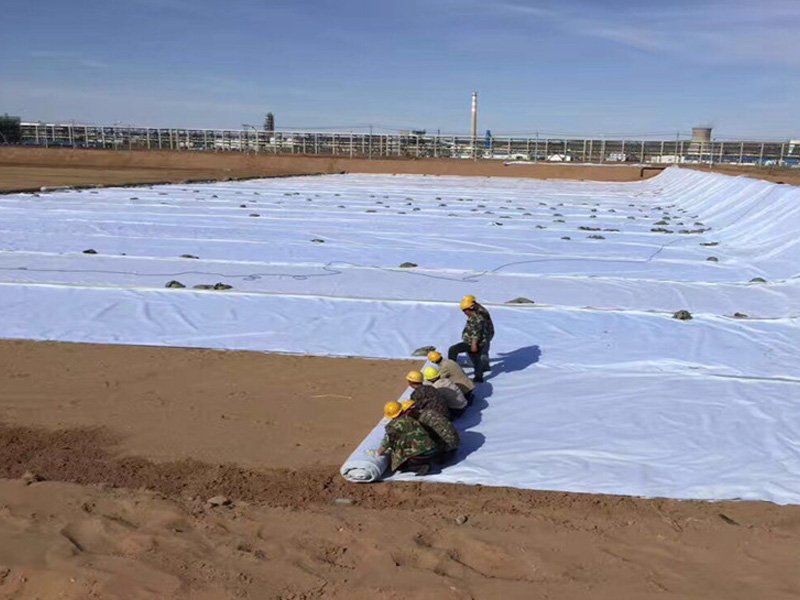
Step 1: Site Preparation
- Clearing and Grading: Remove rocks, roots, and debris to create a smooth surface, costing $0.10–$0.50 per square foot in the U.S. and KSh 20–50 per square meter in Kenya.
- Subgrade Compaction: Ensures stability, costing $0.05–$0.20 per square foot.
Step 2: Geotextile Placement
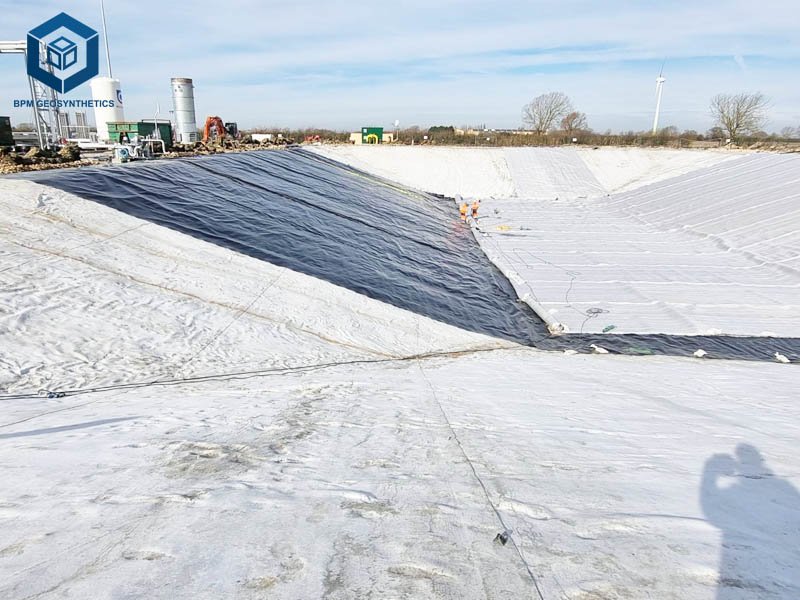
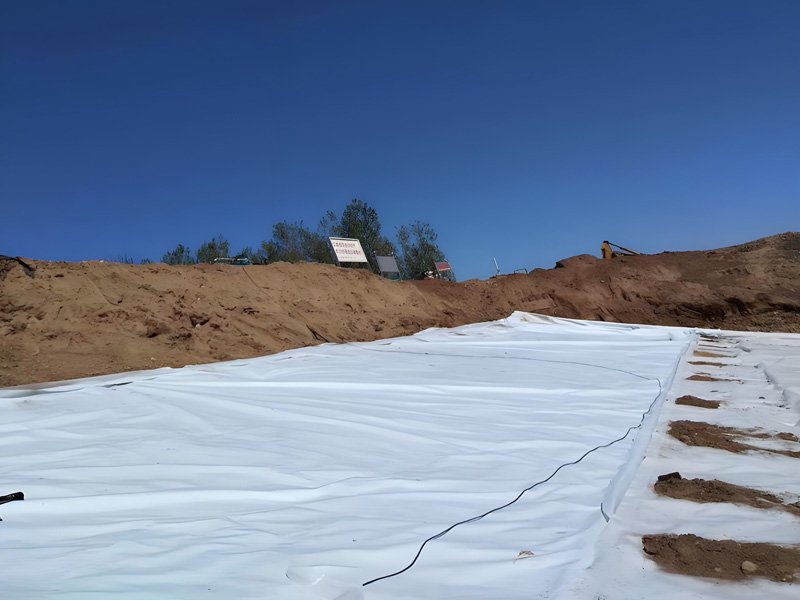
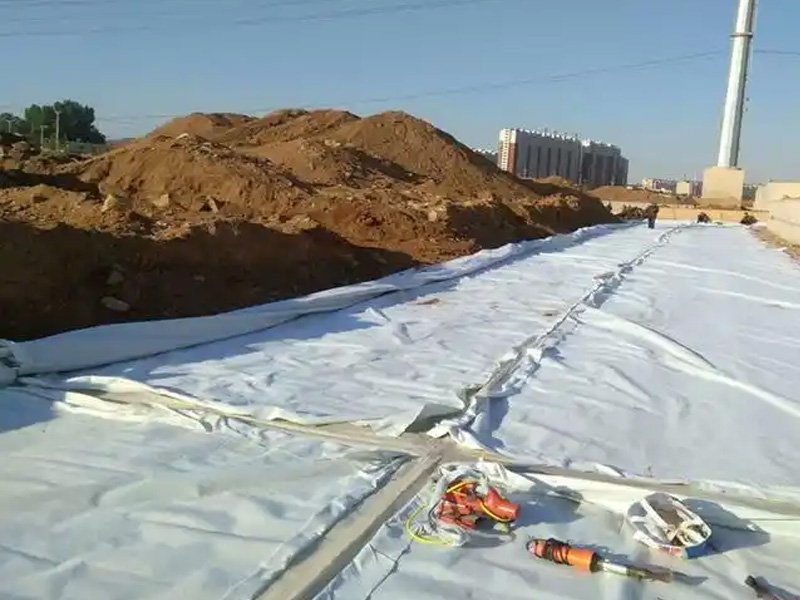
- Unroll the fabric, ensuring overlaps of 0.3–0.6m to prevent gaps. Costs for labor range from $0.20–$0.50 per square foot in the U.S. and KSh 30–80 per square meter in Kenya.
- Anchoring: Secure edges with stakes or trenches, costing $0.05–$0.15 per square foot.
Step 3: Covering and Compaction
- Cover with soil, gravel, or aggregate, ensuring even distribution. Compaction costs $0.10–$0.30 per square foot.
- Inspection: Verify alignment and integrity, costing $0.01–$0.05 per square foot.
Total Installation Costs
- Small Projects (1,000–5,000 sq ft): $0.50–$1.50 per square foot in the U.S.; KSh 80–200 per square meter ($0.06–$0.14 per square foot) in Kenya.
- Large Projects (10,000+ sq ft): $0.30–$1.00 per square foot in the U.S.; KSh 50–150 per square meter ($0.03–$0.10 per square foot) in Kenya.
6. Market Trends and Price Fluctuations
The global geotextile market, valued at $7.91 billion in 2024, is projected to reach $15.02 billion by 2034, with a CAGR of 6.7%. Key trends include:
- Rising Raw Material Costs: Polypropylene resin prices ($1,300 per metric ton in 2025) have increased geotextile costs by 5–8%.
- Sustainability Focus: Demand for eco-friendly geotextiles (jute, coir, recycled plastics) has grown by 15%, with prices 10–20% lower than synthetic options.
- Infrastructure Boom: Investments in Asia-Pacific (e.g., China’s $1.34 trillion infrastructure plan by 2025) and Kenya’s road projects drive demand, increasing prices by 5%.
- Technological Advancements: Nanotechnology coatings and high-strength fabrics add $0.05–$0.15 per square foot but improve performance by 20%.
In Kenya, government initiatives like the National Green Highway project boost demand, stabilizing prices at KSh 80–250 per square meter.
7. Choosing the Right Geotextile Fabric
Selecting the appropriate geotextile fabric involves balancing cost, durability, and project needs:
Project Requirements
- Separation/Stabilization: Woven geotextiles ($0.30–$0.70 per square foot) for roads and embankments.
- Filtration/Drainage: Non-woven geotextiles ($0.15–$0.50 per square foot) for landfills and retaining walls.
- Erosion Control: Natural fibers or knitted geotextiles ($0.10–$0.60 per square foot) for slopes and riverbanks.
Environmental Conditions
- Sun-Exposed Areas: UV-treated polypropylene geotextiles for longevity.
- Temporary Projects: Biodegradable jute or coir for cost savings.
Budget Constraints
- Low Budget: Lightweight non-woven geotextiles ($0.15–$0.30 per square foot).
- Long-Term Investment: Heavyweight woven geotextiles ($0.50–$0.70 per square foot) for durability.
Supplier Selection
Choose certified suppliers like HUESKER, TenCate Geosynthetics, or Grekkon Limited for quality assurance and installation support. Avoid recycled fabrics for critical applications to ensure longevity.
8. Maintenance and Longevity Tips
To maximize geotextile lifespan, follow these tips:
- Regular Inspections: Check for tears or clogging every 6–12 months, costing $0.01–$0.05 per square foot.
- Proper Covering: Ensure adequate soil or aggregate cover to protect from UV damage and physical wear.
- Repair Kits: Use patching kits for minor tears, costing $0.10–$0.20 per square foot.
- Vegetation Management: Promote plant growth to stabilize soil, reducing maintenance costs by 20%.
With proper care, woven geotextiles last 20–50 years, non-woven 10–20 years, and natural fibers 2–5 years.
9. Conclusion
The cost of geotextile fabrics in 2025 ranges from $0.10–$0.70 per square foot globally, with woven geotextiles at $0.30–$0.70, non-woven at $0.15–$0.50, and natural fibers at $0.10–$0.40. In Kenya, prices range from KSh 50–250 per square meter ($0.03–$0.17 per square foot). By understanding material types, specifications, and installation requirements, you can select a geotextile that meets your project’s needs and budget. With global infrastructure investments and a focus on sustainability driving demand, choosing the right supplier and maintaining your geotextile ensures long-term performance.
Please contact trusted suppliers like BPM Geosynthetics for quotes and expert guidance today.