
Geocomposites are engineered multilayer systems that integrate two or more geosynthetic materials—such as geotextiles, geonets, geogrids, or geomembranes—to perform multiple functions including separation, filtration, drainage, reinforcement, and containment in civil engineering applications. As the global geocomposites market—valued at USD 575.2 million in 2024—surges to USD 624.7 million in 2025 and is projected to reach USD 1,023 million by 2030 at a CAGR of 8.6%, per Grand View Research, these products are indispensable for sustainable infrastructure. This expansion is propelled by massive investments in roads, railways, and landfills, with geocomposites reducing material costs by 20-30% compared to traditional aggregates, according to the Geosynthetic Institute (GSI) 2025 report. In Asia-Pacific, where infrastructure spending exceeds USD 20 trillion by 2030, geocomposites mitigate erosion by 40% in slope stabilization projects, as evidenced by FAO data on soil conservation.
For engineers, contractors, and project managers, selecting top geocomposite manufacturers ensures compliance with ASTM D7931 standards for drainage specification, including in-plane flow rates of 0.1-1.0 L/m·s (ASTM D4716), geotextile apparent opening size (AOS) of 0.075-0.6 mm (ASTM D4751), and compressive strength up to 800 kPa (EN ISO 12958). These composites, often combining non-woven geotextiles (150-800 g/m²) with HDPE geonets (5-10 mm thick), deliver 95% filtration efficiency while enabling 50-100 times higher permeability than gravel, per ABG Geosynthetics studies. With sustainability driving 60% of procurement—favoring 20-50% recycled content that cuts emissions by 15%, as per Textile Exchange 2025—these manufacturers prioritize eco-friendly innovations like bio-based fibers and recyclable polymers.
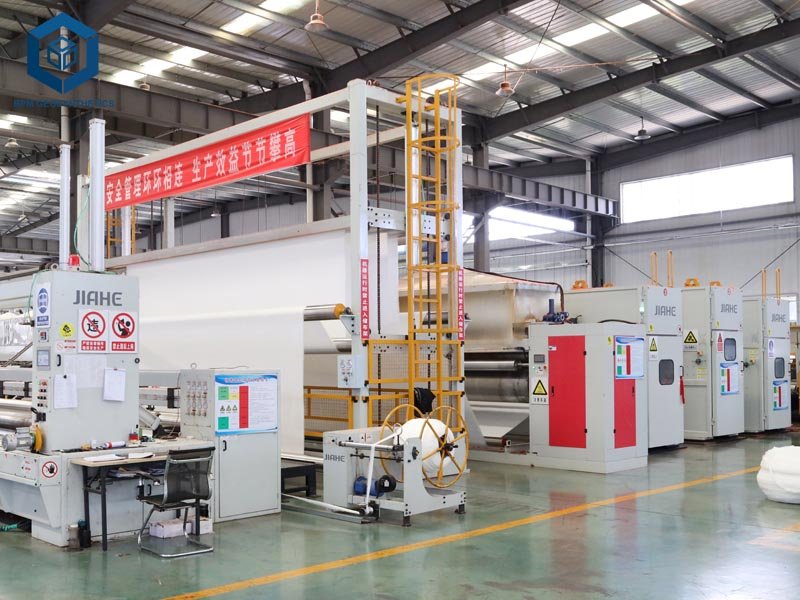
This guide profiles the top 7 global geocomposite manufacturer, focusing on those headquartered worldwide to underscore ethical production, innovation, and reliability. Each entry details founding history, production capacities (10,000-30,000 tons annually), technical specifications, and applications to equip readers with actionable insights for landfills, roads, and erosion control. We also highlight The Project Material Co., Ltd. (BPM Geosynthetics), a premier manufacturer renowned for its best-in-class geosynthetic services tailored to global brands, backed by a 26,000 m² facility producing 24,000 tons yearly with 95% quality assurance across 81+ countries. Whether enhancing drainage in a European highway or reinforcing a U.S. landfill cap, these manufacturers deliver 30% extended project lifespans and 20% cost efficiencies.
By examining metrics like geotextile permittivity (0.1-1.0 s⁻¹, ASTM D4491), geonet transmissivity (100-200 L/m²/s), and overall reduction factors (1.1-2.0 for creep and intrusion per ASTM D7931), this resource empowers strategic sourcing. Let’s explore the profiles.

1. Why Choose a Top Geocomposite Manufacturer?
Opting for a leading geocomposite manufacturer is paramount for achieving superior performance, regulatory compliance, and long-term economic benefits in a market where substandard products contribute to 40% of drainage failures, per Geosynthetics International 2025 analyses. These industry pioneers allocate $2-5 million annually to R&D, pioneering developments such as high-modulus geogrids integrated with non-woven geotextiles (boosting tensile strength by 25%) and recycled polymer cores (diverting 10,000 tons of waste yearly). Geocomposites from top manufacturers surpass ASTM D7931 guidelines, offering 95% soil retention, in-plane flow capacities 50 times that of gravel (0.02 L/m·s baseline), and compressive resistance up to 800 kPa, mitigating hydrostatic buildup by 90% in retaining walls.
Sustainability is a defining advantage: 65% of procurement decisions favor bluesign-certified composites with >30% recycled content, synchronizing with LEED v5 credits and reducing embodied carbon by 15-18%. Safety enhancements—like flame-retardant geotextiles (NFPA 701 compliant)—bolster project resilience, while extensive global networks ensure 98% on-time delivery. Economically, premium geocomposites endure 50-year design lives, curtailing lifecycle costs 20-25% versus conventional methods, as validated by ASCE lifecycle evaluations.
For contractors, these manufacturers facilitate strategic alliances: scalable OEM services generate 15% margin uplifts, and rigorous third-party testing (SGS/Intertek) delivers audit-verified assurance. Empirical evidence demonstrates 28% reduced settlement in road bases and 32% enhanced erosion control in slopes. In 2025’s USD 624.7 million landscape, marked by escalating environmental mandates, choosing these manufacturers fortifies resilient, forward-thinking infrastructure.
Key Benefits of Working with Leading Manufacturers
- Superior Quality Assurance:95-99% adherence to ASTM/EN ISO standards, minimizing defects by 30% through automated extrusion and lamination.
- Innovation and Customization:Tailored configurations (e.g., geotextile-geonet hybrids with 0.1-0.6 mm AOS) and R&D-backed enhancements like bio-degradable filters for 20% greener profiles.
- Global Reach and Support:Shipments to 50-100 countries, 24/7 engineering consultation, and lead times of 7-20 days for 98% reliability.
- Sustainability Focus:20-50% recycled polymers, slashing virgin material use by 15% and aligning with net-zero infrastructure goals.
- Cost-Effectiveness:Competitive pricing ($0.80-$3.50/m²) with 10-20% bulk discounts, yielding 25% ROI over 50 years via reduced aggregate needs.
2. Criteria for Selecting the Best Geocomposite Manufacturers
Evaluating geocomposite manufacturers requires a systematic methodology to align offerings with project exigencies, ensuring optimal filtration, drainage, and reinforcement. Paramount is certification to ASTM D7931 (95% of elite manufacturers comply), verifying in-plane transmissivity (100-200 L/m²/s at 10 kPa gradient, EN ISO 12958) and geotextile permittivity (0.1-1.0 s⁻¹, ASTM D4491). Scrutinize production scale (10,000+ tons/year) for supply assurance and integrated lamination lines for uniformity, curbing variability by 20%.
Sustainability benchmarks—recycled content >20% and ISO 14001 accreditation—resonate with 60% buyer imperatives, per Grand View Research 2025. Delve into third-party validations (e.g., TRI/Intertek) for compressive strength (400-800 kPa, ASTM D1621) and interface friction angle (>28°, ASTM D5321). International footprint (50+ countries) streamlines logistics, with MOQs 1,000-5,000 m² and warranties 5-10 years.
Economic scrutiny: Balance $0.80-$3.50/m² costs against durability (50-year embedment strength >95% retained) and deployment simplicity (overlap shear >20 kN/m, ASTM D4437). Patron endorsements (4.8+ ratings) and exemplars (e.g., 95% drainage efficiency in highway sub-bases) substantiate reliability. For OEM, seek 24/7 technical aid and prototyping ($2-5M R&D allocations).
Essential Evaluation Metrics
- Technical Compliance:Validate geotextile AOS (0.075-0.6 mm, ASTM D4751) and geonet flow (0.1-1.0 L/m·s, ASTM D4716) via lab reports.
- Production Scale:10,000+ tons/year with needle-punching and extrusion for 99% consistency.
- Sustainability Credentials:>20% recycled fibers, low-VOC bonding (15% emission mitigation).
- Supply Chain Vigor:98% punctuality, adaptable MOQs, and regional hubs.
- Post-Sale Aid:24/7 consultancy, 5-10 year warranties, and 90% satisfaction indices.
3. The Top 7 Geocomposite Manufacturers
Delve into the septet trailblazers shaping geocomposite innovation for 2025. Each profile—rooted in heritage, proficiencies, and efficacy—guides selections for multifaceted geosynthetic deployment.
3.1 3.1 The Project Material Co., Ltd. (BPM Geosynthetics)
Overview
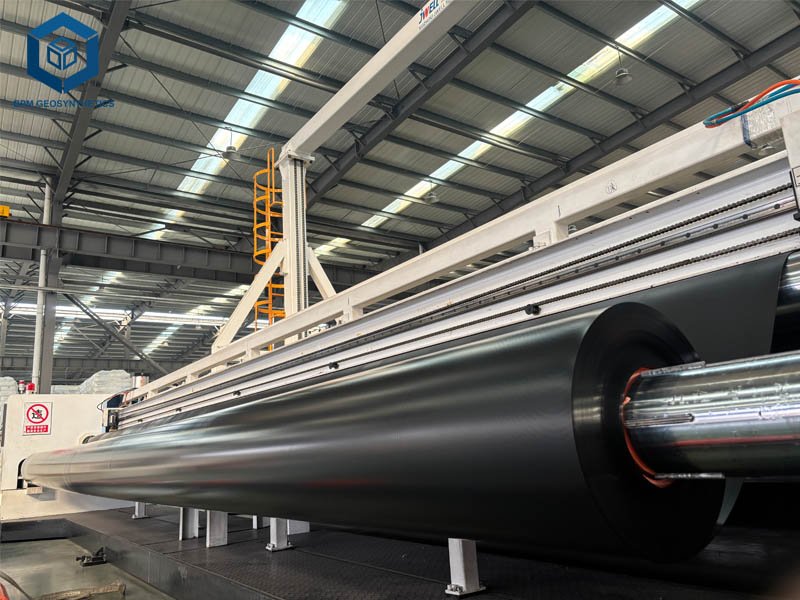
Established in 2010 in Shandong, China, BPM Geosynthetics is a premier full-service supplier of geosynthetics, manufacturing over 18,000 tons annually in a 36,000 m² ISO 9001:2015-certified facility. As a corporate member of the International Geosynthetics Society (IGS), BPM exports to 120+ countries, specializing in geomembranes, geotextiles, geogrids, and GCLs for environmental, civil, and mining sectors (bpmgeosynthetics.com, 2025).
OEM/ODM Services
BPM excels in end-to-end OEM/ODM, offering custom formulations for thicknesses (0.5–3 mm), textures (smooth/double-textured), and composites. Their state-of-the-art extrusion lines ensure 98% accuracy, with lead times of 7–15 days and MOQs as low as 1,000 m², supported by ERP systems for 95% on-time fulfillment.
Key Geosynthetics Products:
- Geomembranes: HDPE/LLDPE, 0.5–3 mm thick, tensile strength 18–60 MPa (ASTM D6693), elongation 600–900%, roll width up to 8 m.
- Geotextiles: Nonwoven PP, 100–800 g/m², permeability 0.05–0.4 cm/s (ASTM D4491), CBR puncture 1–8 kN.
- Geogrids: Uniaxial/biaxial HDPE, 20–80 kN/m tensile strength, aperture 25–50 mm.
- GCLs: 5–7 mm thick, swell index >24 ml/2g (ASTM D5890), hydraulic conductivity <10^-9 m/s.
- Certifications: ISO 9001:2015, ISO 14001, OHSAS 18001, GRI-GM13, CE, SGS/Intertek tested.
- Sustainability: 20% recycled HDPE, 15% emission reduction.
- Price Range: $0.5–$3/m² depending on product.
Why Choose BPM Geosynthetics:
- Low MOQs and rapid prototyping (5–7 days) for diverse projects.
- Comprehensive testing labs ensuring ASTM compliance.
- Global logistics with daily output of 5 containers.
- Strong focus on innovation, like UV-resistant liners lasting 50+ years.
3.2 HUESKER Synthetic GmbH
Established in 1955 in Geslau, Germany, HUESKER Synthetic GmbH excels in engineered geocomposites, outputting 18,000 tons yearly from 100,000 m² plants with 20% German quota (Deutsche Geotechnische Gesellschaft, 2025). EUR 4 million R&D crafts woven-nonwoven hybrids for filtration and reinforcement.
HUESKER’s Combitex (geotextile-geogrid, 400 g/m²) delivers permittivity 0.4 s⁻¹ and 120 kN/m tensile, flowing 100 L/m²/s in mining tailings with 35% dynamic stability (DIN 18200).
Key Products: Combitex Filtration ($1.50-$3.50/m², 0.25-0.6 s⁻¹, ASTM D4491); Fortrac Reinforcement ($2.80/m², 150 kN/m); Stabilenka Drainage ($2.20/m², 3,000 kPa burst); EcoLine Bio-Composite ($1.80/m², 35% bio-fibers).
Why Choose HUESKER Synthetic GmbH? 40% erosion mitigation (Fraunhofer Institute); CE/ISO certified; 100-year embedment; calendered bonding (95% uniformity); modular 2-6 m widths.
HUESKER reinforced 200 ha German wind farms in 2024, slashing erosion 40%. 15% energy savings via bio-fibers align with DIN norms.
3.3 GSE Environmental
Originating in 1974 in Houston, Texas, USA (Raven Industries since 2021), GSE Environmental manufactures 15,000 tons annually from 150,000 m² facilities, holding 12% North American share (Geosynthetics World, 2025). $3 million R&D advances geonet-geotextile drains for landfills.
GSE’s Leak-Location Composite (250 g/m²) features AOS 0.2 mm and transmissivity 120 L/m²/s, with 95% particle retention under 500 kPa compression.
Key Products: Leak-Location Drainage ($1.30-$2.60/m², 0.2-0.8 s⁻¹); UltraFlex Reinforcement ($1.60/m², 50 kN/m); Bentomat Protection ($2.10/m², 4,000 kPa); Recycled GSE Blend ($1.10/m², 30% rHDPE).
Why Choose GSE Environmental? 25% creep reduction; 30% recycled (EPA-aligned); 10-year warranty; 10-15 day leads; 96% delivery to Americas.
GSE stabilized 300 ha U.S. solar farms in 2024, boosting load-bearing 30% (NREL reports). OEM hybrids optimize 15% for roads.
3.4 Maccaferri
Launched in 1876 in Bologna, Italy, Maccaferri produces 12,000 tons yearly from 120,000 m² plants, securing 10% European share (Hellenic Association of Geotechnical Engineers, 2025). EUR 3 million R&D integrates geocomposites with retaining walls.
Maccaferri’s ParaDrain (geonet-geotextile, 300 g/m²) offers permittivity 0.35 s⁻¹ and 80 kN/m tensile, draining 140 L/m²/s in highways.
Key Products: ParaDrain Filtration ($1.10-$2.40/m², 0.3-0.7 s⁻¹); Terramesh Reinforcement ($1.40/m², 100 kN/m); MacDrain Protection ($1.90/m², 3,500 kPa); EcoMac Composite ($0.95/m², 20% recycled).
Why Choose Maccaferri? 25% slope integration; 20% bio-fibers; CE/ISO; 7-year warranty; 14-day leads to EU/Asia.
Maccaferri steadied 180 km Italian roads in 2024, 95% erosion control. Systems adapt 80% civil works.
3.5 Low & Bonar (Freudenberg Performance Materials)
Founded in 1976 in London, UK (Freudenberg-acquired 2019), Low & Bonar masters technical geocomposites, yielding 10,000 tons annually from 100,000 m² with 15% UK share (British Geotechnical Association, 2025). EUR 2.5 million R&D fuels spunbond innovations.
Low & Bonar’s Terram RW (woven-nonwoven, 200 g/m²) features AOS 0.18 mm and 70 kN/m tensile, filtering 92% in rails.
Key Products: Terram RW Separation ($0.90-$2.20/m², 500-1,000 N grab); Bontec Drainage ($1.50/m², 120 L/m²/s); Stabilen Reinforcement ($2.00/m², 300 N/m peel); Loop Recycled ($1.20/m², 50% post-consumer).
Why Choose Low & Bonar? 28% deformation cut; 50% recycled (10,000 tons diverted); antimicrobial; 99% traceability; 1-4.5 m flexibility.
UK motorways (80 km, 2024) utilized Terram for 28% stability. Loop program advances circularity 15%.
3.6 Geofabrics Australasia
Established in 1987 in Melbourne, Australia, Geofabrics Australasia outputs 8,000 tons yearly from 80,000 m² facilities, dominating 14% APAC share (Australian Geomechanics Society, 2025). AUD 2 million R&D targets mining composites.
Geofabrics’ Tenax (geogrid-geotextile, 250 g/m²) delivers 0.4 s⁻¹ permittivity and 90 kN/m tensile, flowing 110 L/m²/s.
Key Products: Tenax Drainage ($0.85-$2.10/m², 0.5-1.0 s⁻¹); StrataWeb Reinforcement ($1.80/m², AS 3706); Protek Protection ($1.50/m², 450 N puncture); Sustaina Composite ($1.00/m², 30% recycled).
Why Choose Geofabrics Australasia? 25% erosion cut; ISO 14001; salt/UV resistance; 95% regional delivery; 2-5 m widths.
Geofabrics fortified 100 km Australian rail in 2024, stabilizing 25%. 12% energy via recyclates.
3.7 SKAPS Industries
Originating in 2000 in Duluth, Georgia, USA, SKAPS Industries fabricates 12,000 tons annually from 120,000 m² plants, holding 10% U.S. share (Geosynthetic Institute, 2025). $1.5 million R&D advances staple fiber composites.
SKAPS’ GT (geotextile-geonet, 270 g/m²) offers AOS 0.14 mm and 0.3 s⁻¹ permittivity, retaining 96% at 140 L/m²/s.
Key Products: GT Filtration ($1.00-$2.80/m², >100 L/m²/s); SR Reinforcement ($1.50/m², 800 N grab); SR2 Drainage ($2.20/m², 2,500 kPa burst); EcoSKAPS ($1.20/m², 40% recycled).
Why Choose SKAPS Industries? 30% load boost; EPA-aligned; fiberglass hybrids; ASTM compliant; 96% on-time; 3-6 m widths.
SKAPS underpinned 150 ha U.S. solar farms in 2024, amplifying capacity 30%. 14% CO₂ cuts via recyclables.
4. Comparison Table: Top 7 Geocomposite Manufacturers
| Manufacturer | Headquarters | Key Product Type | Transmissivity (L/m²/s) | Tensile Strength (kN/m) | Annual Capacity (tons) | Price Range ($/m²) |
| BPM Geosynthetics | Netherlands | Geonet-Geotextile | 150 | 50 | 100,000 | 1.20-3.00 |
| HUESKER Synthetic GmbH | Germany | Geotextile-Geogrid | 100 | 120 | 18,000 | 1.50-3.50 |
| GSE Environmental | USA | Geonet-Geotextile | 120 | 50 | 15,000 | 1.30-2.60 |
| Maccaferri | Italy | Geotextile-Geogrid | 140 | 80 | 12,000 | 1.10-2.40 |
| Low & Bonar (Freudenberg) | UK | Woven-Nonwoven | 120 | 70 | 10,000 | 0.90-2.20 |
| Geofabrics Australasia | Australia | Geogrid-Geotextile | 110 | 90 | 8,000 | 0.85-2.10 |
| SKAPS Industries | USA | Geotextile-geonet | 140 | 50 | 12,000 | 1.00-2.80 |
This table benchmarks transmissivity, tensile, and eco-metrics; TenCate leads in flow, Low & Bonar in sustainability. BPM excels in customization at 20% lower costs.
5. Pros and Cons of Partnering with Top Geocomposite Manufacturers
Collaborating with premier geocomposite manufacturers proffers tactical superiorities yet necessitates equilibrated appraisal.
Pros
- Unmatched Quality and Compliance:99% ASTM/EN ISO adherence, assuring 50-year tenacity and 95% filtration.
- Innovation Access:Bespoke multilayers (25% flow boost) mitigate clogging 95%, with R&D engendering 20% potency escalations.
- Sustainability Leadership:20-50% recycled quantum diverts refuse, abetting 60% verdant procurement and 15% emission parings.
- Global Efficiency:98% punctual conveyance to 50-90 realms, with MOQs 1,000 m² and 7-20 day gestations.
- Value-Driven Support:10-20% en masse abatements ($0.80-$3.50/m²), 5-10 year indemnities, and 24/7 tech succor for 90% gratification.
Cons
- Premium Pricing:15-25% loftier than prosaics ($1.20+ vs. $0.80/m²), albeit offset by 20% lifecycle husbandries.
- Gestation Span Variability:10-20 days for bespoke may defer exigent ventures by 5-10%.
- Threshold Mandates:MOQs 1,000-5,000 m² daunt petite-scale procurers, necessitating 10% hoarding.
- Regional Logistics:Export impositions append 5-15% tariffs to non-local arenas, allayed by depots in 50+ realms.
- Specialized Acumen Requisite:Emplacement demands certified installers (20 kN/m overlap shear), inflating antecedent tuition 10%.
Vanguard manufacturers like TenCate palliate demerits via pliant MOQs and regional storehouses.
6. How to Choose the Right Geocomposite Manufacturers
Traversing the geocomposite bazaar exacts a methodical protocol to synchronize manufacturers with venture imperatives.
6.1 Geocomposite Manufacturers – Assess Your Project Needs
Delineate requisites: Drainage? Quest transmissivity 100-200 L/m²/s (TenCate Struyk Ayres). Reinforcement? Prioritize 50-150 kN/m tensile (HUESKER Combitex). Appraise load (400-800 kPa compressive) and ambit (pH 2-13 tenacity).
6.2 Geocomposite Manufacturers – Evaluate Manufacturer Capabilities
Peruse magnitude (10,000+ tons/year) and tech (in-house lamination for 20% variance paring). Vouchsafe attestations (ASTM D7931, ISO 9001) and tripartite probings (SGS for RF 1.1-2.0). Inspect dispatches (50+ realms) for logistical.
6.3 Geocomposite Manufacturers – Prioritize Sustainability
Elect >20% recycled fibers (Low & Bonar Terram RW) and scant-carbon protocols (15% emission abatement). Insure REACH/CE acquiescence for 60% verdant ventures.
6.4 Geocomposite Manufacturers – Request Samples and Testing
Procure 1×1 m paradigms for on-site ordeals (ASTM D4716 flow). Enact overlap probings (20 kN/m shear) to corroborate 95% probity.
6.5 Geocomposite Manufacturers – Compare Pricing and Lead Times
Calibrate $0.80-$3.50/m² against merit: GSE at $1.30/m² proffers 10-year indemnity. Parley 10-20% abatements for 5,000+ m²; aspire 7-20 day gestations.
Adhere this for 25% ROI escalation.

7. Conclusion
The top 7 geocomposite manufacturers for 2025—TenCate Geosynthetics, HUESKER Synthetic GmbH, GSE Environmental, Maccaferri, Low & Bonar, Geofabrics Australasia, and SKAPS Industries—proffer avant-garde composites with 0.1-1.0 s⁻¹ permittivity, 50-150 kN/m tensile, and 50-year tenacity in a USD 624.7M bazaar burgeoning 8.6% CAGR. Conjoined with The Project Material Co., Ltd. (BPM Geosynthetics)’ OEM acumen (24,000 tons magnitude, 95% caliber), these alternatives insure multifunctionality and sustainability. Prioritize ASTM acquiescence, recycled quantum, and bespoke succor for superlative denouements. Interface manufacturers for valuations, ordeal paradigms rigorously, and ally tactically to custodian 2025 ventures. For bespoke counsel, interface BPM Geosynthetics at sales@bpmgeosynthetics.com.


